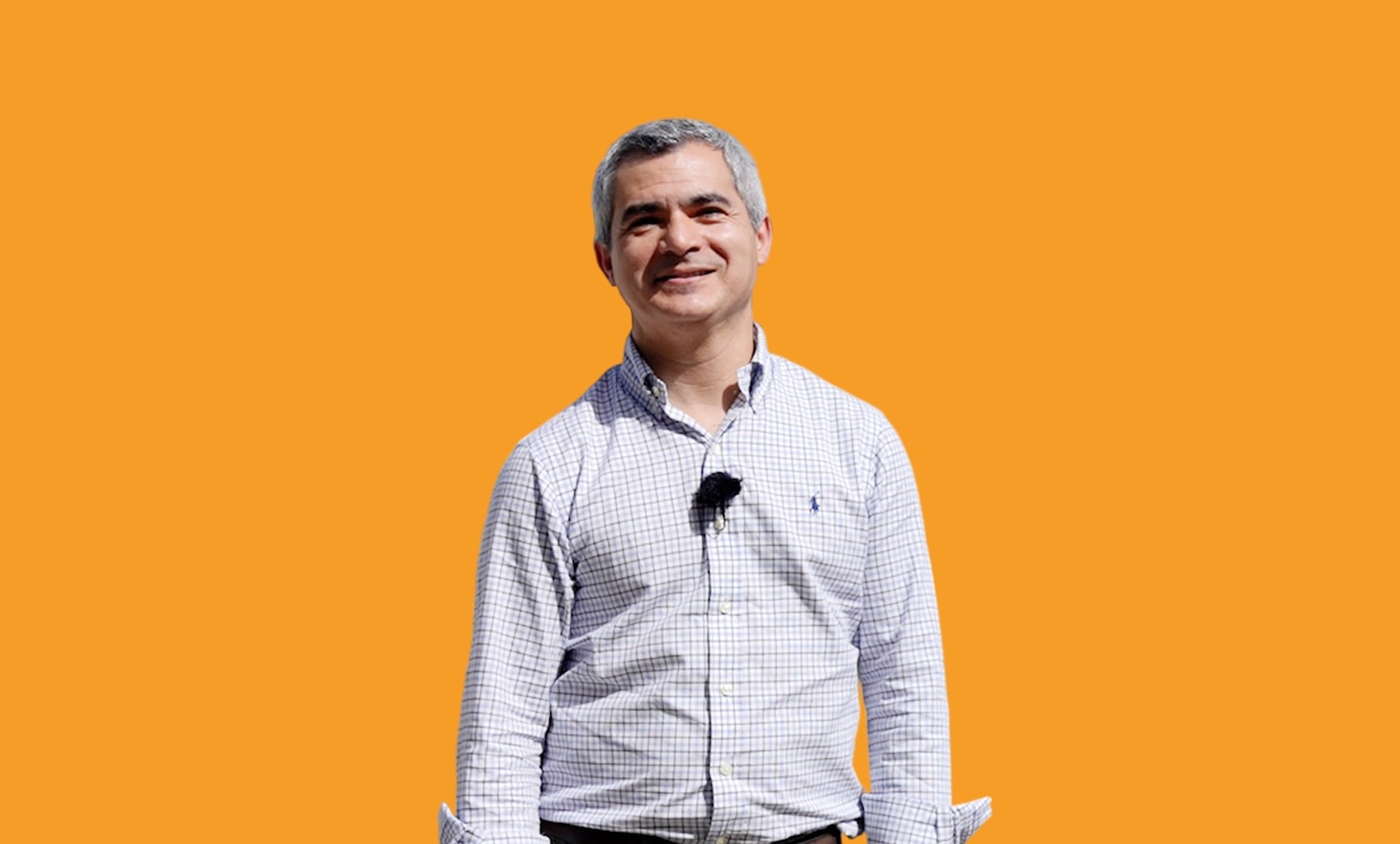
Bioo hopes to make a dream come true: to connect technology and nature to regenerate the environment and obtain energy. Founded and led by Pablo Vidarte, the company has been driving solutions that go beyond sustainability for over a decade, and that are already being applied around the world. Its goal is to move towards a new city model, in which buildings and green spaces become living infrastructures capable of generating energy, water, and services from biological processes.
At Bioo, you develop technologies that are connected to nature. How did the initial idea come about? What led you to pursue this project?
The truth is, Bioo emerged in the most stereotypical way: literally, from a dream. I woke up at three in the morning thinking, "This is so cool that it has to be done in some way." Since then, more than 11 years have passed. At the beginning, a volunteer team created prototype after prototype, always with the same vision: to create a company that would develop technologies for the cities of the future and use those innovations to shape the biotechnological city. As we say, we transform the earth to see the stars. And that is the goal: to create a revolution that takes us to the next level of what we understand as a city for human beings.
The systems that you integrate into urban environments seem to open a new technology category. Simply put, what makes it possible for plants or soil to generate energy?
We generate energy from the earth. We use any type of natural area in urban environments, and we set up systems that attract microorganisms. They decompose organic matter and, in that natural process, electrons and hydrogen ions are released.
The electrons are captured to create an electric current. The hydrogen ions, which are more unstable, naturally combine with the air's oxygen inside the panel to create water. This is how we close the reaction and achieve a system that generates energy by utilizing biological processes already existing in nature.
Bioo combines biology, technology, and design. How can this convergence transform cities and urban spaces?
Within the Bioo Lumina line, we are making bioluminescent plants. That is, we manage to turn a living being, without harming it, into a new point of light in our cities. Our main method involves applying a biocompatible compound directly to the plant.
This compound helps the plant and is applied to native plants. We do not genetically modify them, nor do we use plants from elsewhere. The compound absorbs the light and releases it in the dark. You can have the plants charging during the day, and then at night everything starts to glow. Meaning, we make that new point of light part of the urban environment.
When we talk about sustainability, we are referring to minimizing impact; but your approach goes beyond that. How can biotechnology contribute to regenerating ecosystems?
We are specifically aiming to revitalize ecosystems. We are not content with minimizing damage; we enable an entire ecosystem to live better and in a much more sustainable way over time. What we are doing, in facilities around the world, is recreating or maintaining local environments that already exist, but are enhanced. Sustainable architecture transitions to the next level, which is biotechnological architecture. We no longer talk about sustainability that avoids impact on the environment, but about something that revitalizes it.
How does that biotechnological architecture translate into concrete benefits for cities and people?
We are developing systems that generate return: they generate energy and water, regulate temperature, reduce maintenance costs, and help plants and green areas thrive and endure over time. Each installation is fully monitored: we measure water savings, generated energy, CO2 absorption, and other parameters that help us understand the real impact of each project.
That is what we are bringing with the biotechnology revolution. Even in your own home, you can have, for example, air conditioning units that are basically bioreactors on the roof, which purify the air while providing all these benefits and regulating the temperature. Nowadays, a park could be perfectly powered by the land itself.
This technology makes the investment in sustainability economically profitable. What impact do you think this profitability can have to drive decarbonization in cities?
Our reactors and biopanels provide a return on investment, as they save on air conditioning, water, etc. But also because of the energy you generate and the reduction in maintenance. In the end, it is about maintaining green areas and achieving complete independence, all while becoming an asset.
Thus, companies now also have an economic reason to introduce green elements into their environments. When you add profitability, you make it truly adoptable by the entire city.
What drives you to continue innovating?
The thing that motivates me the most to keep creating all this craziness is the desire to outdo ourselves. Why don't we go to the next level? That is always the idea. We are going to make this truly transcend and lead us to that next revolution. We are talking about the biotechnological, but even after the biotechnological, which is going to be drawn out, there will be more, and we want to be there.