More than half of humanity lives in cities, and UN projections indicate that this proportion could reach nearly 70% by 2050. Spain is no exception. However, 16% of the population (around 7.5 million people) lives in rural municipalities, a figure that has been rising since 2020 as many people choose to return to their ancestral lands, rehabilitate homes, and revive crops and traditional trades, enjoying a slower pace of life with new opportunities. Since 2018, according to the INE, nearly half a million people have left cities to become new residents of small municipalities in Spain. In 2024 alone, that number reached 68,800.
Rural areas also face demographic aging. Fewer people are making a living from agriculture or livestock than before, and those who remain tend to be older. For example, in Spain, the average age of farmers is over 60, highlighting a lack of generational renewal. Nonetheless, there is hope of reversing this trend, thanks to the technological modernization of rural areas, which can act as a magnet for younger generations to return to rural communities.
Agriculture 4.0: Reinventing rural work
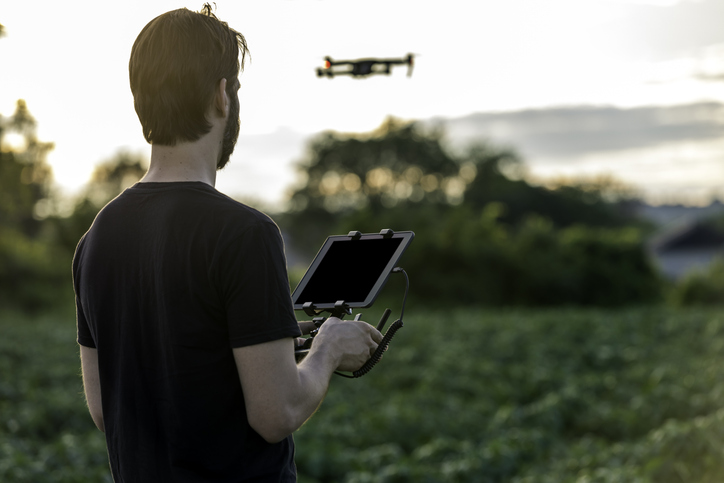
One of the most striking advances is the use of shepherd drones, capable of monitoring pastures or grazing lands in just a few minutes. These devices send live images, help locate lost animals, and, thanks to thermal cameras, detect the heat of livestock against the vegetation. Tasks that once required hours of trekking across uneven terrain can now be carried out easily on a tablet. One example is in Orihuela, Alicante, through a pioneering project by Miguel Hernández University (UMH) that monitors 400 herds of horses, sheep, cows, and goats in real time.
Smart sensors are another revolutionary tool. These, embedded in the soil or installed in greenhouses, collect data on moisture, temperature, or solar radiation. With this information, irrigation systems adjust automatically, preventing water waste. This enables farmers to know the status of crops on each plot at any time, and decisions are no longer based solely on experience but supported by real-time data.
This is complemented by the introduction of artificial intelligence and big data into the sector. Digital tools have been developed that can analyze patterns in plant growth, detect diseases before they are visible, or suggest the optimal amount of inputs for each stage of cultivation.
Innovation is also advancing in the physical field. More and more autonomous tractors and agricultural robots are performing tasks such as sowing, weeding, or applying fertilizers with centimetric precision, thanks to GPS guidance. This reduces overlaps, saves energy, and frees up time for other management tasks.
These advances in the primary sector bring multiple benefits for rural operations and society as a whole. Among them is the promotion of more sustainable practices, as this technology can prevent over-irrigation, minimize agrochemical use, and contribute to more respectful soil management.
Smart farms
In Spain, as in other countries, the term Agriculture 4.0 or smart farming is used to describe this integration of technology into rural life. In this context, various public policies are promoting the digital transition; for instance, the Spanish Circular Economy Strategy 2030, which highlights the need to develop sustainable agrotechnologies.
As a result, not only are certain processes being optimized, but the professional profile of rural workers is being redefined. Now, in addition to physical labor, knowledge in areas such as computing, data management, electronics, or advanced mechanization is also valued.
This opens up a range of new employment and entrepreneurial opportunities in rural areas, such as agricultural data analysts, smart irrigation technicians, agricultural drone pilots, or consultants in farm efficiency. Leveraging the Internet, it is even feasible for young engineers or entrepreneurs to work from a small town, providing agrotechnology services regionally or globally; something unthinkable a few decades ago.
In short, technology has become an ally in revitalizing rural areas. Thanks to innovation, rural professions are entering a new era in which respect for the land coexists with intelligent data use, physical effort with automation, traditional trades with new professional opportunities, and campesino knowledge with cutting-edge science.