Home automation, also known as smart home technology, is transforming our homes by increasing efficiency and making it easier to reduce consumption. One example is a smart plug. Why? It eliminates phantom power, optimizes costs, and enables real-time online control of consumption and demand, as well as scheduling of household tasks during off-peak hours, thereby reducing environmental impact.
According to the OCU, combining smart plugs with time-of-use rates can result in an average savings of up to 25 euros per month (300 per year).
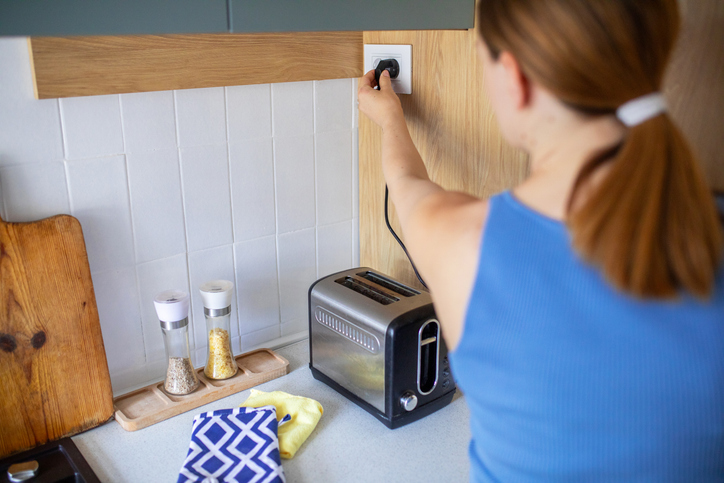
What is a smart plug? It's a home automation device that is placed between the wall outlet and the plug of the appliance you want to control. Its main function is to act as a remote and programmable switch.
It manages the passage of electric current through home networks and processes it through various mobile phone applications or via voice commands using virtual assistants such as Google, Alexa, or Apple HomeKit.
As highlighted by the IDAE (Institute for the Diversification and Saving of Energy, attached to MITECO), the key lies in its ability to allow real-time analysis of energy consumption and adjustment if necessary. Most importantly, it eliminates phantom power by shutting off the energy "tap" when the connected devices are not in use.
There are several types of smart plugs in different price ranges, depending on their intended use. They are mainly classified based on their connectivity infrastructure and installation design. In other words, it depends on how they connect and how they are used.
"Smart plugs" thanks to their connectivity
According to the OCU, the most common, economical, and easy-to-configure option is connecting via Wi-Fi through the home router. The second option is a Bluetooth connection. However, Bluetooth has a more limited range and is usually combined with Wi-Fi technologies to extend control beyond the home.
The third option for smart plugs uses protocols like Zigbee or Z-Wave, which are specifically designed for home automation. These systems create a mesh network among home devices, enabling efficient communication. The main advantage of these systems is that they consume less energy, though they require a bridge or concentrator to function.
"Smart plugs" thanks to their installation
In this case, they are also classified into three categories:
Smart power strips: these have multiple outlets in a single device, allowing individual or collective control of several appliances. They are especially recommended for living rooms or work areas where multiple devices are usually connected at the same time (TV, router, console, cable box, music system, PC, printer, etc.).
Surface smart plugs or adapters: these are plugged directly into any existing wall outlet without the need for electrical installation. They are portable and reusable.
In-wall: these completely replace traditional wall outlets. They offer a more elegant aesthetic but require permanent wiring and electrical knowledge for installation.
Advantages of a smart plug
The main advantage of these devices is that they record each appliance's consumption in kilowatt-hours (kWh) individually or collectively. Through the app, they translate this information into daily, weekly, or monthly consumption graphs that help users manage their households. Another great advantage is their ability to program fixed on and off schedules, like an alarm. This is especially useful for climate control systems (dehumidifiers, heaters, etc.), thus boosting their efficiency.
These small devices now have state-of-the-art AI models that can be automated based on cost in the most advanced systems. In other words, they integrate regulated market rates and activate consumption in hourly time slots with lower costs and demand. They disconnect when going into standby mode (phantom power). This is very advantageous for electric water heaters, for example.
The use of smart plugs aligns with the European Commission's policies to optimize energy consumption through digitalization. They are a small yet highly efficient investment that quickly pays off in terms of resource optimization and sustainability.