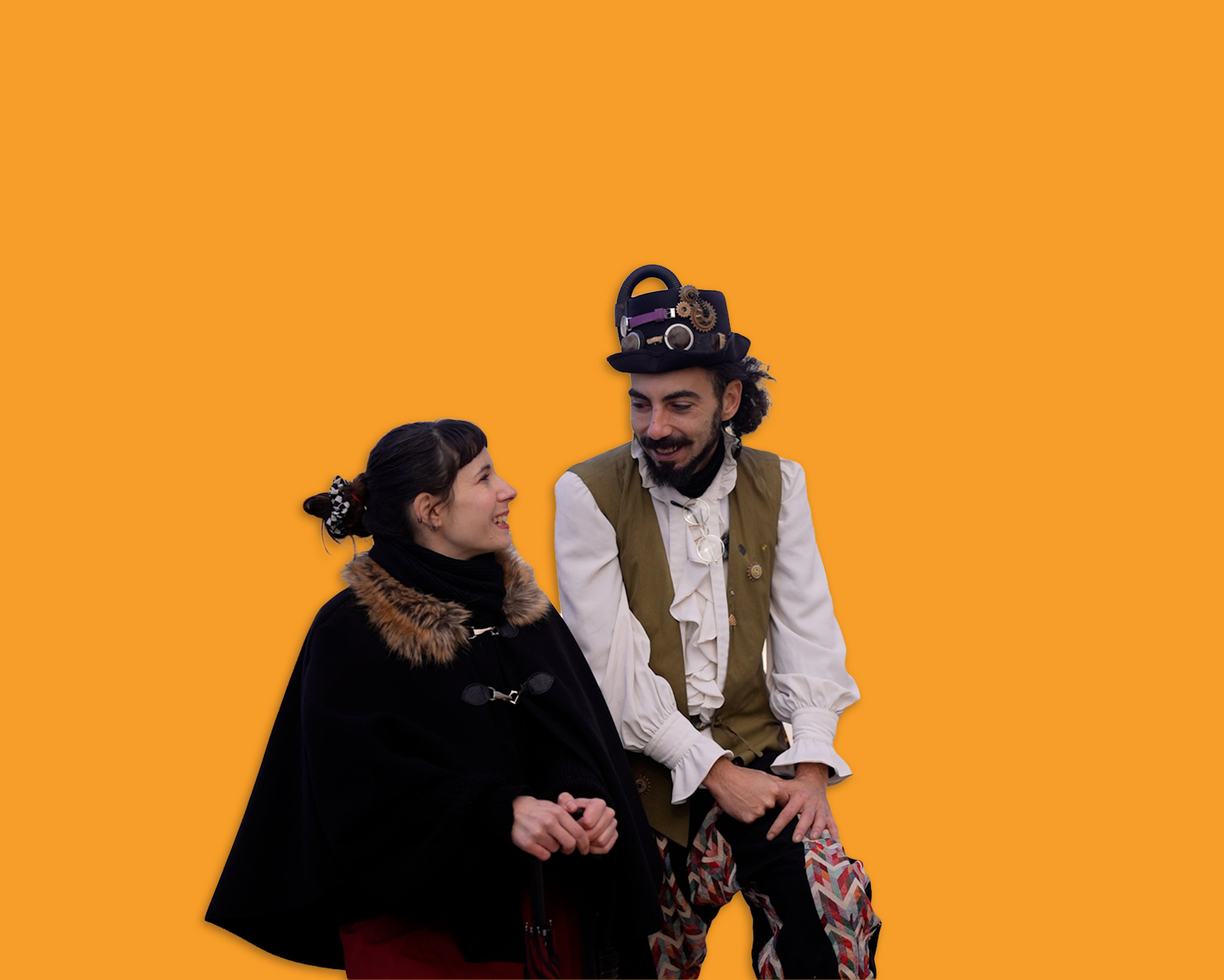
Toledo Errante is a sociocultural project that has been offering a different way to explore Toledo's heritage for the past two years. Founded by Mónica Gómez Lanchas and Emilio Samino Pérez, the initiative combines cultural research and artistic creation to create experiences that go beyond conventional tourism. Mónica holds a degree in Humanities and Heritage and is also a certified guide and instructor. She incorporates historical research into the activities she designs for the project. Emilio, on the other hand, is an actor and puppeteer specializing in mime, physical theater, and clowning. He also makes masks and puppets and is in charge of the project's more artistic side. By joining forces, they found a way to showcase Toledo in their own unique style.
How did the idea for Toledo Errante come about? What personal experiences inspired you to create this project?
Emilio: On one of our trips, we went on a theatrical tour and realized that it was something we could do ourselves. It made us see that we could bring our two worlds together, and we knew that we could tell stories in a unique way. So we started designing a tour, giving it our own voice and vision, and saw that we could bring the idea to Toledo.
How does your personal connection to Toledo influence the project?
Mónica: We had always felt bad about not getting involved in our own city's cultural life. We had traveled so much and done cultural activities in so many cities and towns—just never our own. After spending almost nine years away, working, studying, and training elsewhere, we came back with the aim of settling down and working in Toledo for the first time. We had this dream of creating something together, something different. We wanted to give something back to our city. That's why our tours have an almost sentimental connection to who we are—it's ultimately about our roots.
How do you incorporate activities like theatre, mime, and puppetry into your cultural tours?
Emilio: We try to make our tours as multidisciplinary as we are. At one stop, you might come across a puppet, at another a masked character, and a mime accompanied by live music at the next one. But we always make sure everything fits together and has a connection to the place.
The first thing we do is ask ourselves what the story is, where we want to tell it, who we want to talk about, what we want to show, which landmarks we want to include, what the tour's theme is, and so on. We want every tour to have a consistent theme, so that it's not just about going from one place to the next, but about taking people on a journey. There's a kind of dramaturgy that links the entire tour from start to finish.
Your activities offer experiences that go beyond the typical tourist visit, like the Las olvidadas (Forgotten Women) tour. Can tourism be a tool for social transformation?
Mónica: Las olvidadas is a route that we created and designed to explore the city through the lives of women who were never included in Toledo's history. What we want is for people to come away from the tour with a different perspective. We talk about women most people haven't heard of and who, sadly, aren't even mentioned in history books. Our goal is to recover these stories and give them the recognition they deserve.
Emilio: I think Mónica has done an incredible job with the research, because we're trying to tell the stories of women that hardly anyone in Toledo knows. Every time we finish this tour, people thank us for showing them a side of Toledo they never knew existed.
Mónica: Exactly. We try to shine a light on figures and stories that people aren't aware of. And also on the folklore and legends that are, to some extent, being forgotten or falling out of use. We want to bring them back.
How do you design your routes to avoid crowds while respecting the environment and the local community?
Mónica: We try to steer clear of the busiest streets and main roads. We design routes that are a little hidden—more off the beaten path. One of the goals is for visitors to enjoy the experience of truly "getting lost" in Toledo, which is almost like a labyrinth.
We also keep our groups small. Our routes aren't designed for large crowds. In fact, we don't think you can properly manage a group of 50 people through Toledo. We aim to make every experience more intimate and personal. To us, making our tours sustainable means preserving the city's heritage and supporting its community.
Emilio: I think we show that things can be done differently.
How do you collaborate with cultural organizations, local businesses, and associations in the historic center?
Emilio: Two years isn't a long time, and we still have a lot to do on that front, but we've been working on it from the very beginning. We collaborate with the City Council, local businesses, organizations, and neighborhood associations in the city and surrounding towns. We always make a point of respecting local residents when we're working, and we offer activities they can enjoy too, like during neighborhood celebrations.
Mónica: We don't just work in Toledo, we live in Toledo. We want to be part of the city's cultural life and artistic scene. We want to help build a city we actually enjoy living in, and that's why we work closely with cultural associations, with the aim of building a strong network.
Looking ahead, what do you envision for Toledo Errante, and what new challenges or initiatives would you like to pursue?
Emilio: There are certain needs in the city, and we want to be part of the effort to address them. We'd like to create a cultural activity that focuses more on local residents. We want to be part of spaces we feel are missing. There's no civic center, and there aren't enough cultural spaces or places to do theatre.
We want to get involved in the initiatives that are working to make these spaces a reality—and even create our own, as we have a very clear vision and way of working. But our focus is always on the community, on working together and supporting those who are trying to transform the city. That's our vision for the future: helping to make the city a little better, and yes, creating culture, art, and something more human—more social.