Essentially, photovoltaic glass incorporates materials capable of transforming solar radiation into electricity within the glass itself. Unlike traditional solar panels, these solutions can be transparent or semi-transparent, allowing natural light to pass through while producing energy, as reported in Applied Energy 2025.
The principle is the same as that of any other photovoltaic technology: certain semiconductor materials absorb solar radiation and generate electric current. In this case, the difference lies in the selection of the light spectrum.
The most advanced solutions mainly capture non-visible radiation (such as ultraviolet or infrared) to maintain the transparency of the glass. Technologies such as organic cells, perovskite, and luminescent concentrators are behind these advances.
In this context, the evolution of new materials is key. In fact, innovations such as perovskite solar cells, capable of exceeding 27% efficiency in the laboratory and with potential for flexible or surface-integrated applications, are opening new pathways to developing solar energy beyond conventional panels.
Architectural integration: great potential in buildings
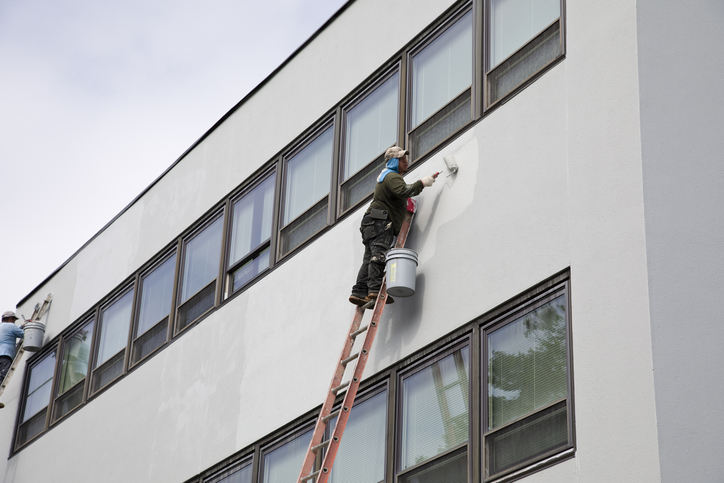
This technology shows the greatest potential in architectural integration. According to the National Renewable Energy Laboratory (NREL), glazed surfaces (windows, facades, or skylights) represent a significant part of building exteriors.
In commercial buildings, the high proportion of glazed surfaces represent a great opportunity to generate energy without the need to occupy additional space on roofs. In addition to generating electricity, these systems can also improve the energy performance of the building, contributing to interior thermal comfort and reducing the demand for air conditioning, thus optimizing efficiency.
For all these reasons, technology in this context, such as photovoltaic solutions that are integrated into buildings, is positioned as a key tool to reduce emissions and advance urban decarbonization.
What challenges does it present for future development?
Despite their potential, photovoltaic glass still faces important challenges that reflects the complexity of its industrial development, such as the rigorous certification processes and reliability tests it must go through.
Moreover, there is a key limitation: the balance between transparency and efficiency. While conventional solar panels usually exceed 20% efficiency, transparent photovoltaic solutions present somewhat lower yields due to the balance between transparency and energy generation. Therefore, it could be said that this balance between performance and transparency is one of the main technological challenges currently faced by this energy solution.
One more piece of sustainable urban planning
Despite these challenges, it is worth noting that progress is continuous and is part of a broader transformation of the energy model. In fact, according to the International Renewable Energy Agency (IRENA), renewable energy accounted for 92.5% of the new global installed electricity capacity in 2024.
In parallel, the development of solutions such as building-integrated photovoltaics responds to a growing trend towards more efficient, electrified, and decarbonized cities. In this regard, the European Commission establishes that new buildings must move towards nearly zero-energy building (NZEB) models, which implies, among other aspects, integrating renewable energy generation into the building itself, including its exterior elements, such as facades, roofs, or glazed surfaces.
This breakthrough joins other innovations that are pushing the boundaries of solar energy. For example, there is now research into developing solar panels that can generate electricity even in the absence of direct sunlight, such as at night. This paves the way for more continuous and flexible energy systems.
As with other solar innovations, the challenge is not only to capture more energy, but to better integrate it into the spaces where we live and work. Because the future of energy isn't just about producing more, but about doing so in a smarter, more efficient way that is integrated into our surroundings.