According to the report by the Institute for Energy Diversification and Savings (IDAE), 7% of Spanish homes' electricity bills correspond to devices that are not in use.
This so-called vampire power or phantom load is more commonly known as "standby" mode. It refers to the energy consumption of devices that remain connected to the power grid, waiting for a power-on command. These devices are on alert but are not in active use.
The Energy Institute, which is part of the Ministry for the Ecological Transition, estimates that the average Spanish household consumes 3,487 kWh of energy per year. The sum of the impact of unused connected devices amounts to between 245 kWh and 300 kWh, nearly one-tenth of the total. Therefore, it is a continuous drain that increases consumption on the grid without practical use, and detracts from domestic energy efficiency.
The impact of "stand by"
This vampire power has an economic impact. The SPAHOUSEC III study by IDAE points out that vampire consumption in an average home can translate into an annual cost of between 150 and 250 euros. Although the European Regulation 1275 of 2008 already limited standby consumption for new devices to 0.5W, older devices and the accumulation of peripherals end up increasing it.
Not all devices have the same impact. Research from the International Energy Agency (IEA) breaks down the most common types of standby power consumption and points to television decoders as "little vampires"; they can consume 15-20W just by being plugged in. But they are not the only ones. For example, a WiFi router and a connected printer on standby can add up to more than 50 kWh annually.
The list extends to other common smart devices in the living room such as video game consoles and sound systems with quick start. In the kitchen, microwaves, automatic coffee makers, and even digital clocks and preheating systems also maintain a constant demand of between 2 and 4W.
Reducing vampire power: an ally for boosting decarbonization
The National Integrated Energy and Climate Plan (PNIEC) 2021-2030 is a strategic tool of the Spanish government for addressing decarbonization. Among its objectives for the current decade, the plan highlights that the energy transition involves "smart demand management."
Eliminating vampire power optimizes the domestic economy while reducing pressure on the national electrical system, in line with the energy saving guidelines set out in the plan itself, the European Commission's guidelines, and the United Nations Sustainable Development Goals.
How to end vampire power
Simple gestures like flipping the switch on a power strip are key to eliminating this type of consumption. The International Energy Agency (IEA), consumer organizations such as OCU, and public administrations like the Junta de Andalucía emphasize these four direct methods of reducing vampire power.
- Group devices that are used simultaneously (television, console, router, decoder, etc.) on the same power strip with a switch allowing for the total power cut to be cut for several devices at once, ensuring zero real consumption.
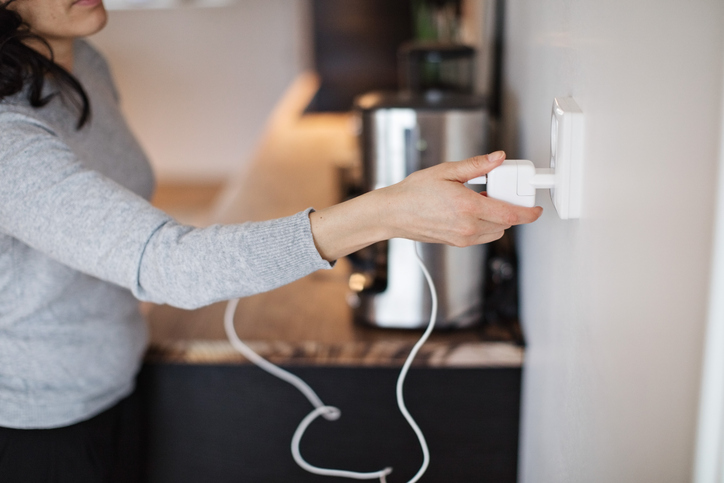
- Choose smart plugs: they allow you to program, even remotely, the complete shutdown of devices during the night or when you're away, such as during the workday, on weekends, or when you're on vacation. They also allow you to regulate consumption, such as that of an electric water heater for domestic hot water, and optimize family consumption during hours of lower electricity cost.
- Manually disconnecting devices from the grid: Unplug cell phone chargers and computer peripheral equipment (speakers, printers, scanners, etc.) when they are not in use.
- Energy labeling: When replacing appliances, consider options with low-power consumption modes in standby, in accordance with current European regulations.
Ultimately, limiting or eliminating vampire power is an exercise in energy literacy. It's not just about individual savings; it's also about the collective impulse to optimize the use of resources in favor of a more resilient, sustainable, and efficient electricity system.