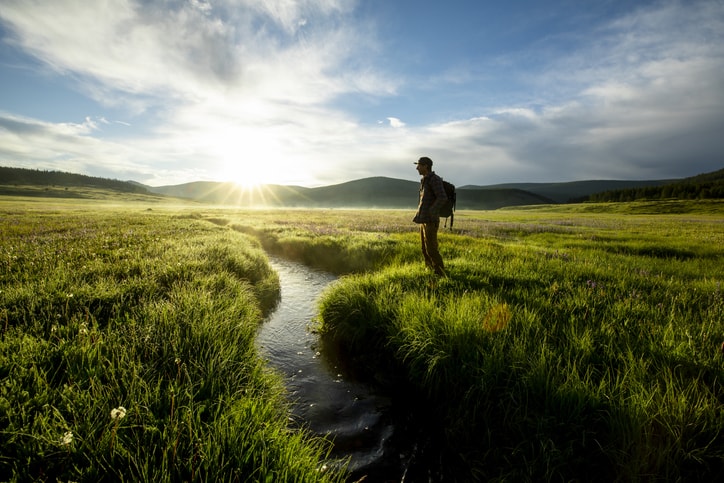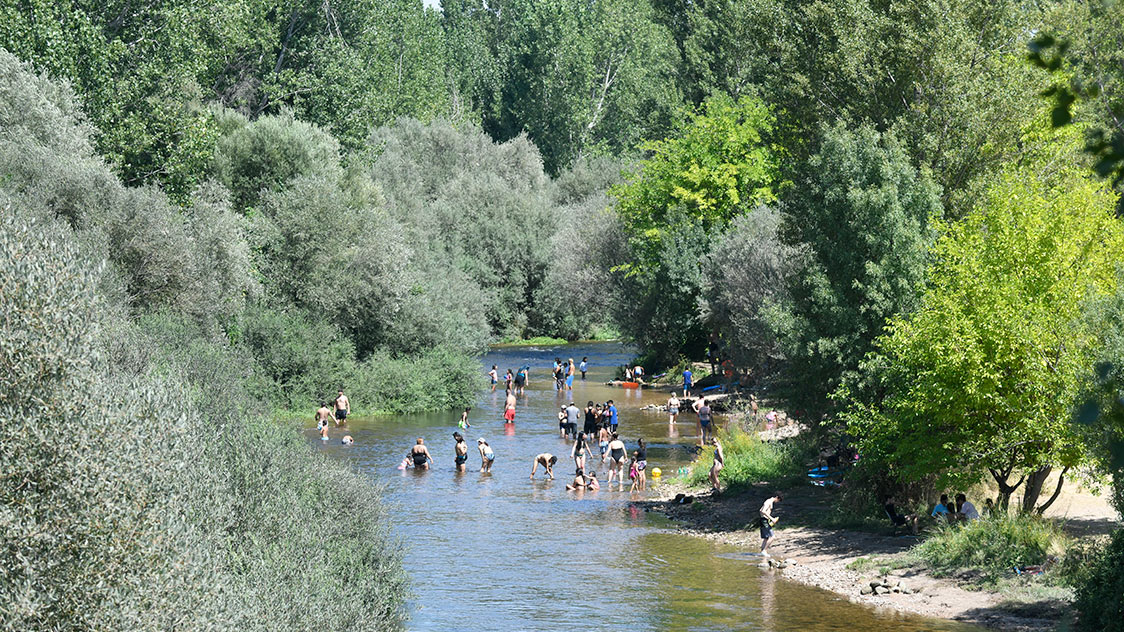
Lakes, lagoons, and rivers provide the perfect setting for a summer swim surrounded by nature. These natural pools are an increasingly popular alternative to a traditional beach vacation. The combination of shade, fresh water, and pristine nature is irresistible for summer enjoyment.
River and inland tourism reduces the need for long journeys and helps minimize the carbon footprint. Additionally, it decentralizes tourism, boosts the local economy, and fosters ecosystem conservation and care, and an attachment to the region.
Moreover, these natural spaces are usually the starting point for activities such as hiking, birdwatching, and climbing. Thus, natural swimming pools can be used for practicing sports or for spending a leisurely day in their waters and surroundings.
Spain has many examples, both inland and along the coast.
Explore some of the best natural “pools” in Spain
Spanish geography features a huge variety of inland and coastal water areas surrounded by forests, gorges and volcanic rocks.
According to 2024 data from the Ministry of Health, there are 204 registered sampling points of continental waters, including ponds, reservoirs, riverbanks, lakes, springs, streams, and rivers. Spread throughout the country, there are spectacular and unique examples, both in terms of their water and their surroundings. Some of the most notable are:
- In Galicia, the “land of a thousand rivers,” the confluence of these creates natural pools, such as the Pozas de Mougás, where it is best to bathe after the rainy season, when the water flow increases, creating a colorful contrast with the gray rocks and green plants. You can also walk along the different waterfalls since the route is part of the Portuguese Way of St. James along the coast. Further north, on the Costa da Morte, are the Caldeiras do Castro natural pools and countless waterfalls (fervenzas), cataloged by Galicia Tourism, where you can cool off.
- In the Basque Country, those who prefer cold water can visit the Pozas de Usako, located near Oñati (Guipúzcoa). You can reach them on foot or by bike via a greenway from the urban center and enjoy the landscape along the way. The bathing area is located in front of a small waterfall, and the water temperature ranges between 14 and 16 degrees Celsius.
- The natural pool of Fontcalda in Tarragona stands out because it combines mineral-medicinal waters with a 14th-century sanctuary. Pine forests surround the religious complex, forming a unique enclave that differs from other pools where nature predominates.
- The natural pool of Las Presillas is located in the Sierra de Guadarrama, in the northern part of the Region of Madrid. Meanwhile, in the south of the Region is the Alberche Beach in Aldea del Fresno. Located next to the river of the same name, it is a good option for families thanks to how shallow it is.
- In Ávila, natural pools in Arenas de San Pedro are surrounded by green areas and are suitable for all ages. A small dam regulates the water of the Arenal River, creating two swimming pools: one with a depth of about two meters and another with a depth of just half a meter for children. Nearby, the Charco de la Chiva has a barbecue area for a more complete summer experience.
- In the province of Cáceres, the cherry blossoms of the Jerte Valley make way for the natural pools of the Garganta de los Infiernos after spring. While at other pools the greenery of the surrounding landscape stands out, here, it is the granite rocks through which the water flows. In some places, river erosion has created large pools.
- The Lago de Sanabria in Zamora (Castile and León) cannot be missing from a list of natural swimming pools. At 369 hectares, it is the largest lake in Spain. It is about three kilometers long and 1.5 kilometers wide, with a maximum depth of more than 50 meters. It has several sandy beaches where swimming and sports activities such as paddle surfing, sailing, and diving are allowed.
- The Canary Islands archipelago has several examples of this phenomenon, which is interesting because they are formed by volcanic rock. The same force that shaped the islands is the protagonist of the natural pools of El Caletón in Garachico, Tenerife, which formed after the 1706 eruption in the town. Nearby, in Gran Canaria, the volcanoes shaped the Agaete pools. Connected by volcanic tubes, these pools, like their Tenerife counterparts, have calm waters where you can enjoy the surroundings with your family.
Phytodepuration in natural swimming pools
One of the most intriguing aspects of these natural spaces is how the pools are maintained, given that many of them are “wild” environments—that is, they were not created by human intervention. The natural process responsible for “cleaning” these pools is phytodepuration. In this process, aquatic plants promote the growth of microorganisms that help oxygenate and regenerate the water. And not only that: they break down organic matter and convert it into nutrients for the plants themselves.
According to 2023 data from the Ministry of Health, most of the waters in inland Spanish provinces were rated as “excellent” or “good.” The National Bathing Water Information System (NÁYADE) collects data on the water quality of these natural pools as well as maritime beaches.
Ultimately, enjoying these river paradises is a privilege, with the sounds of flowing water and birdsong as your soundtrack. The best way to ensure that Spain's natural pools continue to be living, crystal-clear refuges for future generations is to respect the local wildlife and help preserve the beauty of the environment.