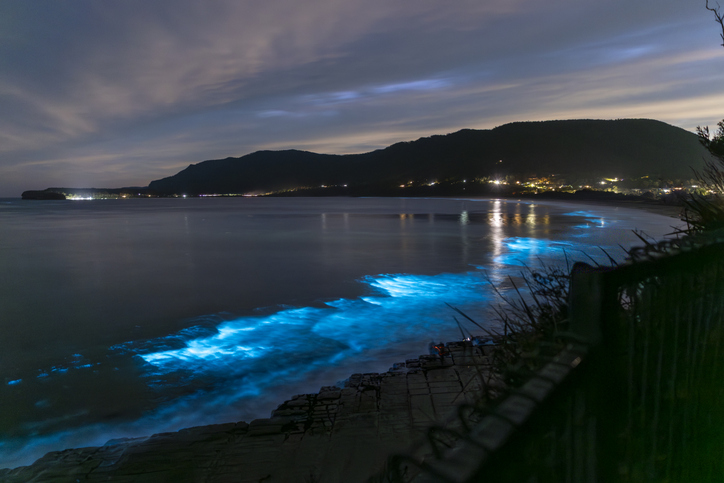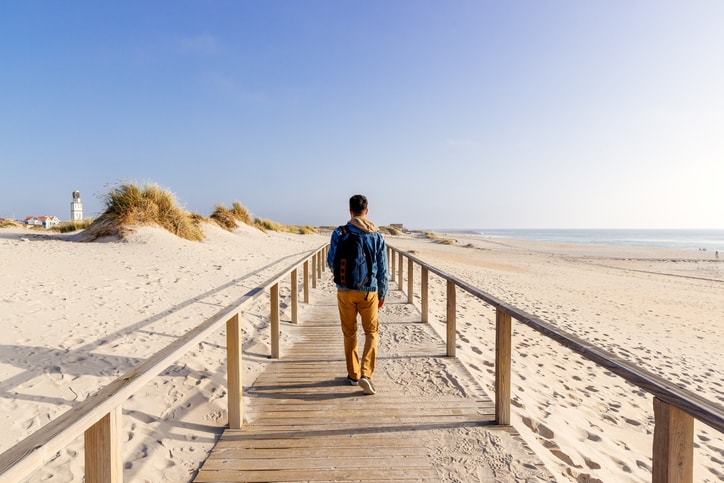
Spain has almost 8,000 kilometers of coastline throughout its territory. A peninsula with two seas, an ocean, and two archipelagos that shape a unique coastal diversity. From the virgin beaches of northern Galicia to Gata, and from the coves of Girona's Costa Brava to the infinite sands of Huelva and Cadiz, passing through the Mar Menor, the cut-off coast of Menorca, Ses Illetes (Formentera), Famara (Lanzarote), and Playa del Inglés in the Canary Islands.
This immense natural wealth and their care, have once again earned the international blue flag recognition from ADEAC, the Association for Environmental Education and Consumer Protection, which has been awarded since the creation of the European program in 1987. This distinction has established itself as the most reliable global indicator to assess the ecological health and services of swimming areas at the international level.
Far from being merely aesthetic or tourist attraction, this award promotes rigorous environmental management in municipalities to protect marine biodiversity and ensure tourist safety under criteria of water quality, sustainable environmental management, services and infrastructure, and educational and informative guidance. In this context, Spain has solidified its global leadership by achieving a new record of 794 'blue flags'.
They include 677 beaches, 111 ports, and six vessels. They represent 15% of the global total and are 44 more distinctions compared to 2025, marking an upward trend in the commitment of public administrations, particularly the premises, which are more attached to the territory.
The regional ranking is led by the Valencian Community with 151 flags, having managed to balance sustainability and attendance; followed by Andalusia (143), the community with the longest coastline; and Galicia (118), in third place with the uniqueness of its estuaries. In fourth position is Catalonia (101).
Other communities in the northern peninsula complete the list, such as the Principality of Asturias (16) and Cantabria (11). The case of Extremadura stands out uniquely, an inland region that records eight blue flags on river beaches for the environmental excellence and accessibility of its reservoirs.
Whether on the coast or further inland, along the Atlantic, the Mediterranean, or river routes, here is a suggested itinerary featuring some of the Blue Flag beaches you can visit this summer:
- Doniños (A Coruña). A truly spectacular stretch of wild, crescent-shaped beach between the Prior and Prioriño headlands, in the northwest of the peninsula. Two kilometers of fine white sand opening onto the Atlantic, with a view of the Tower of Hercules. It stands out for its coastal lagoon, its rich biodiversity, the Pillara dune protection area, and waves that are ideal for water sports.
- Playa de los Franceses (Ourense). At an elevation of 800 meters, nestled between mountains, the river beach of A Veiga is flying the Blue Flag for the first time this summer, marking a historic milestone for inland tourism. It thus becomes the first and only such beach in a landlocked Galician province; it is located very close to an astronomical observatory where visitors can stargaze without light pollution.
- Porcia Beach, Asturias. A gem in western Asturias where the Porcia River flows into the Cantabrian Sea. A hidden sandy beach notable for its rocky islets that break the waves and its Atlantic dunes, home to a rich variety of birdlife. Its newly awarded Blue Flag recognizes a semi-wild rural setting that is in perfect harmony with the forests that surround it.
- Los Locos Beach (Suances, Cantabria). Sheltered by imposing vertical cliffs, this Cantabrian beach is a spectacle of natural power and golden sand opening out onto the Cantabrian Sea. It is a world-renowned mecca for surfers due to its constant, strong winds and tides, set against a rugged, wild coastline of great geological significance.
- Moskurio Beach - Garaio Norte (Barrundia, Álava). Another example of an inland beach that has achieved excellence. Nestled at the foot of the mountains of the Basque interior and surrounded by vast green meadows, this inland oasis lies on the shores of the Ullibarri-Gamboa Reservoir. It offers a unique swimming experience in calm waters amid wetlands inhabited by herons and waterfowl.
- Playa Sant Antoni (Cullera, Valencia). A reference in the Valencian Community, it's known for its fine sand, the excellent quality of its waters, and its adapted accessibility since 1987. It has held the distinction since it was created 40 years ago.
- Cala Lanuza (El Campello, Alicante). It earned its first Blue Flag in history, in the area with the highest concentration of certified beaches in Spain. It stands out for its natural surroundings, its clean and clear waters, and its scenic beauty, combining sandy and rocky areas in a spot that is highly prized by both residents and visitors.
- Llafranc Beach (Palafrugell, Girona). One of the jewels of the Costa Brava that combines the charm of a traditional infrastructure, and boats on the sand, with rigorous environmental management and care of its coastal surroundings, through the urban protection of the Caminos de Ronda and regulation to preserve the meadows of posidonia oceanica.
- Playa Dulce de Orellana (Orellana la Vieja, Badajoz). A great emblem for Extremadura, which has been a pioneering region in demonstrating that a reservoir can meet the highest standards of safety, cleanliness, and sustainability and be the first indoors beach with Blue Flag in Spain. It stands out for its rich biodiversity in a Special Bird Protection Area (ZEPA), where responsible tourism is actively promoted through the Environmental Interpretation Center.
- Playa de la Llana (San Pedro del Pinatar, Region of Murcia). A wild landscape within the Las Salinas y Arenales de San Pedro Regional Park. Fine sand and warm waters in a sanctuary for flamingos and shorebirds that inhabit its protected wetlands. The flag recognizes the balance between a natural area of high ecological value and sustainability—Las Salinas Visitor Center—rewarding management practices that prioritize the conservation of its primary dune system and non-invasive manual cleaning to protect native flora.
- The Beach of the Parador de Mazagón (Moguer, Huelva). A vast, unspoiled paradise within the Doñana Natural Area. Flanked by a cliff face of fossil dunes and surrounded by pine forests, it stands out for preserving its natural processes almost entirely intact. The designation recognizes a model of sustainability that uses wooden walkways to provide services and universal accessibility without damaging a protected coastal ecosystem.