
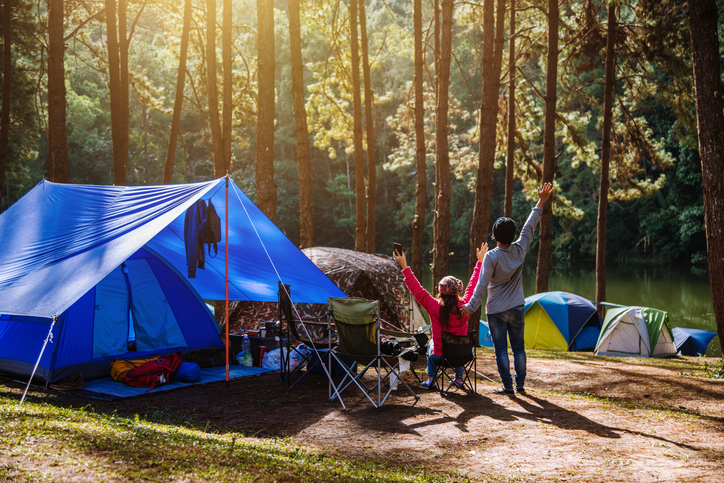
Sleeping by the sea, waking up among pine trees, and dining al fresco are still some of the greatest attractions of camping. Spain has a strong camping culture, with approximately 1,250 campgrounds offering nearly 765,000 campsites, located mainly in Catalonia, the Valencian Community, and Andalusia.
In 2025, according to data from the INE and the Spanish Federation of Campgrounds (FEEC), more than 6.5 million tourists chose this option for their summer vacation. At a time when the tourism industry is seeking to reduce its environmental impact, campgrounds have become a prime example of how to integrate energy-efficiency solutions into everyday life.
Solutions by and for nature
A campground functions much like a small community, as it features accommodations, common areas, restaurants, swimming pools, and other services that consume energy for much of the day. Managing that consumption efficiently not only saves money but also reduces emissions and moves us toward a more responsible model of tourism. This involves optimizing energy efficiency and water management, reducing waste, and promoting the conservation of the environment and local biodiversity.
A notable example is the La Ballena Alegre Camping Resort on the Costa Brava. Under the motto "Being natural also means being responsible," the resort embodies a philosophy centered on enjoying the environment without compromising its care. According to its environmental policy, 100% of the electricity it uses comes from natural and renewable sources, supported by solutions such as photovoltaic panels, geothermal energy, and solar thermal panels. These measures have enabled the resort to reduce its CO₂ emissions by 23,000 metric tons (total), according to the resort's calculations.
Its commitment also extends to food, with the use of locally sourced ingredients that ensure the quality, traceability, and proximity of raw materials. In this way, the campground involves both suppliers and customers in a more responsible form of tourism.
The sun: critical to the sector's transformation
Among the most widespread solutions in the sector is the installation of solar panels for personal use. In a country with as many hours of sunshine as Spain, photovoltaic energy makes it possible to generate part of the electricity needed by facilities and reduce dependence on external sources.
Facilities such as Camping & Resort Sanguí Salou have already incorporated solar energy into their environmental strategy. The resort uses solar thermal panels to generate hot water and photovoltaic panels to produce electricity. Collectively, its solar installations cover 2,730 square meters across various locations on the resort grounds and result in annual CO₂ savings of 60,000 kilograms. In a large tourist accommodation facility, these types of measures are key to making better use of available resources and moving toward more efficient energy management.
Another notable example is the Olite Campground in Navarre. It optimizes its 400-kW photovoltaic system using smart batteries, enabling it to store solar energy to meet peak demand and improve personal use. This storage system reduces dependence on the conventional grid, lowering the campground's carbon footprint and reducing fixed costs.
The challenge for campgrounds is to demonstrate that comfort and energy efficiency can go hand in hand, as every solar panel, every energy-saving system, and every effort to raise awareness helps reduce the impact of a form of travel that has always been closely linked to the local area and nature.