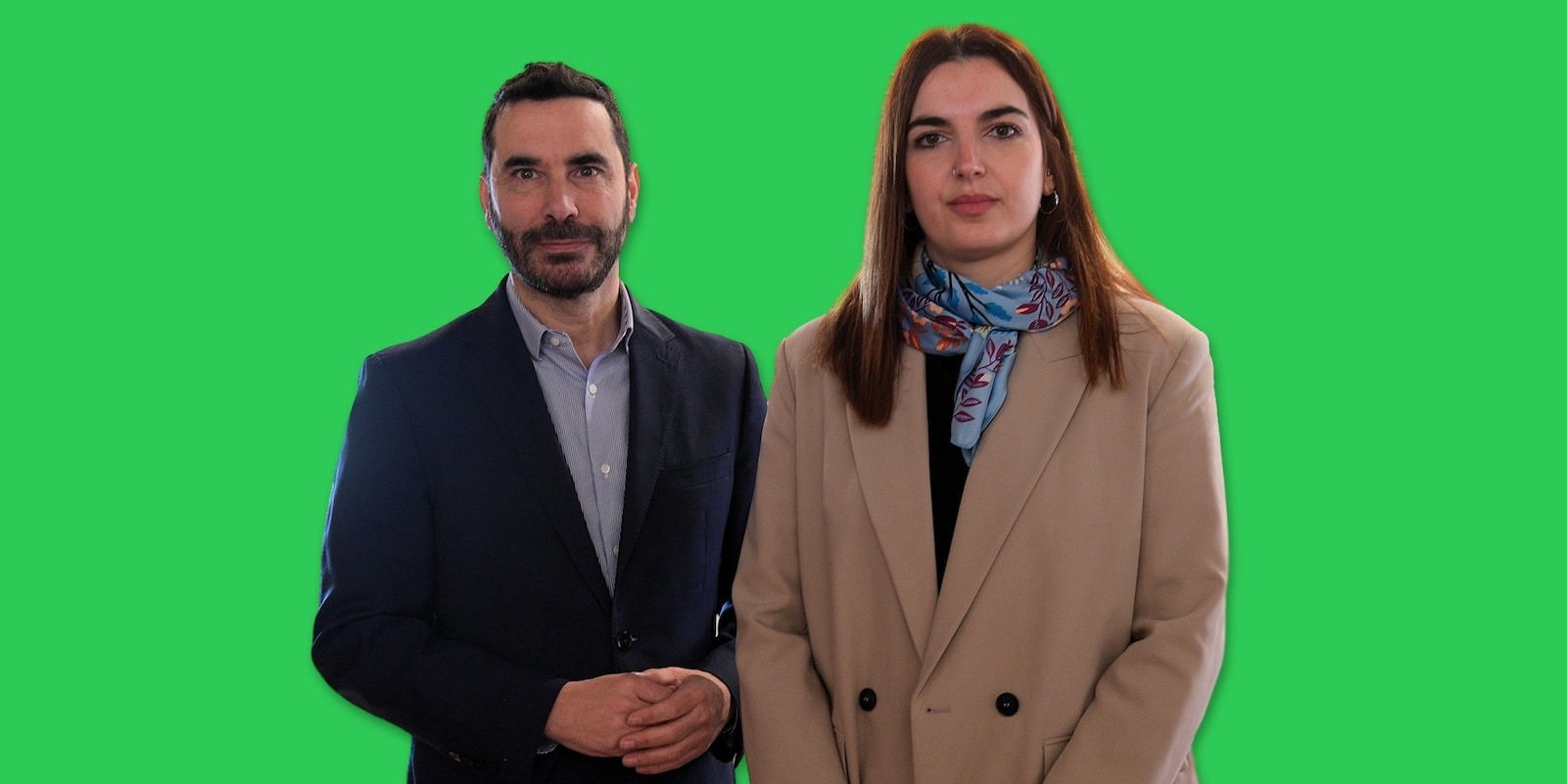
Brañosera, a village in Palencia, symbolic for having the oldest town hall in the country (with 12 centuries of history behind it), shares a need with so many others: to reverse the trend of depopulation. How? Through the sustainable management of its nearly 5,700 hectares of pasture and communal mountains to stimulate the bioeconomy. With ‘firefighter goats' and municipal herds, reforestation and agritourism, in addition to an original Escuela de Pastores (School for Shepherds). Carlos Carrera and Natalia Torrecilla, General Director and Social Innovation and Employment Project Officer, respectively, at Fundación Ávila, explain it to us as one of the institutions that promotes the Brañosera Reactiva project.
What are the main objectives of Fundación Ávila?
Carlos Carrera. It arose as a response to the need to preserve, revitalize, and promote the cultural, social, and territorial heritage of Ávila, both the city and province, from a contemporary perspective, as a space for action and reflection in order to connect tradition and innovation, memory and development. We carry out projects in four areas: culture, environment, social issues, and labor issues.
How is this vision integrated into the Reactiva Brañosera project?
Natalia Torrecilla. The project, which concluded in December 2025, addressed the deterioration of mountain landscapes and communal forest and pasture systems primarily due to the loss of rural populations, changes in livestock and forestry farms, and the abandonment of traditional practices such as transhumance and grazing. This implies lost economic opportunities and increased risks, such as fires. We have sought to reverse this trend through a sustainable management model for forests and pastures based on research, knowledge, and action on the ground, in order to reactivate the bioeconomy and provide employment opportunities and development.
Before explaining the details, why in Brañosera?
Natalia. Because of its symbolism, since it is considered the oldest town hall in Spain, which dates back to the 9th century; and because its natural and social characteristics are representative of many other rural municipalities. It is a very small town, but with almost 5,700 hectares of grass and communal mountains. In the past, it received a lot of transhumance from Extremadura and the livestock cleared the land naturally. Now this has disappeared or has been greatly reduced, so it accumulates a very high forage density. The idea of the project is to demonstrate that the regions of Ávila and Palencia, with similar characteristics, share needs and, therefore, the same type of solutions.
What do those shared solutions consist of?
Natalia. We combine complementary fields. First of all, the study and diagnosis of the landscapes, the characterization of the forest mass and the pastures, with monitoring of environmental data that supports the technical and scientific criteria. Based on that knowledge, we manage selective clearing and reforestation in strategic areas, and we introduce herds of goats in transhumance to balance the forest mass and prevent fires. These interventions also contribute to recovering soil that was degraded, improving the water cycle, conserving biodiversity, and increasing the ability to capture CO2.
We apply a coordinated forest management model. There are areas where neither machines nor people can reach to clear, but goats can. That is where animal clearing intervenes to complement the mechanical, create firebreaks and access roads in areas with a high density of brush accumulated over the years.
How does the economy benefit from areas that need to generate employment to retain their population?
Natalia. This is another fundamental area, promoting job opportunities through landscape management, from new agritourism activities to fostering the livestock sector by improving infrastructures or through the School for Shepherds. For example, tourists could enjoy a day of transhumance with the shepherds and their livestock, or learn how goat cheese is made. Furthermore, we have shared all those experiences and knowledge with the people of Brañosera in order to highlight rural resources with many untapped opportunities.
The School of Shepherds is a project that draws a lot of attention. What does it consist of, and how is it framed in the integral management of the environment? What is the profile of the participants?
Natalia. It is a very promising experience. In fact, although the third edition has finished [two have been held in Ávila, one in Palencia, and the foundation is studying the possibility of organizing others], we are still being contacted by people who want to participate. We’ve developed a theoretical and practical course on extensive sheep and goat livestock farming, with professional shepherds who contribute their herds and knowledge to train the students. A total of 63 people have participated with very interesting and diverse profiles: the majority are very young, under the age of 25; more than half are women; we have included several Venezuelan immigrants; and also a person with a disability. And not only from Ávila or Palencia, but also from Burgos, Extremadura, the Balearic Islands... There are quite a few agricultural training students and digital natives looking to combine teleworking or some other business with a small livestock farm to settle in a town. Therefore, one of the key elements is the use of technology, such as the use of GPS collars and mobile applications to monitor a herd within a controlled perimeter. Technology is key to making the job more bearable. In fact, when they finish the course, they stay in contact, share channels, and help each other when some decide to take the step and go professional.
In addition to your work at the foundation, you are the mayor of a town in Avila, and you know rural needs well. What is the most valuable thing you have learned from the School of Shepherds?
Natalia. The knowledge of shepherds, their understanding of the environment, the seasons, the stars, the animals, how they manage the lambing season… This traditional knowledge is not learned anywhere else. And if we did not have the shepherds who have passed it down, we would be very lost, especially in extensive livestock farming.
Another experience that has surprised us is that associations interested in creating municipal herds so that the whole town can manage them, thus cleaning and clearing the surroundings.
The goal of Reactiva Brañosera for it to transcend the town itself. What is the key that can inspire or guide other municipalities?
Natalia. The cooperation between entities, because in addition to the Fundación Ávila, the University of Valladolid, the Brañosera Town Council, and Fundación Santa María la Real also collaborated, all supported by the Fundación Biodiversidad, of the Ministry of Ecological Transition and Demographic Challenge. Different entities have joined forces to work together on a strategic plan, turning this project into a global one with good results.
Carlos. I think we have managed to integrate this project into society, into the town of Brañosera, putting ourselves in their shoes to understand their problems, what the shepherds, farmers, and foresters there told us. To evolve from an idea we had, a very big one, and to shape it in order to seek other solutions for other projects we have encountered.