The symbiosis between living organisms (plants, flowers, seeds, etc.) and pollinators dates back some 100 million years. It is one of the most fascinating milestones in evolution and a strategic, sustained partnership that has enabled diversification on Earth. In other words, without bees, butterflies, flies, and even ants, our planet would be completely different and would not exist as we know it.
Why? Without insects, birds, and mammals to transport pollen, most terrestrial ecosystems would never have flourished. From a biological perspective, as noted by centers from the Spanish National Research Council (CSIC), such as the Spanish Royal Botanical Garden with its SOS Polinizadores educational project or the Doñana Biological Station, pollinators act as architects of the landscape.
By choosing which plants to visit, pollinators determine which species thrive and how vegetation is distributed across the landscape, which in turn forms the basis for the survival of all other animal species. They also drive genetic evolution in plants, leading to new varieties that are more resilient to environmental changes.
The role they play in our food supply is even more important. According to the Food and Agriculture Organization of the United Nations (FAO), 90% of flowering plants and 75% of the world's food crops depend on animal pollination. In other words, 71 of the 100 crops that provide 90% of the world's food are pollinated by animals. Without this dynamic, virtually invisible pollen "transport" service, the system would be seriously compromised.
What do we know about pollinators?
Although bees are the best-known pollinators, in reality a whole host of insects perform this function that is so vital for biodiversity and food production. The main groups are the Hymenoptera (bees, wasps, and bumblebees, which are especially valuable in cold climates) and the Lepidoptera (butterflies and moths).
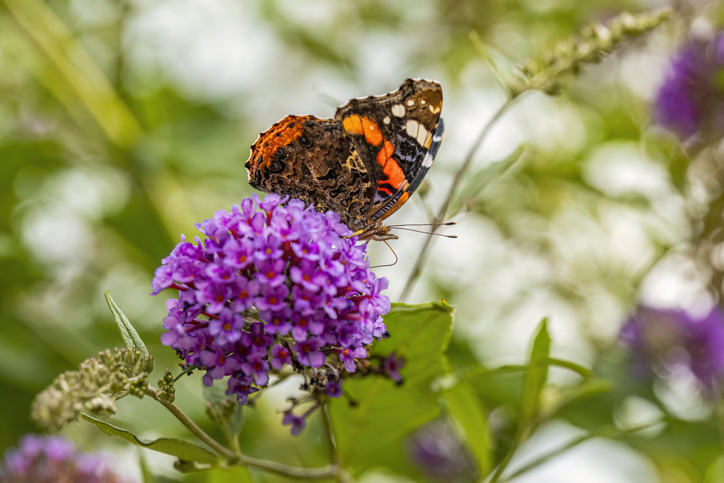
Pollination is a continuous process that never stops, although it reaches its peak in the spring. Butterflies, for example, which are known as incidental pollinators, work during the day and transport pollen accidentally as they search for nectar for themselves, unlike bees, which actively pollinate to feed their young. Moths, on the other hand, are nocturnal pollinators and work at night. As for butterflies, although seemingly fragile, they can travel surprisingly large distances, they promote botanical diversity, and they can access deep flowers thanks to the length of their proboscis.
The third group is the Diptera, which includes flies and hoverflies, similar to so-called fruit flies, whose role is essential in alpine and arctic regions where access and acclimatization are more challenging. And finally we have the Coleoptera (beetles), considered the first pollinators in history. Ants also help transport pollen and seeds of certain species.
City pollinators
They live all around us in treetops, gardens, and rooftops, as well as among the streets and asphalt. The presence of bees, butterflies, and hoverflies in cities is, in fact, a bioindicator: they filter pollutants, act as an early warning system by detecting the presence of heavy metals, and serve as sentinels of biodiversity as their decline is the first sign that an ecosystem has lost its ability to self-regulate. Furthermore, by promoting the reproduction of urban flora, pollinators also help mitigate the heat island effect generated in urban environments.
In this context, the installation of specific infrastructures for wildlife is a growing trend in urban planning. It's not just about bees; many cities are installing nesting boxes for birds such as great tits or blue tits that act as natural pest controllers, as well as shelters for bats, essential flying mammals that can consume thousands of insects in a single night and also serve as pollinators in various climates.
Amsterdam Sustainability is one of the best examples of this. The city didn't just plant flowers, it turned bus stop roofs into gardens and encouraged the widespread installation of insect hotels. This network of microshelters has turned the city into a sanctuary for species once thought to be extinct, and today it is a model for other cities.
Buzz lines
In the document A new deal for pollinators, 2023 — an update to the 2018 strategic agreement aimed at halting the decline of wild pollinating insects — the European Commission highlights that urban green spaces reduce citizens' stress levels and improve the resilience of infrastructures against possible flooding.
One of the goals set forth in that report for 2030 involves the creation of so-called buzz lines: a network of ecological corridors across Europe that connects fragmented habitats, allowing species to move about and find refuge. One example in Spain is a pioneering corridor connecting pollinator populations between the Castle of Puebla de Sanabria (Zamora) and the Castle of Bragança in Portugal, while the Autonomous University of Madrid is launching the BeeConnected SUDOE project (2025–2028) to ensure that pollinators can flow freely between fragmented landscapes in Castilla-La Mancha.
Protecting pollinators is now a priority in urban planning, driven by European-level public policies aimed at promoting food security and sustainability. Therefore, ensuring the future of these tiny insects — the "guardians of biodiversity" — ultimately means fostering balance on our planet.