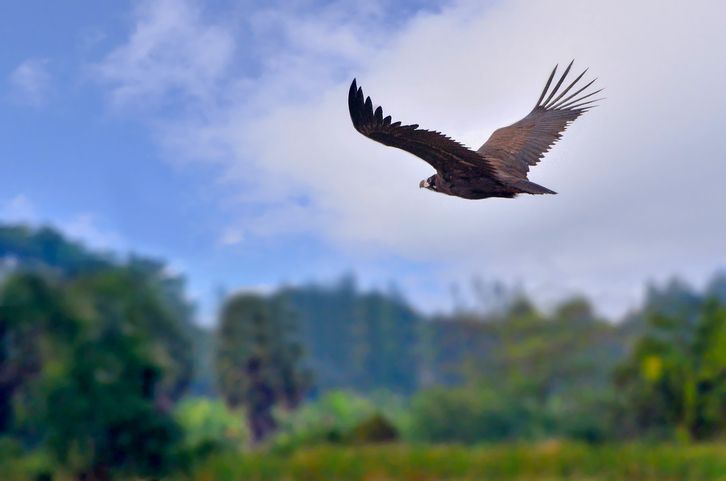
Is it animal instinct, a sixth sense, or an accurate premonition based on environmental cues that humans ignore or simply cannot perceive? This has been an open debate for centuries, firmly rooted in the collective imagination despite a lack of scientific proof, yet widely believed in many regions. It attributes to wild and domestic animals the ability to anticipate natural phenomena such as rain, shifts in wind patterns, avalanches, or earthquakes.
What modern science shows, supported by recent research, is that animals do not predict the weather in a reliable way, as a meteorological model does, drawing on disciplines such as physics and mathematics and even using satellites and highly advanced AI tools. Moreover, weather-related phenomena involve levels of uncertainty and variability that cannot be determined with absolute precision.
That said, there is evidence that animals are extremely sensitive to subtle environmental changes that precede short-term weather shifts. In other words, they do not predict them, but they do perceive them. They act as bioindicators because they can process physical stimuli that humans tend to overlook, such as changes in barometric pressure or humidity detected through smell.
Behavioral changes
So how do they show it? Each species does so using its own mechanisms, with one common denominator: changes in behavior. These are physical responses triggered by what their senses register as imminent environmental changes.
Many bird species, for example, respond to pressure changes that typically precede storms by altering their flight patterns or hunting routines in their habitat. A notable study published in Scientific Reports found that the behavior of certain birds, such as the veery thrush, can correlate with seasonal weather patterns. This is not conscious of prediction, but an evolutionary response to recurring environmental conditions. In this way, they can detect ultrasounds that are imperceptible to humans and that can warn them of events such as a tornado.
On land, insects such as bees and ants are known to anticipate pressure changes associated with incoming rain, as if guided by a natural barometer. As a result, they retreat to the hive or the anthill.
Reptiles and amphibians share another trait that makes them especially responsive. They are ectotherms, or cold-blooded animals, meaning they depend on external heat sources for survival because they do not generate internal heat. Their metabolic activity is directly linked to environmental conditions. This allows them to respond even earlier to changes in weather by modifying their behavior. They are often more active before rainfall in order to absorb more heat from the sun (heliothermy).
As for mammals and other wildlife, reports from the FAO, the Food and Agriculture Organization of the United Nations, show that it is also common for them to instinctively seek shelter ahead of abrupt weather changes to improve their chances of survival.
The smell of rain and vibrations at sea
Dogs and other domestic animals can detect the smell of ozone produced by lightning or rising humidity levels in the air well before rainfall begins and may, for example, bark as a form of alert. Fish and sharks are also able to perceive minute changes in hydrostatic pressure, prompting them to seek refuge in deeper waters.
Finally, while animals cannot predict the weather, they can perceive it more intensely, and science is increasingly working to harness this natural sensitivity to gather more accurate data. One example comes from researchers at Yale University, who fit animals such as elephant seals or storks with electronic tags that are respectful and non-invasive. These devices are used to monitor ocean salinity and other atmospheric conditions in real time. It is a biological lens that complements the scientific data provided by satellites and next-generation climate models.