Almost all modern appliances incorporate an ECO program, button, or mode. Behind these three letters are years of research and development in R+D&I to implement a more sustainable consumption philosophy that saves finite resources such as water, economizes energy, and also reduces consumer bills. Three issues that are evident in the latest IEA Energy Efficiency 2025 report and the energy efficiency in Spain report from IDAE, the Institute for Energy Diversification and Saving of Energy of the Ministry for Ecological Transition, the public entity responsible for promoting energy efficiency, renewable energies, and the energy transition.
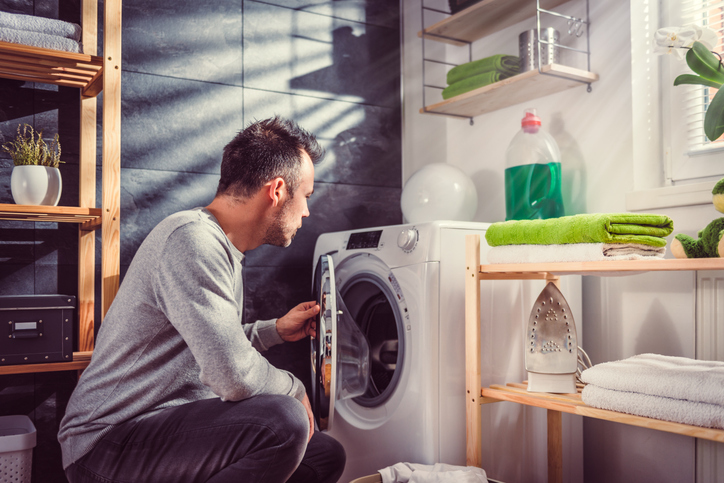
However, there is still a myth that occasionally persists, which can be summarized as follows: if the washing machine takes three hours in ECO mode, it consumes more than in a quick program. But, reality is just the opposite. The secret of efficiency, in this case, is not in the clock, but in the thermometer. In an appliance, 90% of the electricity required is used exclusively to heat the water. ECO mode breaks this barrier with a simple formula that can be summarized as less heat but for longer. As a specific example, when opting for a cold program for washing, around 30°C, the detergent needs more time to act. However, the long cycle compensates for the lack of heat so that the items are equally impeccably cleaned. In this way, ECO mode's extra time allows soap enzymes to break down dirt more extensively in both clothing and dishes.
The same happens with the dishwasher, the dryer, the iron -less heat but more constant and prolonged-, the television (with energy-saving modes) and even with modern showers, which include an ECO mode that, in this case, adjusts the water pressure to optimize it without waste.
Another difference highlighted by new ECO programs is that they incorporate AI. Through smart filters, they are able to adjust the exact amount of liters of water necessary based on the load, which they weigh and calibrate to set the formula. The faucet for sinks and showers already incorporate sensors that adjust the flow of water through the valves to add liters of savings for the planet and for your wallet.
How to measure ECO benefits?
According to data from the European Commission and APPLiA Spain, the Spanish Association of producers, manufacturers, and importers of household appliances within the European network, the recurrent use of these programs generates significant benefits at three levels. First of all, they estimate that electricity savings are between 33% and 50%, compared to intensive cycles.
Furthermore, this energy cut would be added to another significant saving in liters of water, which APPLia estimates at 20%, compared to traditional programs. In 2021, in the INE survey on Homes for the Population and Housing Census, the number of domestic washing machines in Spain was estimated at 18,536,616. It is therefore clear that the sum of household savings translates into billions of liters of water annually.
The industry association also highlights another key feature of the ECO programs: the product's durability. They argue that the proper use of household appliances, according to these premises of energy saving and water, extends the useful life of the devices by avoiding extreme temperatures (washes above 40°C), which put more strain on the seals, drum, and heating elements.
ECO mode effect on the pocketbook
Looking at the pocketbook, another CE document, Ecodesign Impact Accounting Report 2024/2025, highlights that the commitment to eco-design in appliances with ECO programs has led to a savings of 182 to 266 euros annually per household in the years analyzed. In addition, they anticipate that the amount will increase by 2030, thanks to new technological improvements to gain efficiency, in a range they estimate between 473 and 736 euros each year.
Lastly, the report from the European Consumer Organization (BEUC), titled Energy-Savings Appliances: The Silent Money Makers in Consumers' Homes (2023), concluded that while the most significant savings come from heating, other small appliances contribute to savings of 15% on the final bill with more efficient management.
Three tips for ECO mode
The first is a full load. Appliances are more efficient in this mode when they are full. The same advice is valid for both a washing machine and a dishwasher, because the start of the cycle, the use of water, and the cleaning action will be more effective once adjusted to the full load.
Secondly, filters and proper maintenance. Official technicians recommend always keeping filters clean following the manual to allow the device's motor to breathe and manage the task without debris or impurities.
And lastly, when updating and choosing new household appliances, the recommendation of specialists is to look for the A label (energy classification), according to the energy labeling system approved by the EU. Several autonomous regions continue to offer Renove programs and calls for applications, providing direct financial assistance to replace outdated appliances with newer, more energy-efficient models (energy efficiency classes A and B).
Ultimately, pressing the ECO button is another simple gesture and everyday action to reduce water and energy consumption, and to optimize household appliance management. A boost for the planet in the form of programs that only require a little more time.