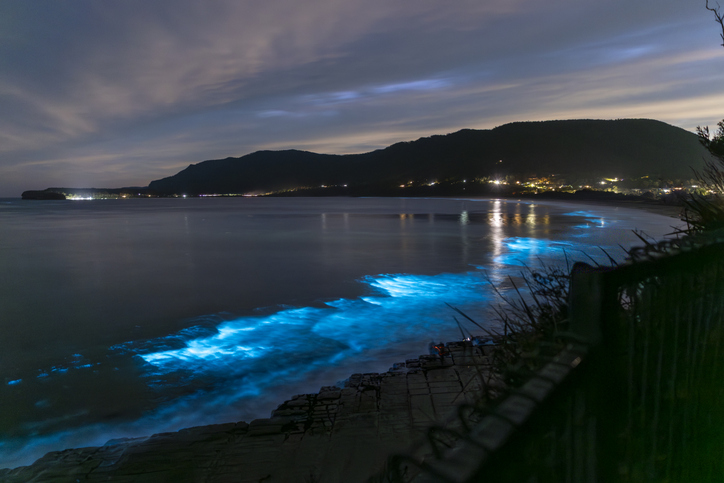
Saltwater seas and oceans cover more than 70% of the planet's surface, giving our planet its characteristic blue color. But beyond their incredible richness and biodiversity, they serve as Earth's primary life-support system. Why? This vast, interconnected body of water functions like a giant global thermostat, distributing heat and absorbing essential gases to keep the atmosphere in balance.
How does this phenomenon work? Unlike land, water has an exceptionally high heat capacity. This means the oceans can "absorb" large amounts of solar energy without their temperature rising dramatically. The UN reported that the oceans and seas absorb approximately 90% of the excess heat in the climate system, according to data from the National Oceanic and Atmospheric Administration (NOAA), one of the world's leading authorities in this field. Another remarkable feature at play is thermohaline circulation, also known as the ocean conveyor belt, which functions as an immense global heating and cooling system.
This is what happens in the famous Gulf Stream, which is responsible for carrying warm water from the tropics to the North Atlantic, reaching our region directly and moderating the climate in Western Europe. This makes the seasons in these areas milder than in other parts of the world at the same latitude.
Nature's warehouse, the sea
Another reason oceans are so crucial for climate stability is their ability to process CO₂. The seas and oceans act as natural "sinks," automatically managing the planet's excess heat and carbon dioxide. They can absorb "close to 25% of annual CO₂ emissions."
Researchers at the University of Cambridge in the UK found that a series of biological and chemical processes within these bodies of water allow carbon to be transported to the deep ocean, where it's safely stored for centuries. Just how much CO₂ can the oceans store? Copernicus estimates that ocean absorption reached 66.3 million tons between 1985 and 2023.
The blue lung
The third thing oceans do is help with oxygen production. We tend to credit forests with this function—especially the "green lung" of the Amazon—but the marine ecosystem has just as strong a case to make, and its contribution is no less important.
A study published in Nature, The power of plankton, sheds light on how marine <a