Spain’s network of livestock and transhumance trails spans 125,000 kilometers and accounts for approximately 1% of the country’s territory, according to the national map published by the Ministry for the Ecological Transition (MITECO). This network of historic trails crisscrossing Spain is one of Europe’s most unique natural heritage sites. The Zamorana, the Vía de la Plata, the Leonesa Occidental, the Galiana, the Conquense, the Segoviana, and the Reino de Valencia are just a few examples of these trails.
MITECO’s Spanish Inventory of Natural Heritage and Biodiversity keeps the maps and records of these public domain areas up-to-date. These spaces are "inalienable, imprescriptible, and unseizable," or in other words, practically untouchable, in order to preserve their authenticity.
The origins of this unique network of paths, which served as livestock trails connecting provinces and territories, date back to the Middle Ages, specifically the 13th century. It was established in 1273 with the creation of the Honored Council of the Mesta during the reign of Alfonso X the Wise, a monarch who recognized the importance of promoting these routes for the movement of people, livestock, and trade.
Under his reign, the traditional trails were organized into a system classified by width: the widest were called Cañadas Reales (up to 75 meters or 90 Castilian varas), followed by cordeles (less than 37.5), veredas (less than 20 meters), and coladas (up to 10 meters).
The great Cañadas Reales of Castile
The best-known roads within this vast network are the great Cañadas Reales of the Crown of Castile, long-haul routes that cross the peninsula preferably from north to south to connect summer pastures with winter grazing lands.
One example is the Vía de la Plata or Cañada Vizana, which spans more than 500 kilometers and vertically crosses the entire western part of the Iberian Peninsula, connecting natural areas of immense value such as the mountains of Babia and Laciana (León), the Béjar Biosphere Reserve (Salamanca), and the Sierra de Francia with Monfragüe National Park in Extremadura, passing through four provinces and following the Esla and Duero rivers until it ends in Trujillo.
Two others also originate in the province of León: the Leonesa Occidental and the Leonesa Oriental. These are two major trails, each measuring nearly 700 kilometers long. The Leonesa Occidental connects León with Badajoz, while the Leonesa Oriental winds through the mountainous inland regions of León and Palencia toward Ciudad Real.
The Soriana Oriental is the longest in the entire network, stretching nearly 800 kilometers. It connects the summer pastures of northern Soria and La Rioja with the Alcudia Valley and Andalusia.
Any other examples? The Segoviana, a 500-kilometer trail running from the Sierra de Neila in Burgos to Toledo, passing through Madrid, where — according to the 2020 regional inventory — there are up to 15 sections or passages throughout the Region, including resting places such as Montesinos and cattle trails such as Listón and Torote.
Its ecological role: biodiversity corridors
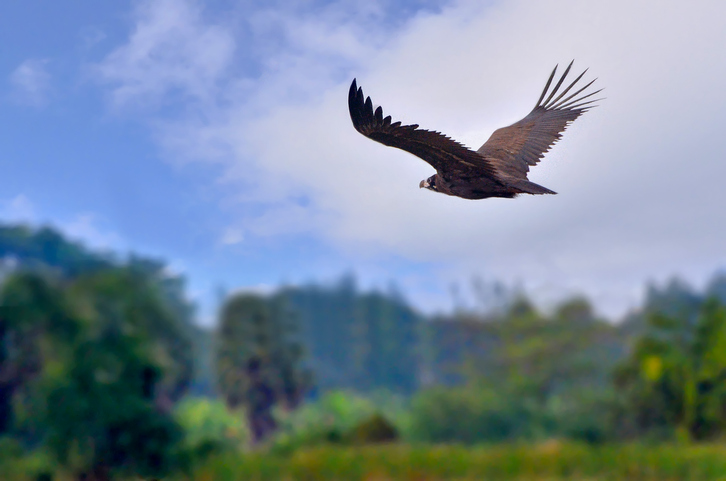
Nowadays, these transhumance trails have evolved beyond their purely livestock-related function to become essential ecological infrastructures. By connecting protected natural areas, national parks, and biosphere reserves, these livestock trails function as true ecological highways or biodiversity corridors.
Keeping them in an optimal state of conservation promotes the dispersal of seeds attached to the animals’ fur, as well as the role of pollinating insects (bees, butterflies, flies, or ants) as architects of the landscape and guardians of biodiversity. It also facilitates the free movement of wildlife and gene flow between fragmented ecosystems, which, according to research such as the TRASVÍAS initiative from the Biodiversity Foundation of MITECO, co-financed by EU ERDF funds, is key for the adaptation of species to the new climate scenario.
Its main objective is to restore more than 10,000 hectares of livestock trails nationwide, restoring their original function as ecological corridors. This project works directly on the ground by renaturalizing forage borders — which provide food for livestock — and installing smart cisterns to restore these green corridors.
These are self-sufficient underground water management systems designed to collect and store rainwater, with real-time monitoring of water availability to ensure supply on demand. This system reduces the burden on shepherds during droughts and optimizes resources, preventing wildlife and domestic animals from coming into contact at watering holes.
Its socio-economic role: to revitalize regions
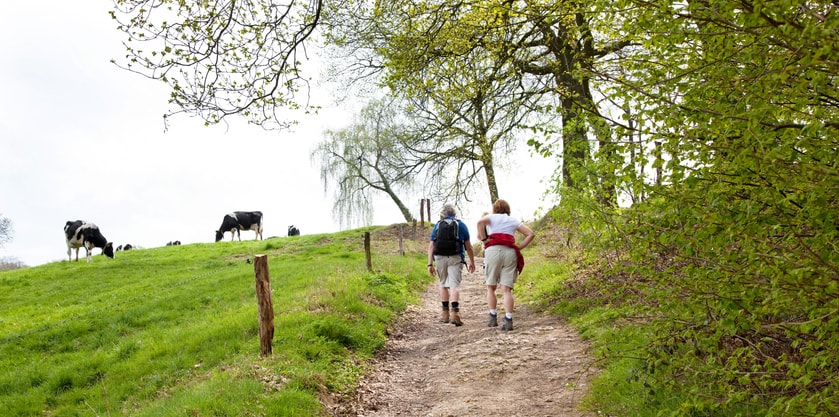
Beyond its ecological value, this network of trails is also a tourist attraction, offering everything from hiking trails to cycling routes. The Ministry of Agriculture, Fisheries, and Food actively incorporates sections of these trails into its Spain's Nature Trails program, promoting low-impact tourism.
Other examples can be found in the Shepherding Schools that have recently emerged from Galicia to Andalusia, including one in Soria organized by Reactiva Brañosera, with the aim of revitalizing the region, helping to retain the local population, and highlighting traditional trades that care for and protect natural heritage.
This initiative — which combines scenic, recreational, and cultural elements and is based on a philosophy that promotes slow, off-the-beaten-path tourism — channels new streams of travelers to inland regions, generating alternative sources of income for rural accommodation facilities, local tour guide companies, and artisan shops.
For municipalities, the restoration of their traditional trails offers an ideal means of revitalizing the region, identifying opportunities for collaboration, and discovering new horizons to advance their future. This philosophy underlies the Trails to the Future project, which is promoted by Moeve to build networks across regions and generations.
Ultimately, these 125,000 kilometers of public trails represent essential green infrastructure for connecting ecosystems and diversifying rural economies. Preserving and promoting them for future generations is an environmental priority to ensure that the heart of rural life continues to beat strongly.