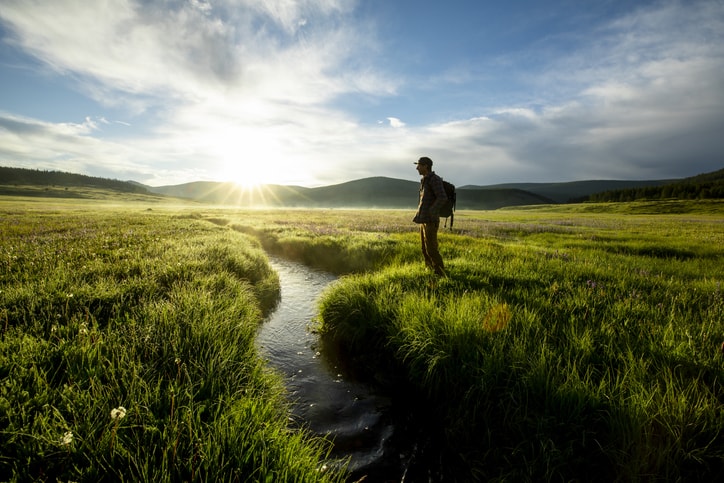
When a species disappears, the ecosystem of which it is a part is also altered, as each species fulfills a specific and necessary function. These are processes that sustain the natural balance and that, when they fail, can generate imbalances that are difficult to reverse.
In this context, species reintroduction, also known as rewilding, has become a key tool for environmental conservation. It involves returning those species that have disappeared to certain areas, so they can once again play their role in the natural environment. According to the Ministry for Ecological Transition and Demographic Challenge, species reintroduction programs aim to ensure that habitats regain their balance, and that species can carry out their corresponding role within the ecosystem, from seed dispersion to the control of other species.
The sky is once again taking center stage
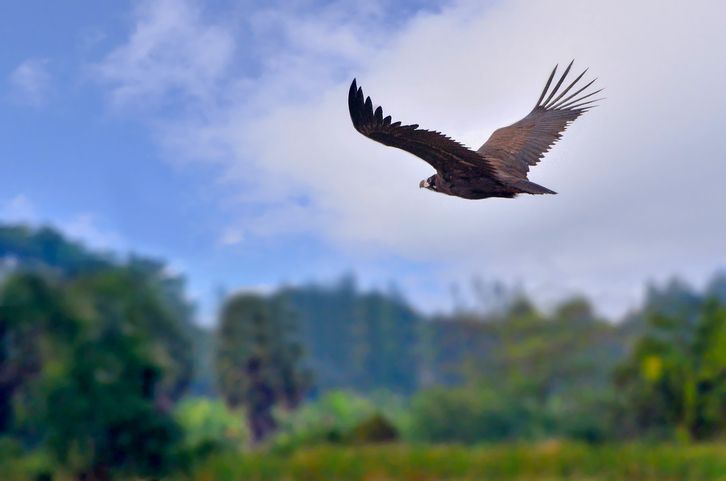
There was a time when certain regions of Spain no longer hosted large scavenger birds in their skies. The black vulture (Aegypius monachus), for example, plays a vital role in removing the remains of other animals. Its presence helps to keep ecosystems clean and reduce health risks. The reintroduction of this species to areas such as the Sierra de la Demanda, a natural space straddling La Rioja, Burgos and Soria, has enabled this natural process to resume. One organization involved in this process is the GREFA Association, which, with the support of the Biodiversity Foundation of the Ministry of Agriculture, Fisheries, Food and the Environment, has launched a project to restore black vulture populations in northern Spain, including areas where they had become extinct.
Another notable example of a scavenger bird is the bearded vulture (Gypaetus barbatus). This species disappeared from much of the Iberian Peninsula for decades. Its decline placed it at high risk of extinction, prompting the implementation of specific conservation programs. In response, public administrations and organizations such as the Bearded Vulture Conservation Foundation (FCQ) started working on its recovery in areas where it had historically lived. The reintroduction of the species has enabled it to recover and preserve its ecological function of removing bone remains. This restores part of the natural cycle that had been interrupted, thereby contributing to the balance of the ecosystem.
The success of reintroduction
The Iberian lynx (Lynx pardinus) is considered one of the greatest conservation successes in Europe. In the early 2000s, the species was on the brink of extinction, with a population of fewer than one hundred individuals in the wild. Thanks to captive breeding programs, reintroduction, and habitat improvement, the species has recovered and spread to new territories in the Iberian Peninsula. The International Union for Conservation of Nature (IUCN) considers the Iberian lynx a reference case for international conservation, demonstrating that coordinated efforts can reverse even the most critical situations.
Cases like this highlight the importance of taking a planned, long-term approach that values the reintroduction of native species as a means of preserving biodiversity.
Recovering species has a social impact as well. It reinforces the connection between people and their environment, creates new opportunities in rural areas, and highlights the need to protect biodiversity. After all, when a species is recovered, it restores part of the environment's functioning on which it depends. This ensures that ecosystems continue to be capable of sustaining life as we know it.