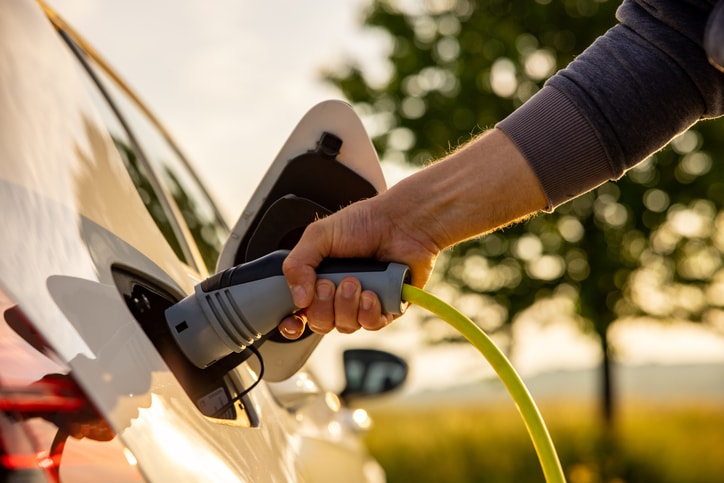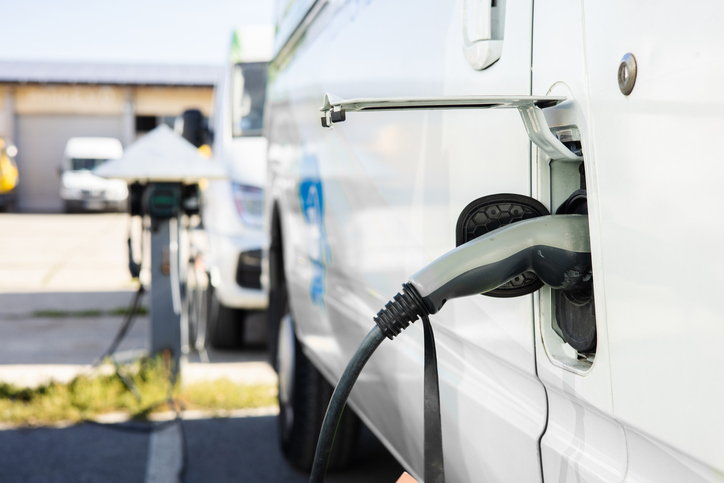
The RV sector has grown exponentially, thanks not only to the number of people who choose it for travel, but also to those who select it as a lifestyle. This growth is evident in the number of recreational vehicle registrations recorded by the DGT and supported by the Spanish RV Industry and Trade Association (ASEICAR).
From motorhomes to camper vans and classic converted delivery vans, everything is trending toward decarbonization. The engine has been transformed into a home on wheels that seeks greater energy autonomy and a smaller environmental footprint, with an interior design that prioritizes sustainability in everything from materials to waste management.
According to the Electric Camper Van Market Report published by Dataintelo, the electric camper van market is expected to experience accelerated growth over the next decade. The document from this specialized portal states that the market share of electric recreational vehicles will grow from 2.1% in 2025 to 8.7% in 2034, solidifying its position as the fastest-growing segment.
RVs are experiencing a revolution driven by electric mobility and the current market's sustainability requirements. In this context, the demand for zero-emission camper vans is growing, combining the desire to travel while respecting the environment.
The rise of electric camper vans
How is the electric caravaning segment expanding? Through the reinvention of the classic Grand California, which is now up to 6.8 meters long, has a fully digitized cabin, and features a Smart Home-type touch panel for efficiently managing climate control, water levels, and LED lighting. It also has a Dune finish with standard photovoltaic panels. Volkswagen has also surprised the sector with the ID Buzz, a new proposal that is nearly five meters long and has a range of 500 kilometers. These are some examples of manufacturers' new roadmap.
Another automotive giant, Mercedes-Benz, has also followed the trend with the electric version of the Marco Polo, and the new Mercedes-Benz EQV, an extra-long camper van with a range of over 360 kilometers. Other competing models include the Citroën e-Jumpy, Ford e-Transit, Peugeot e-Expert, and Opel Vivaro-e.
As a result, electric camper vans have grown from a niche market to a solid, competitive alternative to traditional engines. The increase in demand is partly due to their improved energy efficiency, made possible by intelligent navigation systems and active regenerative braking. Routes are optimized in real time by cross-referencing data on topography, vehicle weight, and fast-charging stations accessible to large-volume vehicles.
Energy independence
Another major innovation of e-camper vans is their exterior design. The new models are designed as green energy, self-sufficient units in more or less isolated environments, reducing the need to connect to the traditional electricity grid.
Furthermore, the integration of high-performance photovoltaic solar roofs is the cornerstone of this strategy. They continuously capture solar energy and use smart inverters to direct it to state-of-the-art lithium batteries.
This mini-infrastructure on wheels allows for the simultaneous operation of magnetic induction systems for cooking, low-consumption compressor refrigerators which are usually integrated, and advanced climate control networks for thermal comfort on board.
Wool and cork for insulation
The third major revolution of e-campers is internal. It applies the principles of the circular economy to maximize efficiency and minimize environmental impact. Eco-design uses advanced composite materials, certified sustainable wood from plantations, and zero-kilometer recycled marine plastics, such as natural fibers from recycled cork or wool, to lighten the structure and cabin. These materials reduce dependence on air conditioning or heating due to their better performance as a thermal bridge.
Because they are lighter, these vehicles require less effort from the engine, increasing their range. This way, you can get away from conventional tourist routes and explore other towns and municipalities.
The electric motor has another advantage: it allows unrestricted access to Low-emissions Areas (ZBE) for travelers seeking to enter historic districts.
Ultimately, the technological advances incorporated into electric camper vans usher in a new era for the RV sector, offering the same freedom, more kilometers without the need to recharge, and less impact on the environment.