The international hydrogen market is undergoing unprecedented financial and industrial acceleration as countries pursue greater energy autonomy. With committed investment now exceeding $130 billion (the equivalent of €111.82 billion), the sector has established itself as a strategic pillar for advancing decarbonization, strengthening security of supply, and improving competitiveness.
That investment corresponds to committed capacity of 6.9 million metric tons per year across more than 579 projects, according to the Global Hydrogen Compass 2026 report, published annually by the Hydrogen Council, the leading global industry association for the sector.
The study covers investment in several types of hydrogen (renewable and low-carbon), grouped together under the heading of “clean hydrogen.” Notably, 90% of these projects are now either at an advanced stage of construction or fully operational.
The data come from the McKinsey & Company report, which draws on input from 70 CEOs of international companies in the sector. In concrete terms, global renewable hydrogen production capacity currently in operation has doubled over the past year. More significantly, it is expected to double again by 2027 as projects already under development come online.
The study highlights that, of the 11 million metric tons per year of potential renewable hydrogen demand projected for 2030, roughly six million metric tons are backed by policies that have already been approved and are in force. The industry is calling on public authorities to introduce incentives and support measures for the remaining five million metric tons in order to drive large-scale projects that meet the need for greater energy security and autonomy through the development of green molecules such as renewable hydrogen, second-generation (2G) biofuels, and biomethane. A report by Moeve and PwC, titled Why does Europe need green molecules?, argues that these technologies could cut Europe’s external energy dependence in half, from 57% in 2024 to 28% by 2040.
EU ranks as the second-largest market
Overall, the report from the Hydrogen Council, released this month, emphasizes that hydrogen has taken on additional strategic significance amid rising geopolitical tensions, as governments seek to strengthen security of supply, economic resilience, and industrial competitiveness while also advancing decarbonization.
Against this backdrop, China remains the leader as the world’s largest renewable hydrogen market, already accounting for more than half of global committed capacity and 90% of the new operational capacity added since 2025. However, Europe has now established itself as the second-largest market worldwide. Not only does it lead in number of projects, but it has also seen substantial investment growth of 35% since 2025.
Driving renewable hydrogen from southern Spain
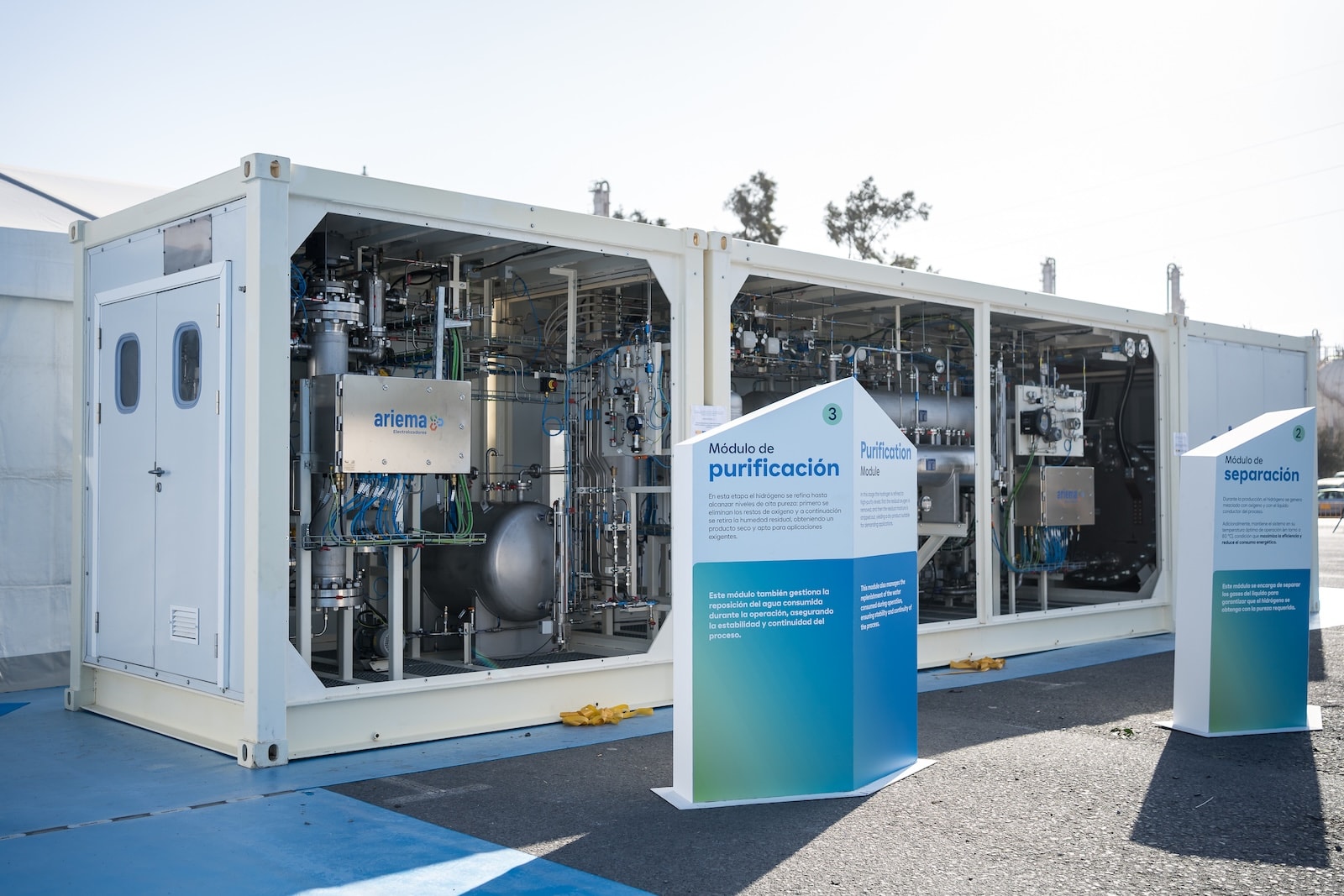
Within this global energy landscape, the start of construction on the first phase of the Andalusian Green Hydrogen Valley, Europe’s largest renewable hydrogen production project, is a tangible sign of this takeoff.
Positioning Spain at the global forefront of the sector, the project, known as Onuba, will have 300 MW of expandable electrolysis capacity, with combined investment of more than €1 billion and an employment impact of more than 8,000 direct, indirect, and induced jobs across the entire value chain over the project’s various phases, according to figures from the multinational energy company.
Ultimately, renewable hydrogen is emerging not as a stopgap but as a key pillar in advancing Europe’s energy autonomy and the energy transition, bringing together science, industry, innovation, and collaboration in pursuit of a more strategic and resilient energy model.