The transition to a more efficient energy model calls for technologies capable of supplying energy that is not only sustainable but also consistent. With that in mind, we take a closer look at two renewable energy sources that are both powered by the sun yet differ in important ways: photovoltaic and solar thermal energy.
Although both draw on the same source, they don’t work the same way. They are often confused, but in reality they take different paths toward the same goal: turning solar radiation into the electricity we use every day.
In short, the main difference between solar thermal and photovoltaic energy lies in how each one converts the sun’s energy into electricity: photovoltaics uses light directly, whereas solar thermal harnesses the heat in solar radiation.
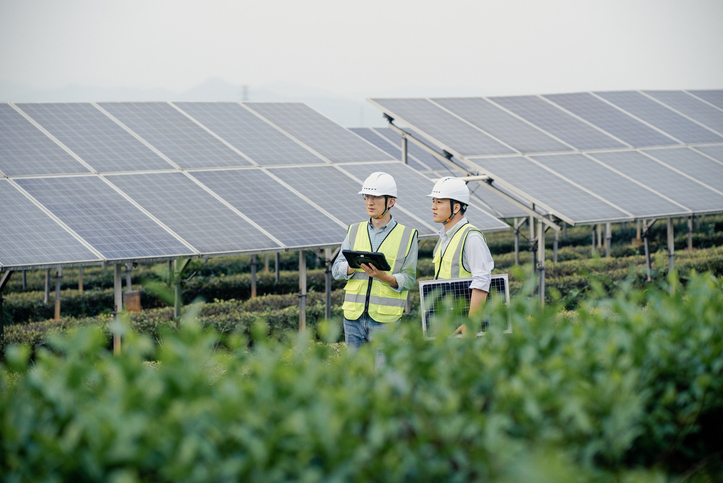
Photovoltaics is a technology that converts solar energy using solar panels. Its silicon panels capture the particles that make up light (photons) and convert them directly into electricity through the photovoltaic effect. It is an instantaneous physical process with no moving parts. Notably, the technology has advanced considerably in recent years, paving the way for new solutions built on more energy-efficient materials, such as perovskite, that are expanding its renewable potential.
Solar thermal energy, on the other hand, is known technically as concentrated solar power (CSP). Unlike photovoltaics, it does not convert sunlight directly into electricity. Instead, it concentrates solar radiation to generate heat, which is then used to produce electricity for a wide range of applications.
Whereas the silicon cells in conventional solar panels convert photons directly into electrons via the photovoltaic effect, solar thermal systems use fields of movable mirrors, such as heliostats or parabolic troughs, to concentrate solar radiation onto a receiver.
How does it work? As explained by IDAE, Spain’s Institute for Energy Diversification and Saving, the heat produced in this process is typically transferred to a fluid and then used to drive a turbine that generates electricity. That said, the two technologies also differ in cost-effectiveness and efficiency. Photovoltaics delivers better performance because its direct conversion process avoids intermediate losses and gives it greater durability.
In fact, unlike small-scale photovoltaic systems for residential self-consumption, the challenge with solar thermal technology is that it requires large tracts of land and substantial upfront investment. As a result, it is mainly deployed in large-scale power infrastructure projects and to supply heat for industrial processes.
Ultimately, the key difference between photovoltaics and solar thermal comes down to light versus heat. The former turns sunlight directly into electric current with nothing more than a static panel, while the latter relies on a more complex system of mirrors and mechanical turbines. This difference in processes helps explain why photovoltaics, rather than solar thermal, dominates the global energy landscape today.