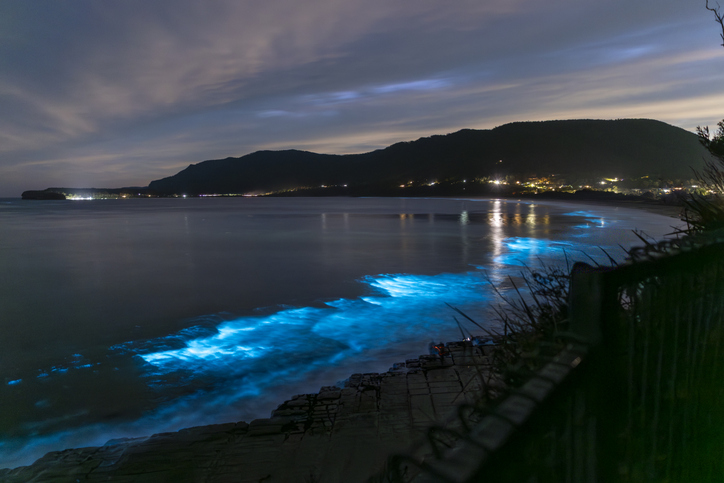
Explained very simply, the Aurora Borealis phenomenon occurs when solar wind particles collide with the Earth's atmosphere. When they collide, atoms of atmospheric gases, particularly oxygen and nitrogen, release energy in the form of light, giving rise to spectacular glowing curtains that move and change color in the night sky.
Since this phenomenon follows no set calendar, we can't specify when the Aurora Borealis will appear with 100% certainty. Nonetheless, it is more common at certain times of the year, usually between September and April in the northern hemisphere —and the further north, the better— when there are more hours of darkness, and observation conditions tend to be more stable. It's not that this phenomenon doesn't occur in summer, but rather that the sky tends to be brighter and, therefore, it is harder to see.
Another factor to consider is how near we are to the Solar Maximum. The sun has activity cycles lasting approximately 11 years, during which it alternates between calmer and more active phases. The latter occur during the Solar Maximum, like the period between 2024 and 2025 that brought us images of auroras visible in Spain. This peak of activity is usually linked to more intense effects, such as more pronounced geomagnetic storms that send more of the particles that form auroras to the Earth. The result? This phenomenon occurs more frequently, and there are greater chances of observing it outside of the most common regions.
Predicting the Northern Lights
Although there is no specific day that the Aurora Borealis will appear, it can be predicted to some extent. As explained by the Space Climate Prediction Center of the National Oceanic and Atmospheric Administration of the United States, this prediction works on different time scales. In the short term — less than one hour — it can be predicted fairly accurately by measuring the solar wind and the Earth's magnetic field using satellites located approximately 1.5 million kilometers from our planet in the direction of the Sun.
Why is it interesting to know when these phenomena will occur? Behind the beauty of the Northern Lights lies interesting information for human beings. This event is the visible manifestation of intense solar activity, which can affect various systems ranging from telecommunications equipment or satellite navigation to ground communications, electricity and rail networks, or pipelines, as noted by the European Space Agency.
This effect can have extreme consequences. One such example was the solar storm of 1859, known as the Carrington Event, when it was possible to see the Aurora Borealis in latitudes as low as Cuba. Researching this phenomenon teaches us more than just how to deal with the associated interferences in technological or communication systems. For example, it enables us to learn more about other atmospheric and magnetic phenomena in our solar system — there are auroras on other planets like Jupiter or Saturn— and even in other regions of the universe. It also encourages basic research into the physics of plasma — the very foundations of this science — and it can help with the planning of satellite missions. In addition, it promotes international scientific cooperation and the development of new tools and instruments for observation and measurement.
Also, very importantly, it encourages citizen collaboration with projects like Aurorasaurus, where people from all over the world report sightings. All of these factors undoubtedly have an impact on the rise of tourism linked to this experience.
Travel to see the Northern Lights
This new type of tourism has experienced a boom in recent decades and is expected to generate 1647.9 billion dollars in 2030. It is a major attraction for tourists visiting countries such as Canada, Norway, or Finland. Searches for accommodation in Lapland has increased by 370% and the city of Tromsø has initiated work to expand its airport due to the large number of visitors it receives.
Tourism associated with this phenomenon acts as a catalyst for these regions, with options ranging from bus safaris, sledding, or dinners aboard cruise ships, to entire nights sleeping under green-tinged skies. There is a wide range of activities on offer and the cities that welcome Aurora Borealis enthusiasts also provide cultural and educational opportunities so that visitors can make the most of their stay. For example, the company Brim Explorer organizes daily excursions on electric boats to spot whales and orcas, and skiing or a cruise through the fjords could be the perfect addition to an experience based on direct contact with nature.
The Aurora Borealis has become more than just a beautiful spectacle: the figures and tourism trends associated with its appearance in the sky reveal a genuine interest in nature and science. Therefore, it will continue to attract visitors and those who study this phenomenon, who always find something new to discover.