Who hasn't heard of Newton's apple? According to popular belief, Isaac Newton was resting beneath an apple tree when a piece of fruit fell on his head. He wondered why apples always fell straight down and not in any other direction. In the words of William Stukeley, a friend of Newton's who recorded this anecdote in a biography of the scientist, this falling apple led him to believe that the force of gravity was not limited to a certain distance from the Earth, but must extend much further.
Gravity is a force that cannot be seen or heard and does not change shape, but orders the world. A body within a field influenced by this force develops what is known as gravitational energy. The farther the object is from the earth — i.e., the higher it is — the more gravitational energy it will have. This is a natural phenomenon that is present in all the systems around us.
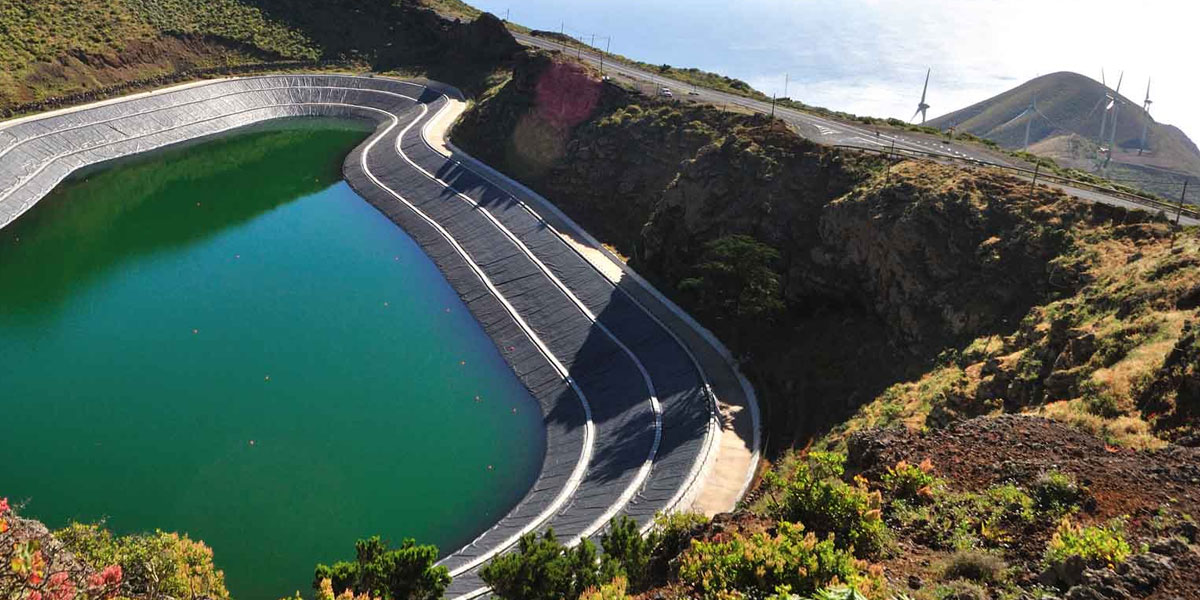
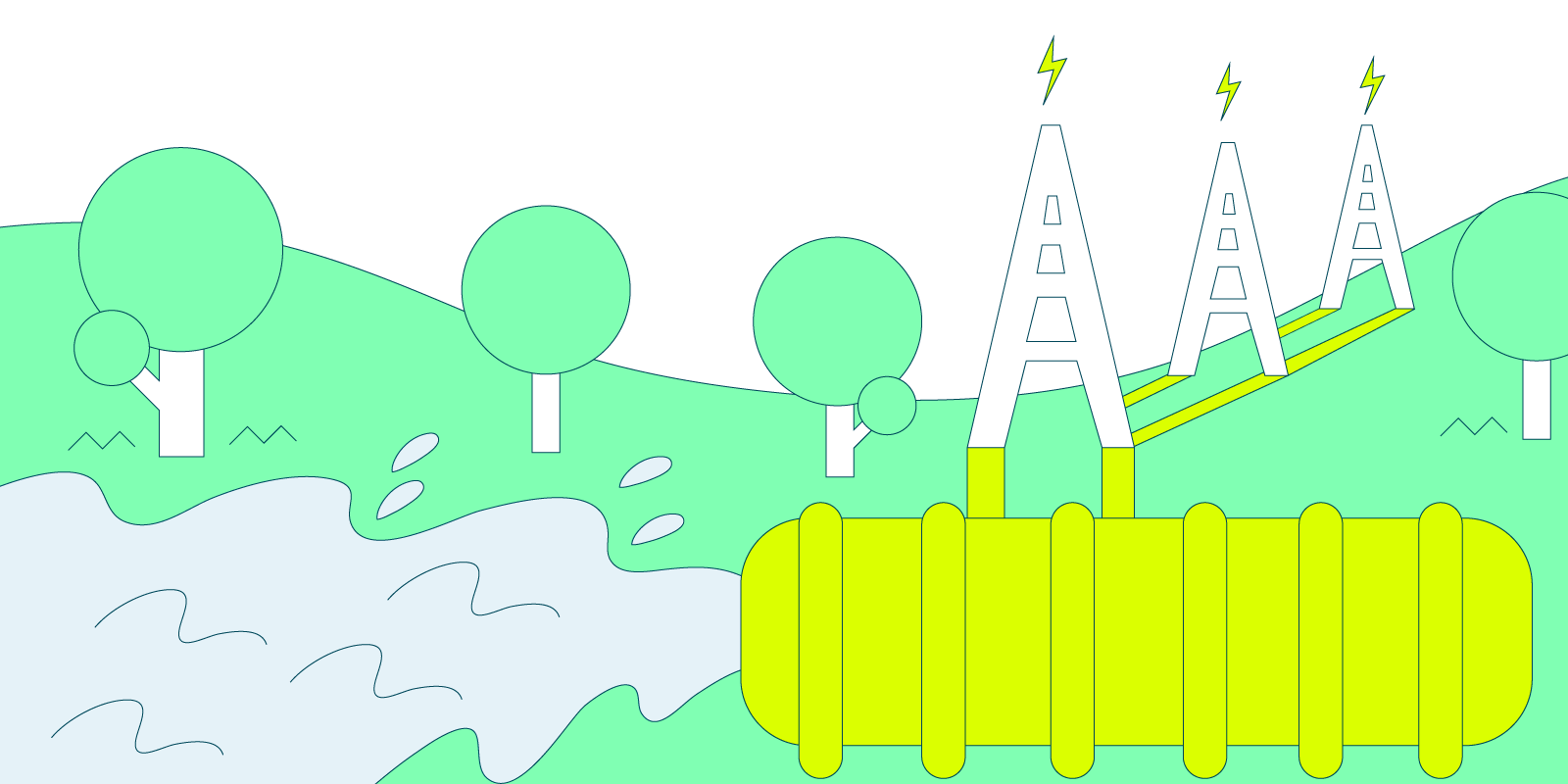
One of the clearest and most tangible examples of gravitational energy is moving water. Every time a drop falls from a certain height, potential energy is transformed into kinetic energy in a pure and elementary exchange. This principle has been exploited by human civilizations for millennia. Watermills, waterwheels, complex irrigation canals, and, more recently, large hydroelectric power plants are based on this ancient relationship between gravity and movement.
Hydraulic energy, which enables us to generate electricity by harnessing the kinetic and potential energy of water currents or waterfalls, is a sustainable and renewable energy source. Along with wind and solar power, it is one of the main ways of driving decarbonization and sustainable energy production. According to the latest data published by the International Hydropower Association (IHA), it is estimated that hydropower currently provides approximately 14% of the electricity consumed worldwide.
What's more, the potential of large-scale water infrastructures goes even further. As the water is stored at high points, they also use the force of gravity to distribute it efficiently as it flows naturally to lower areas without the need for mechanical pumps.
Furthermore, in gravity irrigation systems, water flows from a main channel to ditches or secondary pipes that distribute it through fields, taking advantage of the natural slope of the land. This is also the case in cities, where elevated reservoirs enable water to reach homes and services with constant pressure and lower energy consumption.
Gravity batteries
However, scientific and technological research does not stand still and innovative solutions are constantly emerging that use gravitational forces to store energy efficiently and sustainably. For example, there are systems called gravity batteries that work in a similar way to mechanical batteries: when there is excess electrical energy available, for example from solar or wind farms, it is used to lift very heavy objects or blocks to an elevated position.
Later when energy is needed, these blocks are dropped and the accumulated potential energy is converted back into electricity by generators.
Urban gravity: sponge cities
In the European Union we find initiatives such as the StoreMore project, which studies how to take advantage of natural elevations to store energy from gravity on a large scale over big areas and connect them to electricity grids.
Gravity is also being taken into account in urban design, as in the case of "sponge cities", which were initially developed in China in response to the challenges of water management in dense urban environments. The idea is to combine permeable surfaces, green spaces, rain gardens, and artificial wetlands that capture, retain, and release rainwater following the natural slope of the land, taking advantage of the force of gravity.
In short, talking about gravitational energy is akin to talking about stability. Unlike other natural phenomena, gravity does not fluctuate or depend on external conditions. It has always been there and always will be. Just observe how, thanks to gravity, everything remains in place and continues on its course.