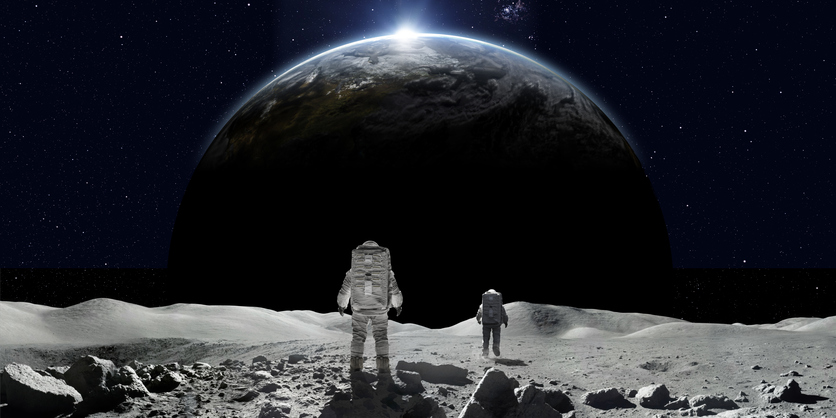
More than half a century after humans first landed on the Moon, the Artemis program marks the beginning of a new era. The Artemis II mission not only represents a scientific and technological milestone, but also a decisive step toward the more ambitious goal of establishing a sustained human presence on the Moon. In this context, one element stands out as a quiet but key player: hydrogen.
Its essential role starts on the launchpad. The Space Launch System (SLS) — which was used to launch this mission and is one of the most powerful rockets ever built — uses liquid hydrogen combined with liquid oxygen as the basis for its propulsion system. This mixture generates extraordinary thrust with high energy efficiency, which is a critical aspect when every kilogram counts on a space mission.
Although this technology was already used in the Apollo program, to this day it is still one of the most advanced solutions for spaceflight. The reason for this is its high energy density per unit of mass, which makes hydrogen an ideal fuel for reaching the speeds needed to escape Earth's gravity. But its important role doesn't end there. While launching is the first major challenge, staying on the Moon is a new frontier in which this element once again plays a key role.
One of the main objectives of the Artemis program is to demonstrate that the Moon can be self-sufficient in terms of energy. Various studies suggest that the moon is home to water in the form of ice at the lunar poles, and this resource could be crucial for sustaining future human bases.
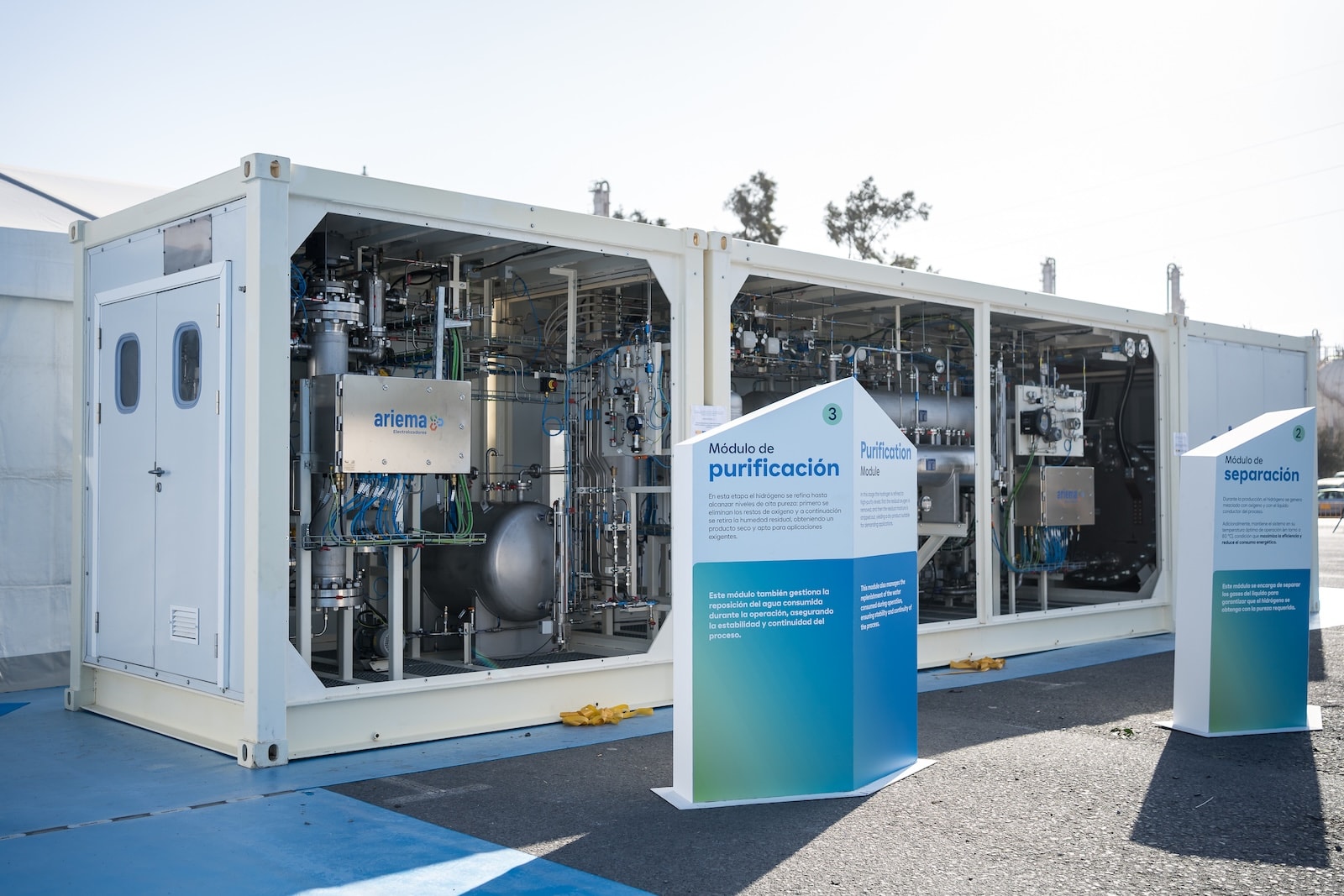
The key lies in electrolysis, a process that uses electricity to break water (H₂O) down into hydrogen and oxygen. Hydrogen can be used as fuel, while oxygen is essential for breathing. This approach would reduce reliance on supplies sent from Earth, paving the way for a more efficient and sustainable model of exploration.
What happens 384,000 kilometers away can also be seen in the energy systems being developed on Earth. The electrolysis that will make it possible to produce hydrogen on the Moon is the same technology driving the development of renewable hydrogen as a key energy carrier.
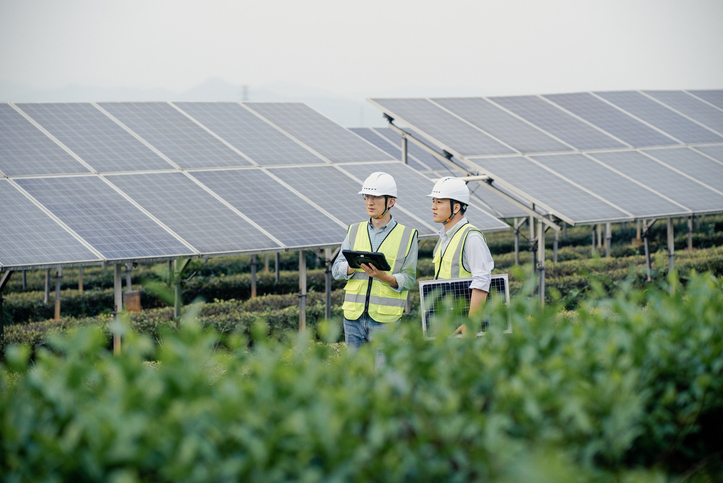
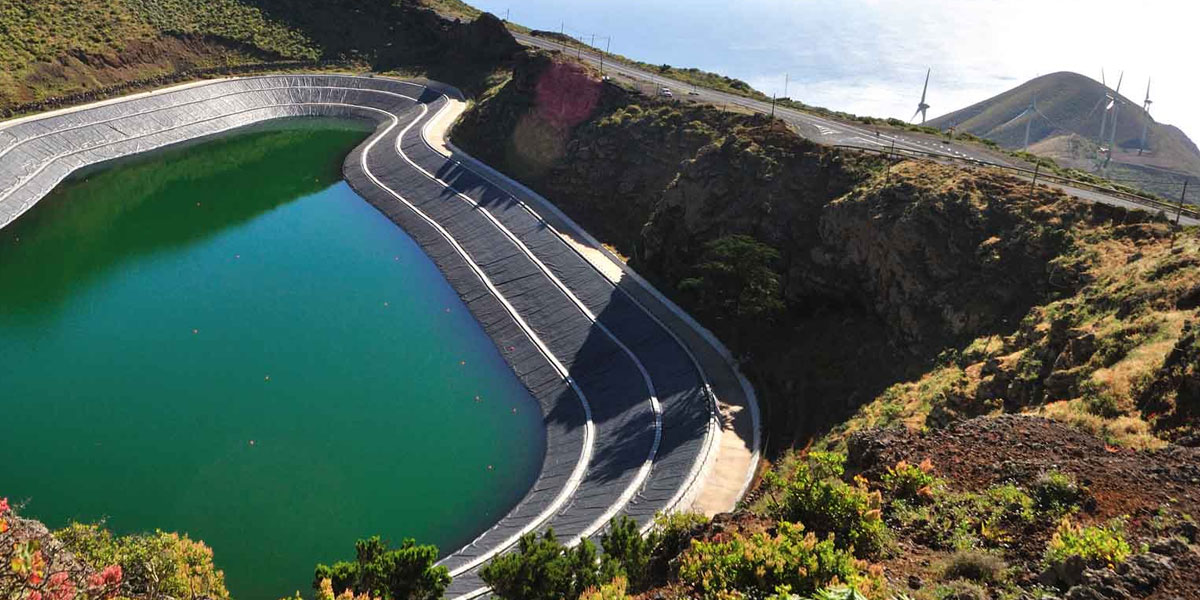
In an energy system undergoing transformation, renewable hydrogen is emerging as a strategic solution for sectors that are difficult to electrify, such as heavy industry, maritime transport, and aviation. Its ability to store energy and connect various energy applications makes it a central component of an increasingly integrated system, where so-called “green molecules” are taking center stage.
One of the most ambitious initiatives in Europe in this field is the Andalusian Green Hydrogen Valley, which is promoted by Moeve. The energy company recently announced the final investment decision to launch the project, which will involve an investment of more than 1 billion euros. With a capacity of 300 MW, it will be able to achieve a production capacity of around 45,000 tons of green hydrogen per year, preventing 250,000 tons of CO2 emissions.
Hydrogen, a quiet but key player in Artemis II, thus bridges two seemingly disparate fields: space exploration and energy transition. In both cases, the key lies in converting resources — whether lunar ice on the Moon or water on Earth — into clean, sustainable energy.
At a time when the global energy system is undergoing a major transformation, a new, more efficient, and decarbonized model — as demonstrated by the new space race — knows no geographical or even planetary boundaries.