Facades that capture carbon dioxide or green bridges on roads are the evolution of the idea of a garden city that, more than a century ago, sought to provide well-being and comfort to the workers who populated the area.
At the end of the 19th century, the garden city, conceived by Ebenezer Howard, revolutionized the idea of cities transformed by the Industrial Revolution. The Brit’s goal was to design small communities inspired by villages, surrounded by green or agricultural land. In 1903 the construction of this first city began: Letchworth, 55 kilometers north of London. In 1919 came Welwyn Garden City, also north of the capital, to which Howard himself moved in 1921.
Other countries replicated these models in their own way, and today they have urban oases within cities. In Madrid, for example, we have the quiet residential neighborhoods of Ciudad Jardín and El Viso, whose row houses resemble a village, but are located just a few steps away from the frantic avenues. In the metropolitan region of Buenos Aires (Argentina), tranquillity and the village atmosphere of certain streets in Ciudad Jardín Lomas del Palomar come together. And the influence of this concept (residential areas surrounded by green areas) can be found in larger cities such as the planned Brasilia, the new capital of Brazil, which was built in the middle of the 20th century.
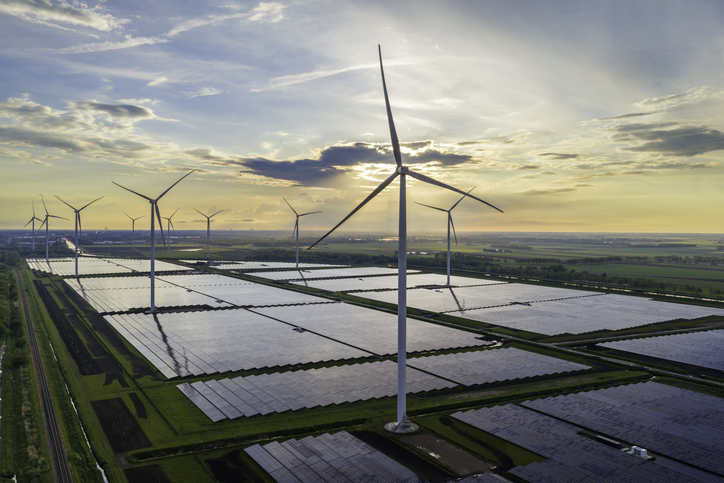
Today, more than 125 years after Howard's first ideas, new sustainable infrastructures are being implemented that connect urbanism and nature.
“Eco-Futuring”: a laboratory of more resilient cities
In this journey towards green architecture, the research work of universities stands out. In Alcalá de Henares (Madrid), the group “Eco-Futuring. Design lab for the green city”, has been working for more than a decade to obtain a level of beauty and efficiency that its coordinator, Rosa Cervera, described as "productive" and "sustainable". Professors from the master's degree in the Advanced Project in Architecture and Cities created this group, with an interest in climate situation, the environment and its influence in cities. Thus, they began to work on initiatives that integrate climate, landscape, and ecosystems with architectural design and urban design.
One of its goals is to seek new forms of urban design inspired by nature, such as vegetation and water corridors, which reduce the heat island effect. Also, to create new urban systems that, instead of continuously consuming energy, produce it by capturing sunlight and other nature-based solutions (such as green roofs and floodable parks), which help manage rainwater and increase urban resilience.
Microalgae on facades and urban vegetation
Among the projects developed by the research group itself is a facade for cultivating microalgae in Alcorcón (Madrid) to capture carbon dioxide, produce biomass, reuse gray water (domestic wastewater), and improve thermal insulation, thus promoting a sustainable resource cycle and reducing the carbon footprint.
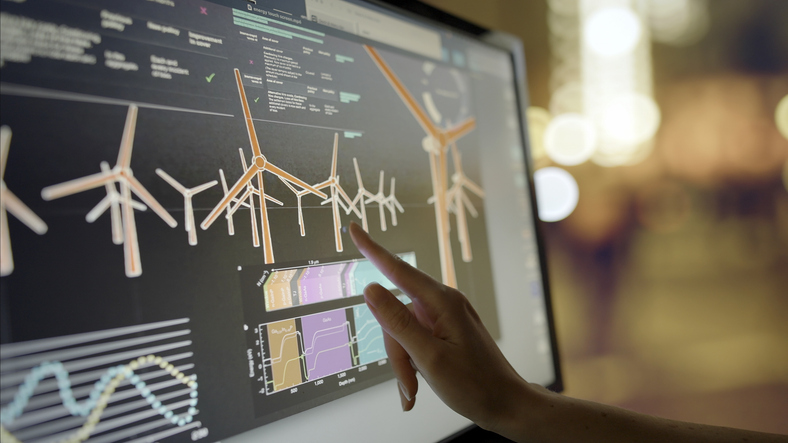
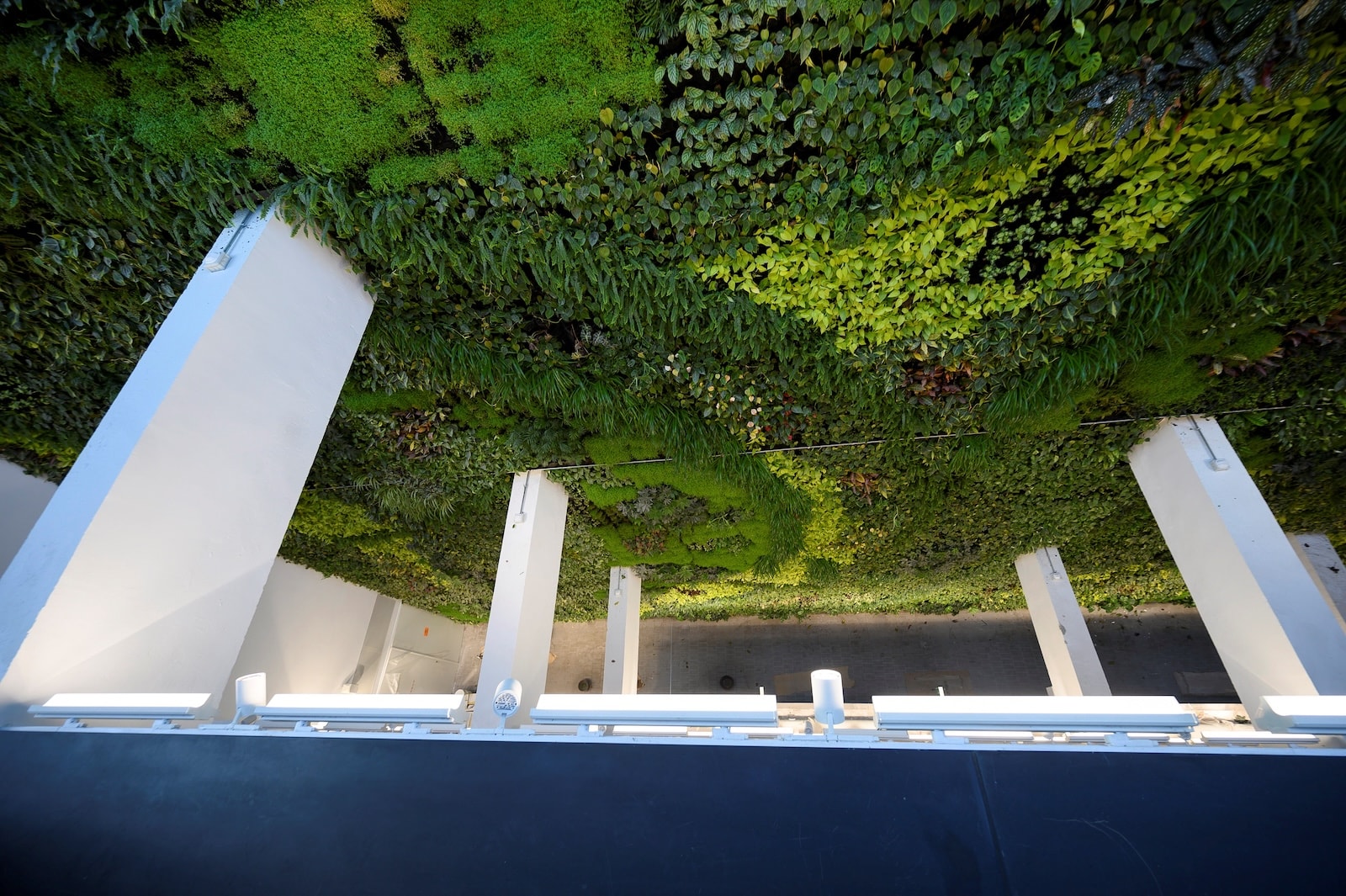
Meanwhile, the OPTIGREEN project and COL3Natur, from the University of Navarra, are researching how urban vegetation contributes to making the city a more livable space with better thermal comfort through BIOMA, the Institute of Biodiversity and Environment. Optigreen uses mobile sensors, satellite data, and modeling to monitor atmospheric parameters, and proposes green facades and living walls, in line with the European example of Optigrüen, the company that already operates in Great Britain, Austria, and the Netherlands, populating rooftops with a green layer using nature-based solutions to regulate excess rain, for example. Specifically, Col3Natur focuses on educational spaces and seeks to re-naturalize from schoolyards, the building itself, and even its roads.
From neighborhoods to roads
Other elements of green architecture can be found in the most unsuspecting places. We are talking about so-called ecoducts or green bridges. They are wide areas on the roads covered with vegetation that function as bridges for animals to cross from one side of the road to the other without the risk of being run over. In this way, habitats are restored on both sides of the asphalt and fatal accidents are reduced for both these species and for people.
One of the most impactful examples of this is Banff National Park, in Canada. It has 44 steps, six elevated and 38 underground, along the Trans-Canadian highway, which crosses the enclave, and since 1996 the movement of animals has been monitored, which has also helped to plan road expansions.
In short, from house facades to state highways, new architecture connects with traditional garden cities. Although climate adaptation and mitigation have recently been combined, the goal remains the same: to achieve harmony between people and ecosystems that improves the well-being of all.