The global energy landscape is undergoing a major shift. According to the latest data published in the Energy Institute's Statistical Review of World Energy, produced in collaboration with Ember, KPMG, and Kearney, renewables made the largest contribution to growth in total energy supply (TES) worldwide in 2025.
Why is this so significant? Because this is the first time renewable energy has led global growth under normal economic conditions, without the impact of a worldwide recession. Recent figures further confirm this shift: in April 2026, wind and solar generated more electricity worldwide than gas for the first time, accounting for 22% of global electricity generation, compared with 20% for gas.
As the report points out, this rapid expansion is in line with estimates published by the International Renewable Energy Agency (IRENA) in its capacity statistics. IRENA notes that the transition is moving at an unprecedented pace, with global renewable capacity reaching a new all-time high, driven by a clear market preference for sustainable technologies. According to the agency, renewables now account for nearly half of all installed power capacity worldwide, with particularly strong growth in emerging economies.
The figures in the Statistical Review of World Energy show that renewable electricity generation rose by 861 TWh in 2025, exceeding the 855 TWh increase in global electricity demand. At the same time, battery storage capacity grew by 66%, to 302 GW, strengthening energy security and helping avoid 72 billion euros in fossil fuel imports between 2022 and 2025, according to the report.
Exponential growth in solar power
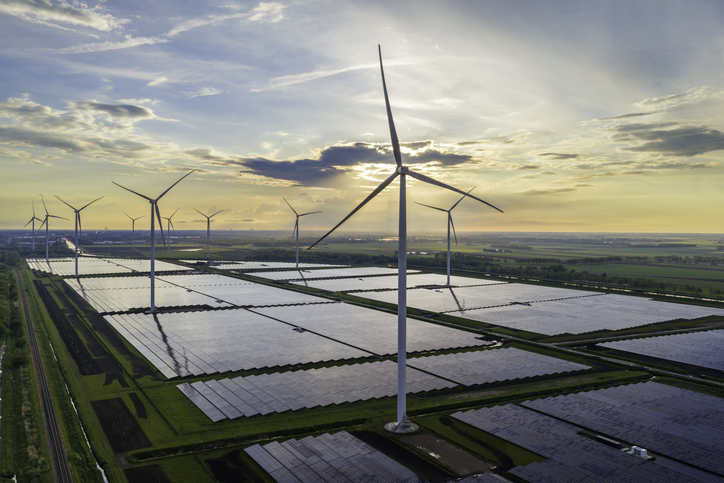
Within the renewable energy sector, solar power has emerged as its most disruptive technology. According to Energy Institute data, solar accounted for more than 70% of the total increase in renewable energy supply, contributing the equivalent of 3.3 exajoules (EJ). This growth puts photovoltaic infrastructure at the forefront of global decarbonization, with deployment expanding faster than that of any other energy source covered in the report.
The International Energy Agency (IEA) also estimates that solar photovoltaic technology will account for nearly 80% of the projected increase in renewable capacity through the end of the decade. In fact, the organization expects global renewable generation capacity to double by 2030—equivalent to adding the combined current capacity of China, the European Union, and Japan to the global energy system.
Against this backdrop, the latest market data points to a historic shift: for the first time, wind and solar combined generated more electricity worldwide than natural gas over the course of an entire month, in April 2026.
In percentage terms, these clean technologies accounted for 22% of global electricity generation, compared with 20% from gas-fired plants, confirming a technical milestone that analysts had long anticipated.
Even so, gas remains a key pillar of the transition, as structural demand continues to rise, increasing by 1.6% year over year.
The EU at the forefront of green energy
At the regional level, the European Union is leading this structural shift, showing that the energy transition is closely linked to public policy in each region.
According to official Eurostat figures, renewable sources already account for nearly 46% of all electricity generated in the EU during the first part of this year. Denmark and Portugal top the European rankings, producing more than 80% of their net electricity from renewable sources, mainly wind and hydropower, while Spain is the clear leader in solar photovoltaic generation.
Between 2022 and 2025, renewables also acted as a strategic shield, helping avoid 72 billion euros in fossil fuel imports, with Germany, Spain, and Italy accounting for the largest share of these savings.
The Statistical Review of World Energy also highlights several challenges facing the global energy system. Although clean energy capacity continued to grow in 2025, global energy-related emissions rose by 1.1%, underscoring the complexity of a system that is still in transition. The path to a cleaner energy system is not linear and, despite the progress made, momentum must be maintained by accelerating the development of low-emissions energy projects and strengthening the infrastructure needed to support them. Recent progress shows that the world is moving in the right direction, but it also makes clear that there is still a long way to go.
The paradigm shift described in the report also shows that the energy transition goes beyond installing renewable generation capacity and requires flexible infrastructure as well. Large-scale energy storage and the deployment of smart grids are essential to absorbing renewable output, stabilizing supply, and ensuring that energy remains secure, accessible, and sustainable.
Ultimately, according to IEA estimates, achieving global sustainability will require continued alignment between technological innovation, regulation, and sustained political commitment to support the growth of green energy.