Ten years after the adoption of the Paris Agreement, renewables, energy efficiency, and electrification have entered a new phase of maturity that is structurally transforming the global economy. This is stated in the United Nations special report Seizing the moment of opportunity. Supercharging the new era of renewables, efficiency and electrification, which emphasizes that the world now has the necessary technology, resources, and economic conditions to accelerate the transition toward a more sustainable, secure, and affordable energy system.
One of the key factors behind this change has been the significant reduction in the costs of the main clean technologies. According to the report, between 2010 and 2024, the cost of solar photovoltaic and onshore wind power steadily decreased to reach levels below the cost of new fossil-fuel power plants in most countries. Furthermore, in 2023, 96% of new commercial solar photovoltaic and onshore wind facilities generated electricity at a lower cost than new coal and gas plants, without the need for additional financial support.
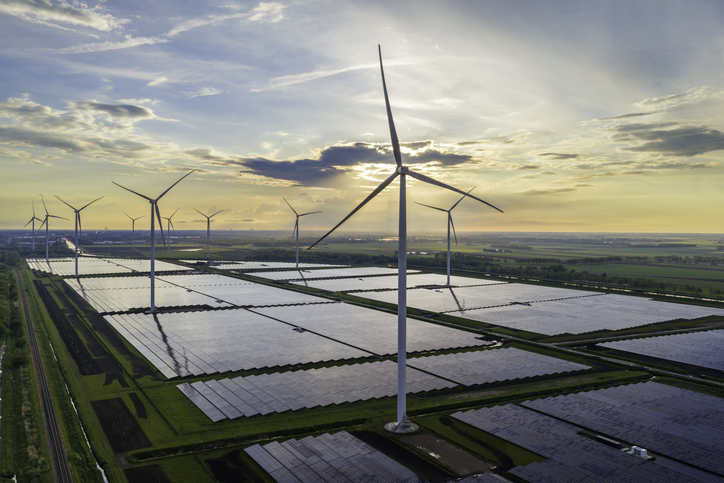
In this context, economic competitiveness has led to accelerated deployment. In 2024, renewable energies accounted for 92.5% of new electricity capacity installed worldwide and represented 74% of growth in electricity generation. Between 2015 and 2024, global renewable capacity increased by around 2,600 gigawatts (GW) compared to the 640 GW added by fossil fuels, significantly reducing the historical gap between the two systems. This trend was also seen in 2025, as in the first half of the year 380 GW of new solar capacity were added, 64% more than in the same period of 2024.
On the other hand, the electrification of transportation is another pillar of this transformation that continues to progress. Electric vehicle sales grew by 3,300% between 2015 and 2024, rising from half a million units per year to more than 17 million, which represents more than 20% of cars sold worldwide.
This trend continued in 2025 as battery electric vehicles reached a 17.4% share of the European market with 1.88 million new registrations, up from 13.6% the previous year, according to data from the European Automobile Manufacturers Association.
According to the UN report, solar and wind power and electric vehicles have passed a pivotal turning point, driven by a virtuous cycle of cost reduction and mass adoption.
This technological progress is giving rise to a new economy based on sustainable energy with tangible effects on growth and employment. In this regard, the report highlights that in 2024, annual investments in clean energy surpassed 2 trillion dollars globally for the first time, after already exceeding investments in fossil fuels in 2016.
The sector generated employment for nearly 34.8 million people worldwide in 2023, and 16.2 million of these jobs were linked to renewable energies. That same year, renewable energy contributed around $320 billion to the global economy, which represented 10% of global GDP growth and nearly a third of GDP growth in the European Union.
However, the United Nations report also introduces a necessary dose of realism. Despite the progress made in recent years to reduce dependence on fossil fuels, it is necessary to adapt the pace to drive the transition and consolidate this structural change. Additionally, the lack of transport, distribution, and storage infrastructures is becoming one of the main bottlenecks for progress in the energy transition.
The report also emphasizes that, although emerging markets and developing countries account for a substantial share of global renewable potential, they receive less than one in five dollars of investment in renewable energy, excluding China. To continue making progress toward climate goals, these regions will need to increase their annual investments fivefold or more by 2030, accompanied by regulatory reforms, international financing, and technological cooperation.
The progress made shows that the energy transition is underway and that global momentum is paving the way for a new energy model, but taking full advantage of the current momentum therefore requires more than just technology and competitive costs. It also requires accelerating investment in energy grids, storage, and infrastructure, while transforming and adapting production and consumption systems. In this context, the scenario described by the UN also reinforces the commitment to transform industrial assets towards the development of green molecules (such as second-generation biofuels and green hydrogen) and to stimulate electric mobility solutions as key springboards for converting the global impulse of the energy transition into a tangible and lasting economic transformation.