Although contradictory information has prevailed in recent years, the truth is that the green economy and businesses linked to the energy transition continue to advance decisively. Far from being a passing trend, this sector has become a consolidated global market that continues to grow, attracting record investment and transforming the foundations of the global economy.
In this context, the value of the so-called green economy, which encompasses sectors such as renewable energies, energy efficiency, sustainable mobility, clean technologies, and low-carbon industries, has reached a scale that, until recently, was unimaginable.
According to a report from the World Economic Forum (WEF) and Boston Consulting Group (BCG), this economy already surpassed $5 trillion in annual value in 2024, positioning itself as one of the most dynamic global sectors. In addition, it is expected to exceed $7 trillion per year by 2030, driven by the opportunities and demands arising from sustainability and decarbonization.
In other words, despite a challenging economic environment, the green economy has demonstrated resilience and capacity for expansion. Several key segments, such as revenue linked to sustainable activities, are growing even faster than those of traditional sectors, according to the WEF-BCG report.
Record investment in energy transition
Beyond the total value of the sustainable market, it is worth noting that specific investment in the energy transition has broken records. The Energy Transition Investment Trends 2026 report from BloombergNEF (BNEF) reveals that in 2025 $2.3 trillion in global investment was reached, representing an increase of 8% compared to the previous year. This figure is roughly equivalent to the annual GDP of countries like Italy or Brazil.
Among the main destinations of that investment are:
- Electrified transport, with nearly $893 billion, leading global investments in this area.
- Renewable energy, which received $690 billion.
- Electricity grids and energy conduction systems‒infrastructures that are not always visible, but are critical for the energy transition, such as infrastructures for transporting renewable gases or energy storage infrastructures‒with over $483 billion.
This data confirms that the energy transition is not only being maintained, but is advancing and continuing to consolidate as a strategic investment priority, even in the face of adverse global economic cycles. In fact, for the second consecutive year, investment in clean energy already exceeds investment in fossil fuel supply, and moreover, with a growing gap.
Europe and Spain: a commitment to renewable energy and sustainable growth
Although the energy transition is a global process, Europe plays a crucial role in its development. This is also reflected in BloombergNEF's report, which indicates that in 2025 investment in energy transition by the European Union grew by around 18%.
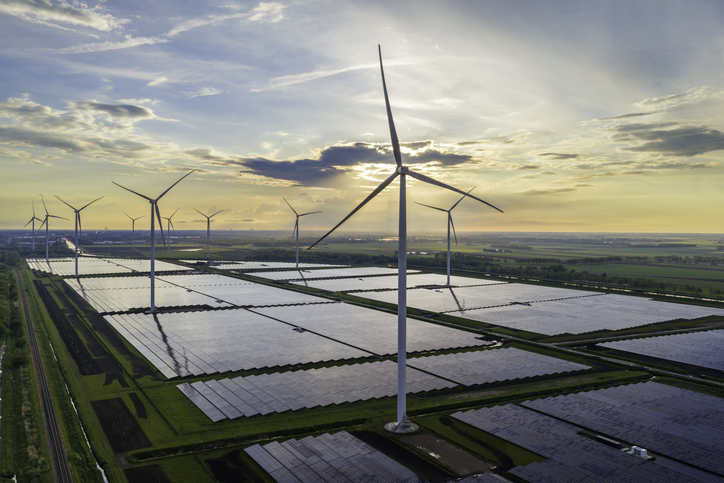
Moreover, the growth of renewable energy, especially solar and wind, continues to be a key factor for the continent’s energy independence and for the reduction of fossil fuel imports. Initiatives such as the offshore wind projects in the North Sea, which aim to install up to 100 GW of new wind capacity in the next decade, demonstrate the European commitment to decarbonization and energy security.
In Spain, the economy shows strength, with GDP growth above the European average, while the deployment of renewable energy and the investment programs linked to the energy transition maintain a sustained growth path.
Industrial decarbonization projects, calls for specific lines of aid, such as those recently activated by the Ministry of Industry and Tourism for the sustainable manufacturing industry with over 330 million euros, and regulatory advances aimed at promoting the energy transition are signs of a clear institutional commitment to this new economic paradigm.
A sector with returns and opportunities for the future
Ultimately, the data not only shows record figures, but also a structural change in the global economy. The expansion of the green economy offers sustained growth opportunities on different fronts:
- Technologies linked to electric mobility, renewable energy, and efficiency offer competitive returns compared to traditional solutions.
- Companies that integrate sustainable practices tend to benefit from lower capital costs and better valuations, according to the WEF-BCG analysis.
- The increased investment in electricity grids and storage favor energy stability and the integration of renewable sources.
Moreover, the consensus among various analysts is that average annual investment in energy transition may continue to increase in the coming years, reflecting not only the climate emergency but also the profitability and viability of clean technologies.