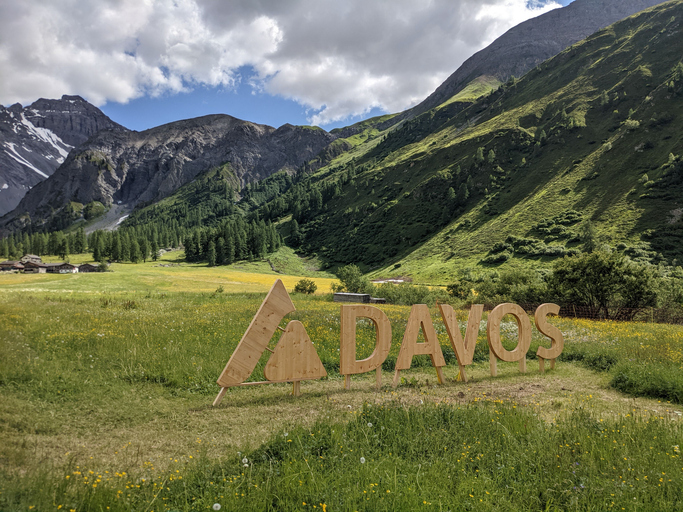
The text does not make any predictions or shed light on a specific version of the future but basically provides a series of projections. The latest Global Risks Report 2026 presented at the Annual Meeting of the World Economic Forum in Davos (Switzerland) is a portrait of a more complex world, where partnerships are being redefined and the economy is demonstrating its strength in the face of uncertainty.
Environmental risks seem to have lost their urgency over the next two years. However, if the report's projections comes true, they will be at the forefront in the medium term, over the next ten years. We must be aware of these timescales because challenges have not disappeared. The snapshot provides a clear picture. Geoeconomic confrontation has emerged as the main challenge facing our world. We are talking about a two-year timeframe. Who can ignore it? The familiar fragmentation of supply chains is the reflection — on the Swiss snow — of a more multipolar international order that requires collaborative efforts.
Risks have changed position in the ranking. Extreme weather events have dropped from 2nd to 4th place, and pollution from 6th to 9th position. Concern for biodiversity loss and ecosystem collapse has lost momentum in this classification. But, as we have seen, this is an analysis of a specific moment in time. If you set your sights on the long term — a decade — extreme environmental risks will regain their spot at the top of the list, according to the Global Risks Report 2026.
After reading the more than one hundred pages of the report, the conclusions become clear, sometimes using financial and economic jargon. "Despite the challenges, the fundamental elements of the transition to a more sustainable and resilient economy remain unchanged and will persist, regardless of political and economic obstacles," predicts Rocío Jaureguizar Redondo, an ESG specialist at the management firm Pictet AM. Movement is unstoppable, even if it is not always made public. "Many companies that have reduced their social promotion of sustainability are actually doubling up their efforts in this area," she reveals. And managers have abandoned the dual terminology of "green" and "brown" assets. The goal is what really matters.
Europe, for example, has taken steps to ensure that the complex legal framework related to sustainability, which had been criticized for its regulatory complexity, is now more accessible. The Omnibus Simplification Package proposal reduces the complexity of regulations regarding climate change, industrial emissions, circular economy, and climate assessments. Therefore, the environmental agenda has not been put on hold; on the contrary. "Sustainability has entered a less rhetorical and more strategic phase of maturity." "Corporate decisions continue to link sustainability with competitiveness, although the political context — and its growing polarization — influences the pace and the narrative," reflects Belén López, director of corporate social responsibility (CSR) at ESIC University.
It is true that there is some resistance. "Geopolitical tensions are shaping the energy transition, misinformation is eroding the confidence required to [undertake] ambitious climate policies, and technology is amplifying both solutions and vulnerabilities," the teacher explains.
Although this — as said before — is a snapshot. A moment in time. The US investment bank Goldman Sachs maintains that "sustainability issues, under their classic nomenclature, will dominate 2026, even as decarbonization receives, relatively, less attention."
In a unique moment in time, sustainability has entered a new phase. "Companies are moving away from jargon-filled disclosure to narratives with a simplified, more pragmatic purpose aimed at investors, employees, and the general public, and which are intended" [we have also seen this] "to maintain support and counteract misinformation," he points out. Among other aspects, Goldman Sachs warns that the planet is preparing for a possible energy drought.
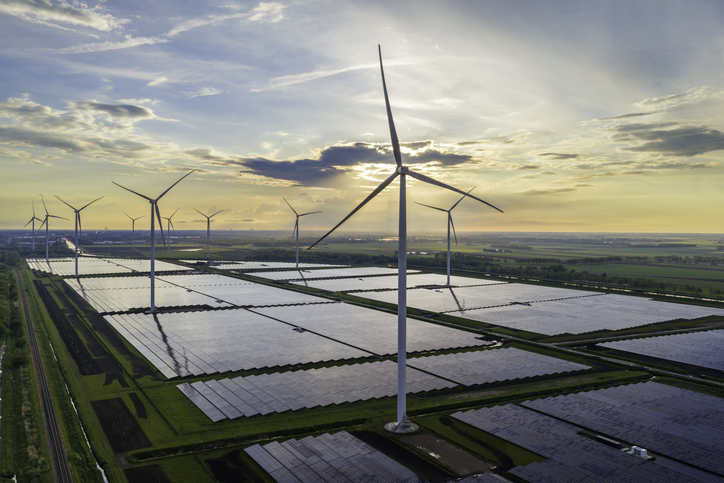
Demand has risen for the first time in a decade. Wind and solar power are needed to ensure an energy supply at the lowest price possible in three or four years because about 90% of new capacity worldwide comes from renewables and storage, according to the Spanish management firm Pictet AM.
Furthermore, double materiality (to use financial jargon) is required. This means that there must be not just financial income, but also a positive impact. "It is time, let's think about hydrogen. The focus is broadening as we consider that there are certain non-negotiable requirements for sustainability: strategic autonomy, critical supplies, and safety," emphasizes Roberto Scholtes, head of strategy at Singular Bank.
For all these reasons, it is important to have a good understanding of how these projections are ranked. The reality is shaped by markets, governments, companies, and civil society. The report undoubtedly indicates that geopolitical and economic uncertainty has shifted immediate attention towards risks perceived as more urgent. "This is the context in which the Draghi and Letta reports should be understood. Both agree that Europe should not address sustainability as an isolated agenda, but rather integrate it into a broader vision of competitiveness and security that halts the EU's economic decline compared to other powers, without losing sight of productivity," narrates David Elustondo, scientific director of the BIOMA Institute of Biodiversity and the Environment at the University of Navarre.
Under this tactic, according to the consulting firm McKinsey, sustainability is no longer driven solely by large multilateral frameworks, but increasingly by smaller, regional, and results-oriented coalitions. Progress can be seen when decarbonization is integrated into industrial agendas, as in Europe, or when it makes energy cheaper, strengthens resilience, or accelerates innovation. It is not a step backwards, but rather a more realistic manner of integrating sustainability into the economic and geopolitical agenda.
The challenge now is to prevent this short-term logic from diluting long-term ambition. Climate risk remains systemic, and delaying action today only increases the economic, social, and strategic cost tomorrow. There are obstacles. Daron Acemoğlu, winner of the 2024 Nobel Prize in Economics and one of the nine institute professors at MIT (Massachusetts Institute of Technology), highlights the political hostility in the United States. "However, thanks to advances, solar and wind technology and renewable energies are becoming much more economical in many activities, which indicates that, at some point, there will be a more complete energy transition," he predicts. Ultimately, we must be prepared for the medium term, because it is just around the corner.