The European Union faces a scenario of high energy dependence, with nearly 60% of the energy consumed within its territory being imported, according to the latest Energy Insight published by Moeve. This average dependence rate is disproportionately higher in the EU's periphery; Spain, for example, has a rate of 68%. This situation results in direct exposure to international price volatility and supply risks stemming from geopolitical tensions.
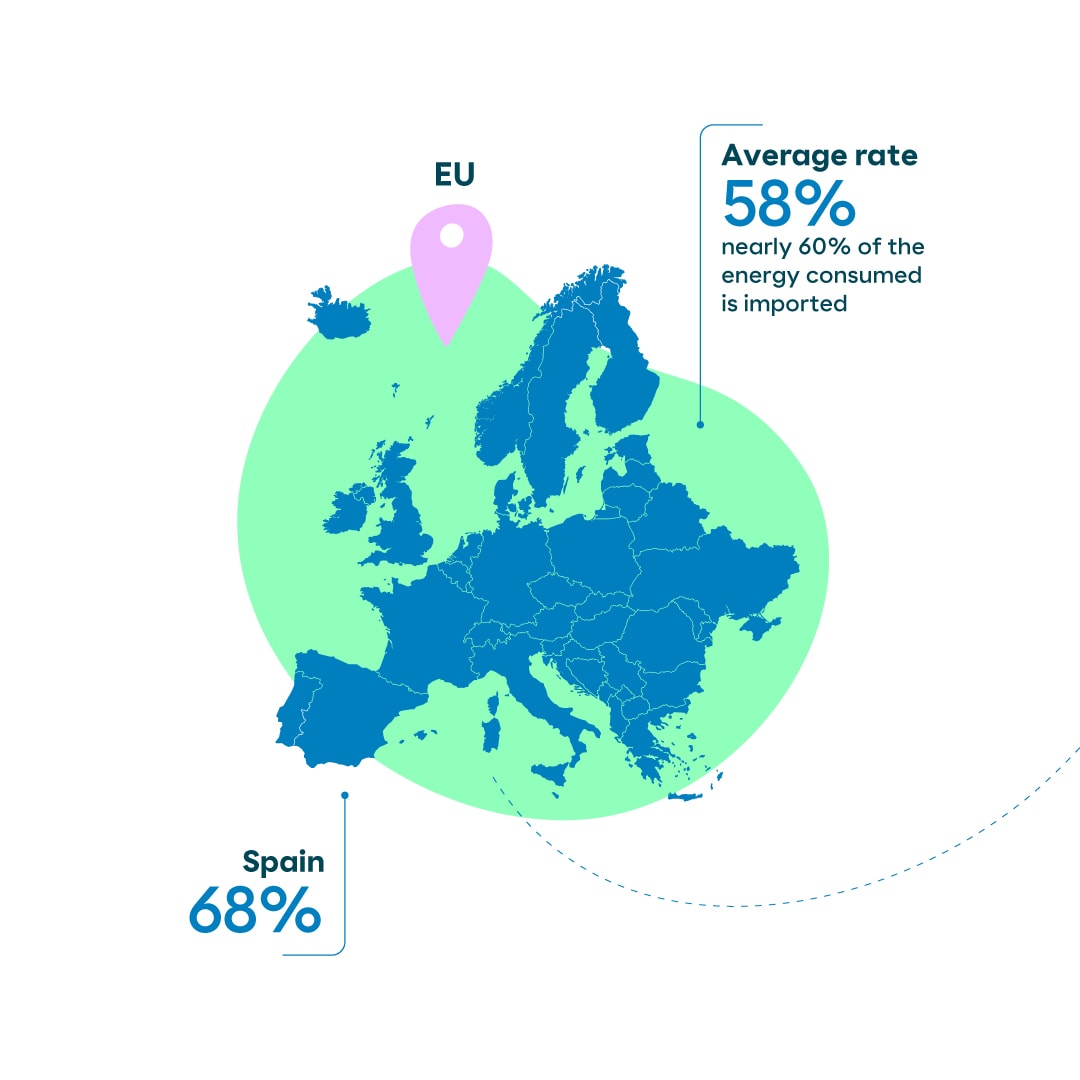
The EU's response following the outbreak of the war in Ukraine was to accelerate the diversification of energy supplies through more than 180 international agreements aimed at reducing the flow of coal, oil, and natural gas from Russia. In this new landscape, green molecules—which include green hydrogen and its derivatives, second-generation (2G) biofuels, biomethane, and sustainable chemicals—are emerging as the primary lever for consolidating energy sovereignty and protecting industrial competitiveness in the face of external dependencies. The development of these green molecules could replace approximately 20% to 40% of the continent's current demand for fossil fuels (half through 2G biofuels and half through hydrogen) by the year 2040. According to technical projections, this strategic deployment would reduce the European Union's external energy dependence by 50%, lowering the import rate to 28% by 2040, thereby strengthening the continent's energy stability. This self-sufficiency is particularly crucial for the decarbonization of sectors that are difficult to electrify, such as heavy industry and long-distance transportation (aviation, maritime, and heavy-duty road freight).
Investments that pave the way forward
The economy based on sustainable energy production currently generates more than 5 trillion global dollars and maintains a growth forecast that will enable it to reach 7.1 trillion dollars by 2030.
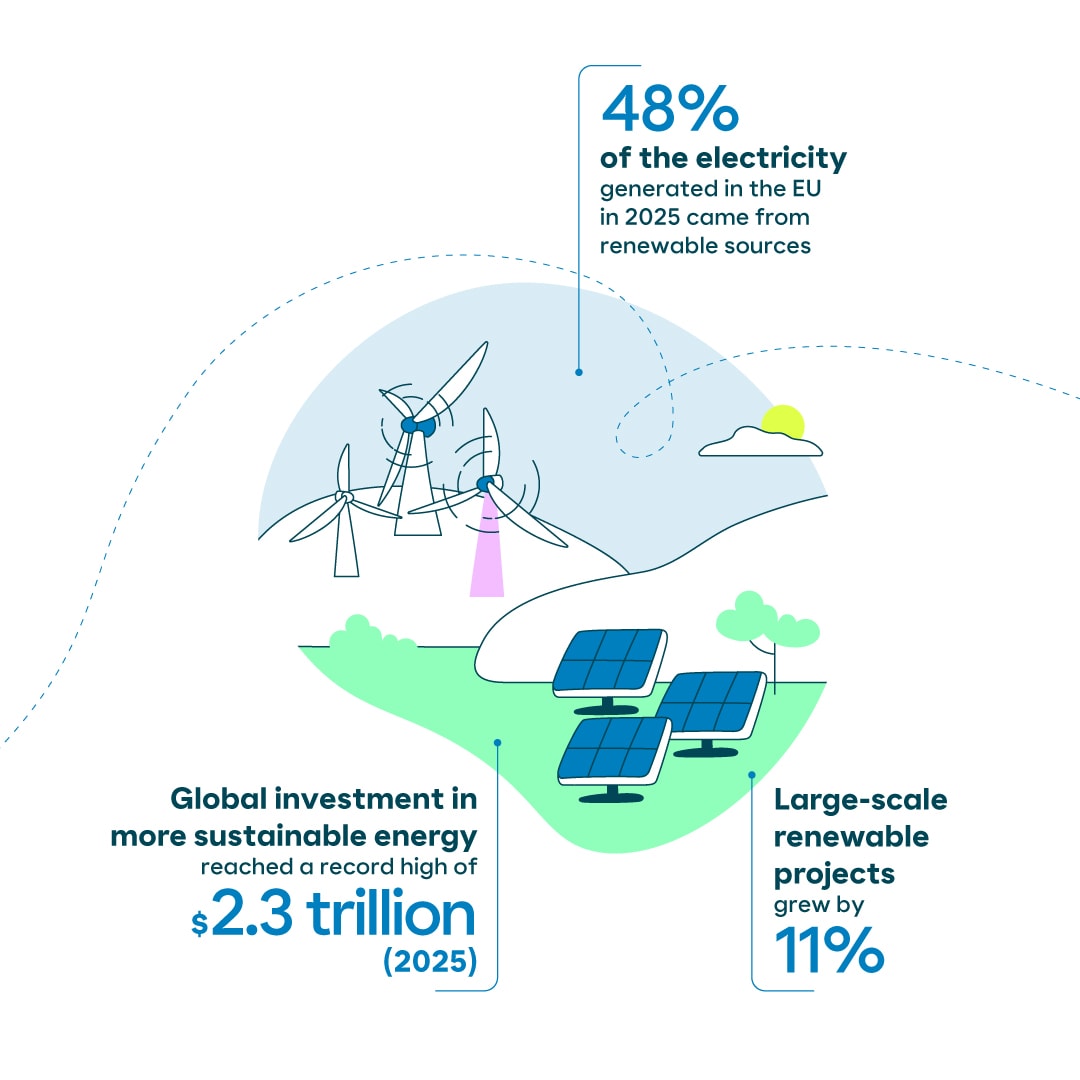
Worldwide, the investment for clean energy reached a historic high of 2.3 trillion dollars in 2025, surpassing for the first time the total fossil fuel expenditure. This financial flow was mainly allocated to four areas of investment:
- Electrified transport: It led capital raising with a record high of $893 billion in 2025, representing a 21% increase compared to the previous year.
- Renewable energy: This remained the second largest vector with 690 billion dollars, despite experiencing an annual decline of 9.5% influenced by inflation, the rise in interest rates, and regulatory delays in capital intensive projects such as offshore wind.
- Electrical installations: With an investment of 483 billion dollars (17% more than the previous year), operators prioritized strengthening transportation infrastructures.
- Emerging sectors: Other vectors that gained strategic weight such as storage, with an investment of 71 billion dollars, and industrial decarbonization with 34 billion dollars. Investment in green molecules reached 25 billion dollars, with an estimated growth of 30% by 2030.
Advancing decarbonization in the European mix
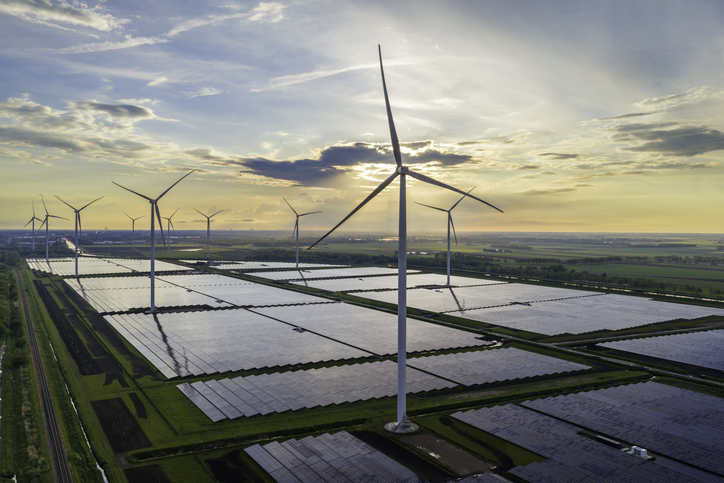
In the European Union, 48% of the electricity generated in 2025 came from renewable sources, achieving for the first time in history that the total of wind and photovoltaic production surpassed fossil-based generation in the Eurozone. In fact, globally, data shows that the portfolio of large-scale wind and solar projects grew by 11%.
Alongside the electrification of the grid, sustainable fuels achieved notable milestones in market penetration, reaching a new all-time high of $43,700 million. Furthermore, forecasts indicate that growth will continue, reaching 9.4% by 2030—a date by which, according to most markets, biofuels will be on track to achieve price parity with fossil fuels in all hard-to-abate sectors.
At the same time, hydrogen—the most abundant element in the universe—is emerging as the ideal medium for storing and transporting renewable energy on a large scale. Globally, commercial projects aimed at producing renewable hydrogen totaled more than $110 billion, already committed to a portfolio of over 500 international initiatives.
Recognizing that Europe's reindustrialization and energy independence depend on leading the way in these cutting-edge technologies, the European Union's institutions have established ambitious funding mechanisms to support private-sector initiatives. Among the most notable tools is the European Innovation Fund, a program that is directly funded by revenues from greenhouse gas emissions trading, promoting investment in sustainable innovation.
Under this institutional framework, the European Union has made a binding commitment to allocate a budget of €40 billion for the period from 2020 to 2030. These funds are being channeled directly toward three main objectives aimed at transforming the productive fabric of EU member states: scaling up green hydrogen, industrial electrification, and carbon capture.