- The company joins the Alliance to help advance the sector’s decarbonization roadmap alongside key stakeholders from Spain’s maritime and port ecosystem
- Moeve will participate in working groups focused on the decarbonization of vessels in operation and port terminals, contributing its expertise and capabilities in the energy transition
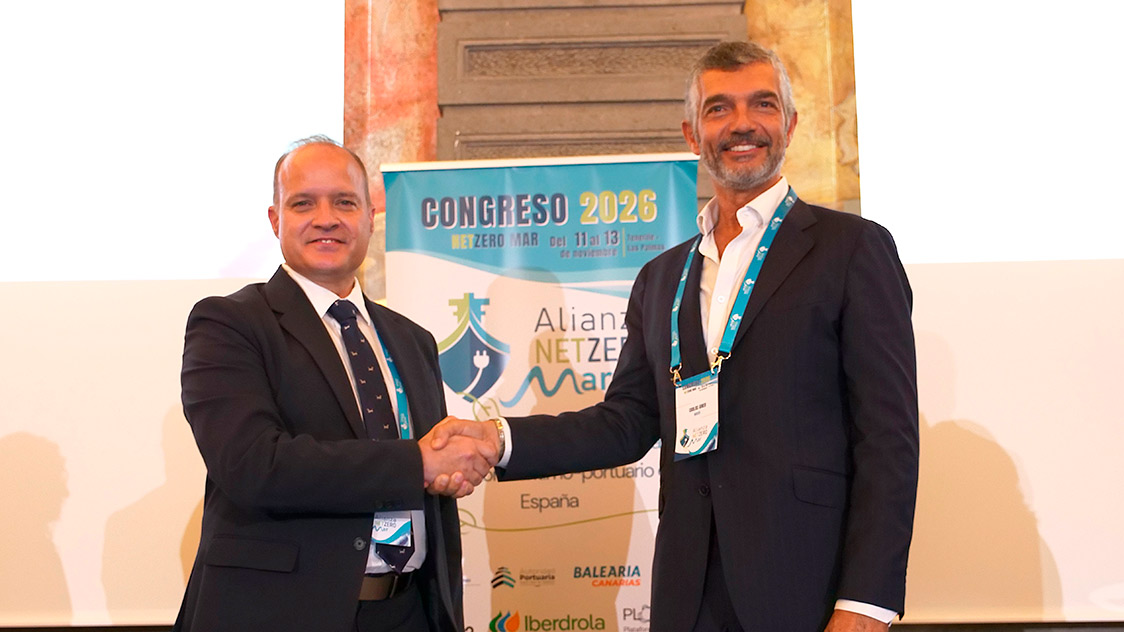
- The membership was formalized during the Net-Zero MAR 2026 Congress, that took place in the Canary Islands and brought together public- and private-sector representatives to address the main challenges of maritime transport and port decarbonization
Moeve has joined the Net-Zero MAR Alliance, an initiative that brings together stakeholders across Spain’s maritime and port ecosystem to accelerate decarbonization. The energy company will participate in working groups dedicated to the decarbonization of vessels in operation and port terminals.
The membership was formalized during the Net-Zero MAR 2026 Congress, being held in Las Palmas de Gran Canaria and bringing together public authorities, ports, shipping companies, energy companies and other industry representatives.
“The decarbonization of maritime transport requires collaboration across the entire value chain. The energy transition is also an infrastructure transition that enables the deployment of new energy solutions. Joining Net-Zero MAR will allow Moeve to contribute its expertise and capabilities, understand the sector’s needs, and work alongside ports, shipping companies, cargo owners and other stakeholders to drive solutions that effectively help reduce emissions.”
Carlos Giner, Moeve director for the Canary Islands.
Javier Cervera, President of the Net-Zero MAR Alliance, stated: “The Net-Zero MAR Alliance is reinforcing its commitment to the decarbonization of the Spanish maritime sector with the addition of Moeve as a new member today. This is a company with a commitment embedded in its DNA that aligns with the decarbonization goals we are pursuing in our association.”
A sector facing the challenge of accelerating its transformation
Around 98% of the existing global fleet still relies on conventional fuels, according to the report developed by Moeve and PwC, Why Does Europe Need Green Molecules? This is a sector in which asset lifetimes typically range from 25 to 30 years. The study notes that large vessels account for around 80% of maritime transport emissions and that, due to their power and energy-density requirements, green molecules will play a key role in advancing their decarbonization. Biofuels can help reduce emissions in the short term, while solutions such as e-methanol and e-ammonia have the potential to play a larger role over the medium and long term.
This transformation is also being driven by regulation. FuelEU Maritime requires a 2% reduction in the greenhouse gas intensity of energy used on board ships from 2025 compared with 2020 levels, with this target progressively increasing to 80% by 2050. In addition, maritime transport has been included in the European Union Emissions Trading System (EU ETS) since 2024.
Moeve, a partner for maritime transport decarbonization
Joining Net-Zero MAR further strengthens Moeve’s position as an energy partner with extensive experience supplying energy to the maritime sector and developing lower-carbon solutions. These include second-generation biofuels, which Moeve already supplies at Spain’s main ports. They can be used without modifying vessels and can reduce CO2 emissions by up to 90% over their lifecycle compared with conventional fossil fuels.