

Amidst laurel forests, ravines, and the Atlantic
The Camino de Anaga traverses one of the oldest landscapes on the island. It connects historic trails, villages with viewpoints like Taborno and more isolated hamlets like Roque Negro, a small settlement linked to water and the mountain forest.
What are we going to find?
- Historic trail network with over 100 kilometres of paths connecting viewpoints, forests and small inhabited hamlets.
- Laurisilva forest, one of the best preserved in Europe, with horizontal rainfall and constant mist.
- Deep ravines and steep ridges, which account for the landscape's unique character and biodiversity.
- Traditional hamlets such as Taborno or Chinamada.
- Natural viewpoints overlooking the Atlantic and the volcanic rock formations.
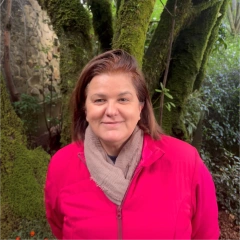
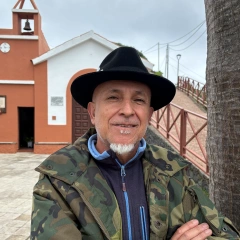
Voices from the “Camino”
Preparing for the trail
location
12 kilometres, 6 hours on foot
uniform
Appropriate footwear and clothing
bird
Laurisilva and wildlife
visibility-on
Viewpoints, views over the Atlantic
This route calls for a change of pace. Here, the terrain sets the terms: shaded stretches, narrow passes and viewpoints that appear when the mist allows. A trail to walk with care and let Anaga reveal itself gradually.
Section 1 – Forest threshold
We begin near Cruz del Carmen and head into the forest: shade, humidity and a dense green that envelops everything. There are stretches where the forest closes in and the path seems carved out of green, covered in moss and moisture.
Section 2 – Downhill trails
The path descends along narrow tracks, slippery on wet days, with clearings that open out towards the Atlantic.
Section 3 – Arrival at the Roque
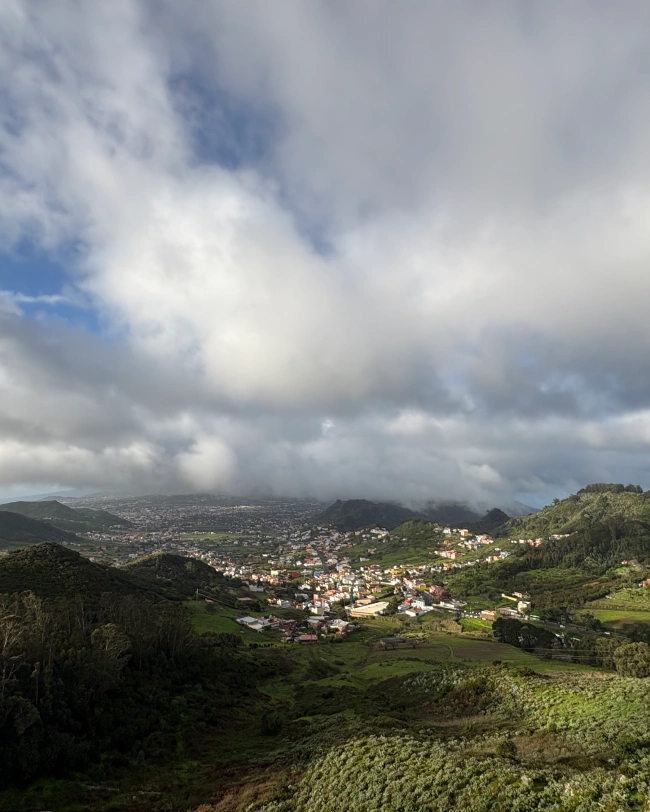
The hamlet of Taborno appears as a natural balcony beneath the Roque: houses, terraces and an open horizon.
Section 4 – Return with views
We head back along the circular route, alternating between forest and panoramic vistas, with wind and mist as companions along the way.
Map and route
Sound footprint
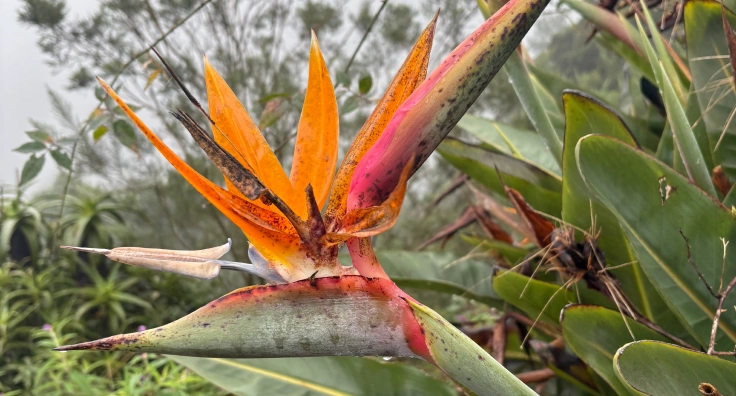
In Anaga, sound defines the trail. The mist filters the wind through the laurisilva, the steady drip of horizontal rainfall falls on the leaves and, at times, the Atlantic can be heard in the distance. The footsteps on damp earth, the forest birds and the deep silence of the ravines all keep you company. Listening to Anaga is another way of walking it.
00:00

00:00
Camino del Roque de Taborno: what to see and where to go
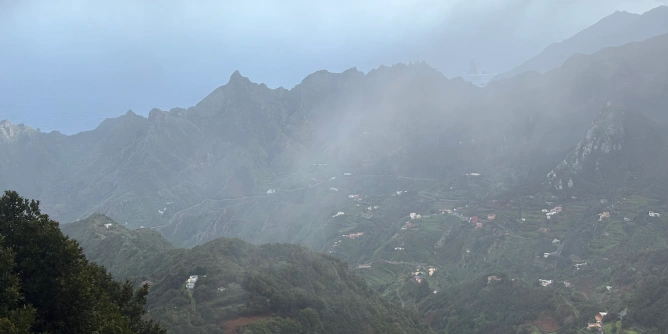
A living rural park
Anaga is one of Tenerife's oldest massifs and a living rural park. Scattered hamlets, historic trails and exceptional biodiversity coexist just a few kilometres from the city of La Laguna, a UNESCO World Heritage Site.
Walking Anaga is understanding how isolation, terrain and water have protected a territory that remains alive today. A space where nature and people share a fragile balance, looking to the future through stewardship, environmental education and mindful tourism.
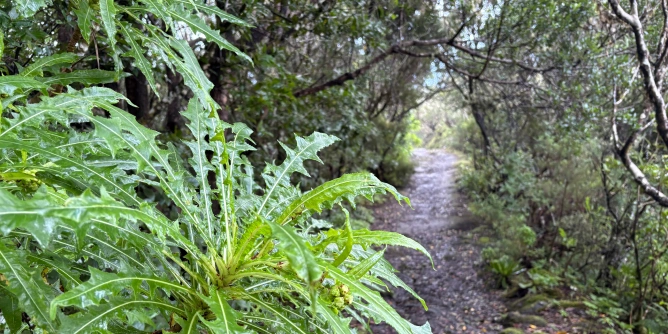
Laurisilva and horizontal rainfall
Anaga's laurisilva forest is one of the best preserved in Europe. A tertiary-era ecosystem sustained by constant humidity, mist and the so-called "horizontal rainfall" that continues to feed the territory's water supply.
This forest is not just landscape: it is natural infrastructure. It feeds aquifers, regulates the climate and supports a unique biodiversity. Walking beneath its canopy makes it possible to understand why Anaga is a Biosphere Reserve and why its conservation is key to the island's future.
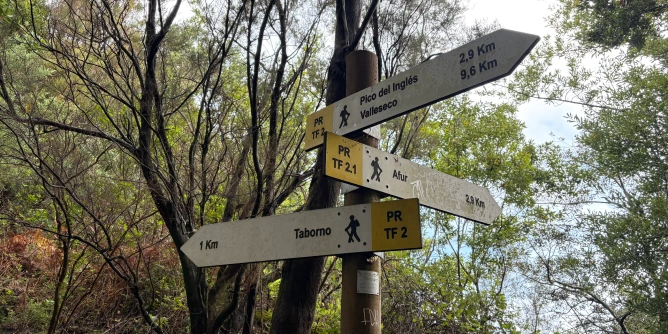
Hamlets that teach you to slow down
Anaga's trails were born to connect people. For centuries, they were the only way to travel between hamlets such as Taborno, Chinamada or Afur, built to cling to impossible slopes and withstand the constant wind.
Today, these paths recover their purpose by connecting walkers with a simple way of life, shaped by self-sufficiency, respect for the surroundings and the quiet resilience of those who chose to stay or return.
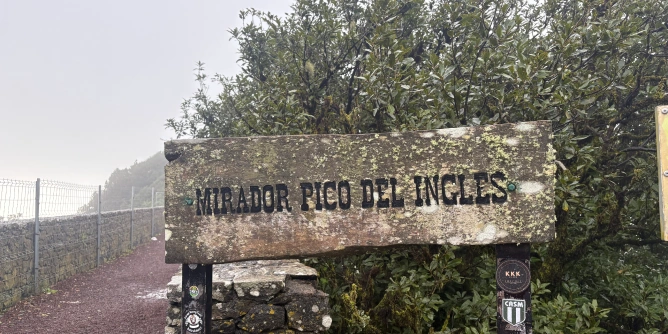
A living rural park and Biosphere Reserve
Taborno is known as Anaga's "viewpoint village". Perched on a ridge and sheltered from the wind, it offers open views over the Atlantic, the Roque and the ravines that define the park.
Like other hamlets in Anaga, its future depends on finding a balance between visitors, local life and a sustainable economy. A place where walking is not just about arriving, but about understanding and respecting.
The essential visit to Anaga's least visible heart
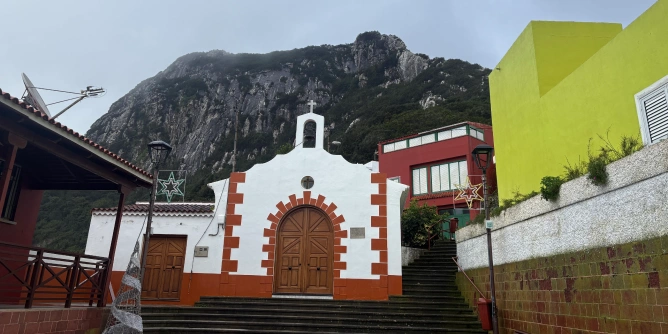
Roque Negro is one of the most isolated and authentic hamlets in the Anaga massif. Nestled beneath a great mass of rock and open to the Afur valley, it maintains a direct relationship with the laurisilva, the water and the historic trails that have connected this territory for centuries.
Although it does not yet have an official trail, Roque Negro is linked by traditional paths and forms part of Anaga's living network. Circular routes set off from its church through evergreen forest, dragon trees and heather, with open views and a strong presence of birdlife.
Its future lies in integrating these paths into the park's conservation model, reinforcing local life, traditional architecture and celebrations such as the Feast of Our Lady of Fátima, which continues to bring together residents and visitors around a shared memory and a commitment to caring for the place.
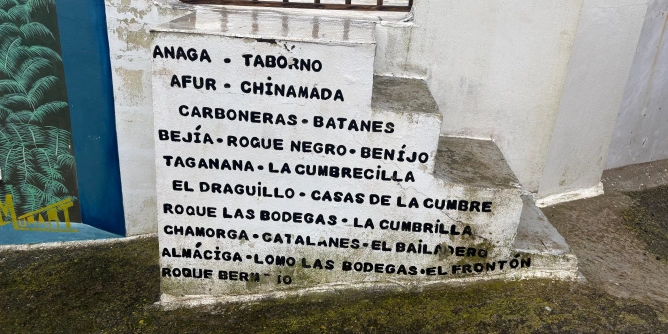
Essential dates for your diary
Festivals in Anaga mark the calendar of the hamlets and serve as meeting points between residents, visitors and the land. They are simple celebrations, rooted in local life.
- Taborno. Feast of Saint Joseph: second Sunday in June.
- Afur. Feast of Saint Peter the Apostle: second week of July.
- Chinamada. Feast in honour of Saint Raymond Nonnatus: mid-August.
When to walk:
- Best season: autumn and winter, when the forest is at its most active and lush.
- Summer: recommended to set out early and plan routes with shade.
Further information: Cruz del Carmen Visitor Centre as a key information point.
Discover the rest of the routes

Moeve in the region
We shape the future by driving initiatives in communities to connect people and opportunities.