

A future rooted in heritage
Navas de Oro has a history that stretches back to the Bronze Age. Its name, according to some historians, refers to its lagoons, wetlands, and the “liquid gold” of miera (resin).
What can we find?
- 60.000 hectáreas 60.000 hectares of rich biodiversity, with forests of black pine and stone pine along the Eresma River.
- Settlementss from the Iron and Bronze Ages.
- Historic resin chimneys.
- Resin Museum.
- Santa María Church, 16th-century Gothic-Mudéjar style.
- Santiago Church, mentioned in documents as early as 1210.
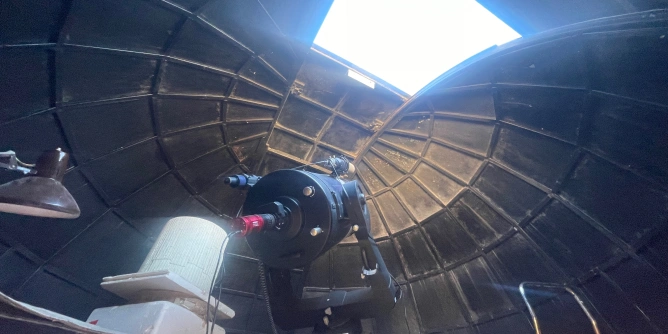
- Las Pegueras Star Observatory.
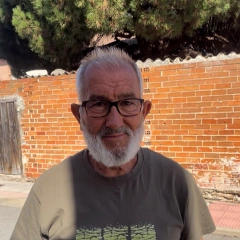
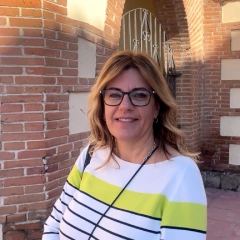
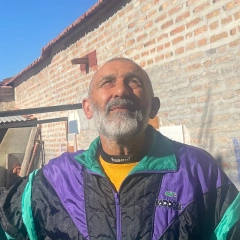
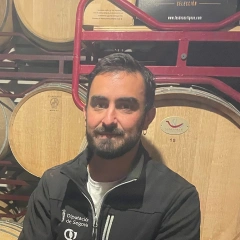
Voices from the “Camino”
Preparing for the Trail
location
Circular –11.8 kilometers - 4 hour walk
uniform
Wear suitable shoes and clothing
bird
Birds and pine
water
Fountains
Camino de la Miera takes you through the living resin history of Navas de Oro.
Walking here reveals how knowledge of the land, its pines, crafts, and orchards, continues to inspire new ways of creating value.
Each segment recalls where we come from and, above all, invites us to imagine where we can go when land and community move together.
Segment 1 — Entering the pines
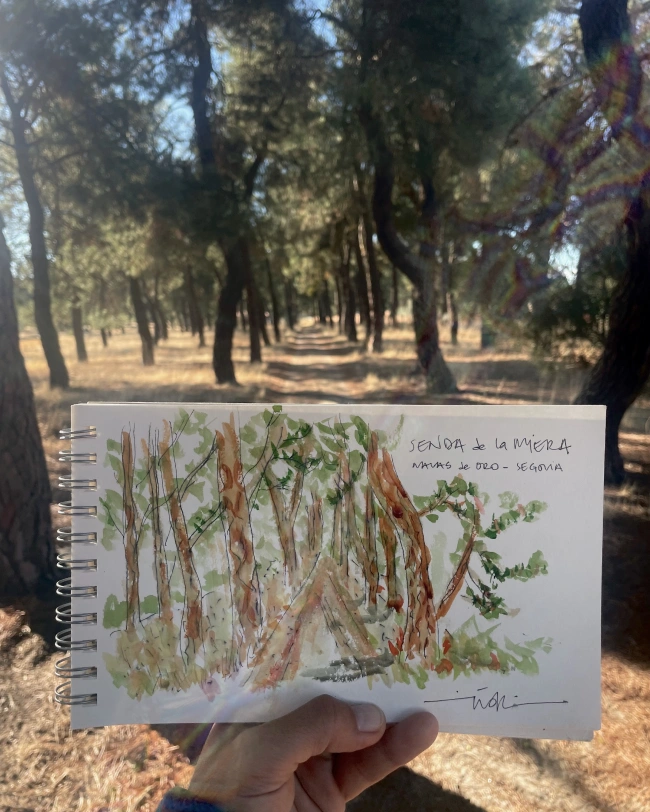
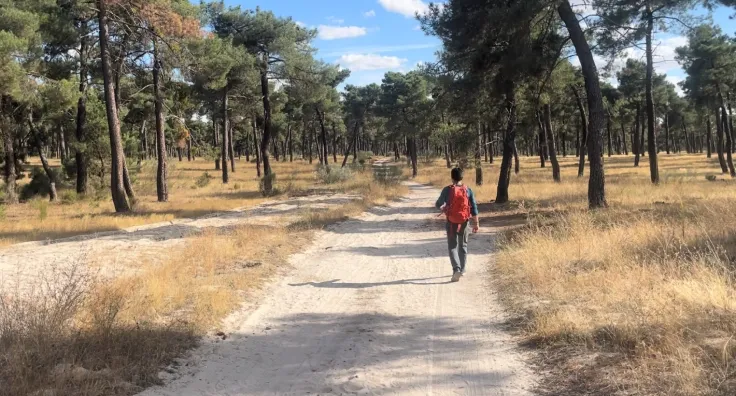
The trail leaves the asphalt behind and enters a vast forest where light and sound shift around you.
Segment 2 — Resin craft and memory
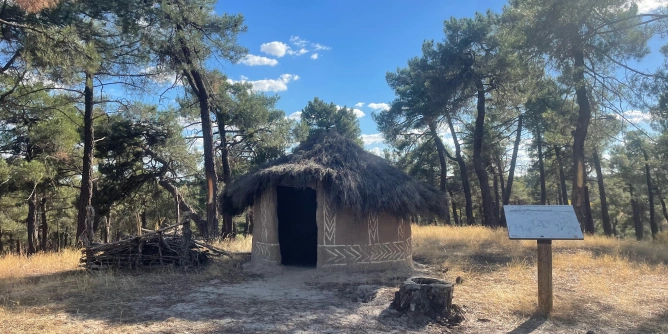
Remnants of pegueras (resin huts), shelters, and extraction marks tell the living history of the craft.
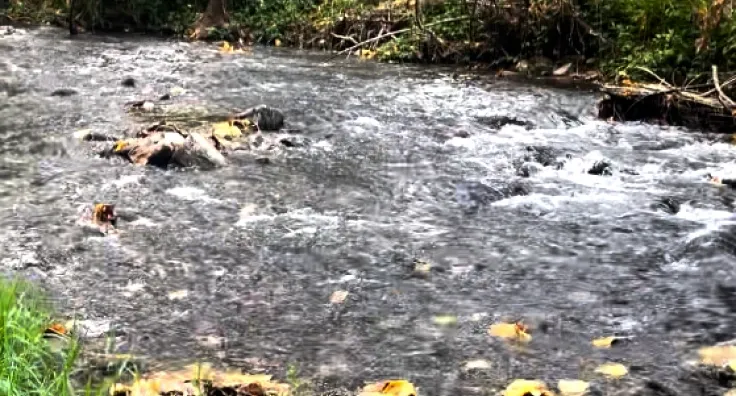
Segment 3 — Eresma riverbank
A damp, shaded stretch alongside the river and the old hydroelectric mini-plant housing.
Segment 4 — Return to town
Return to town The trail winds back through pine forests toward the brick chimneys dominating the landscape.
Map and itinerary
Sounds of the land
Over 65% of Navas de Oro’s territory is forest. On the route, in addition to observing roe deer, foxes, eagles, bustards, and vultures, you can let yourself be carried away by the wind in the pine forest, the sound of the birds, the flow of the water, and your own footsteps.
00:00
00:00

00:00
Camino de la Miera: what to see and where to go
A history driving a new future
Navas de Oro was founded on a Bronze Age hillfort; remains can be seen at Peña del Moro, a kilometer and a half from town. Alfonso VIII of Castile earned the nickname “el de las Navas” (“the one from Las Navas”) unrelated to this town, for defeating the Almohads at the Battle of Las Navas de Tolosa (1212).
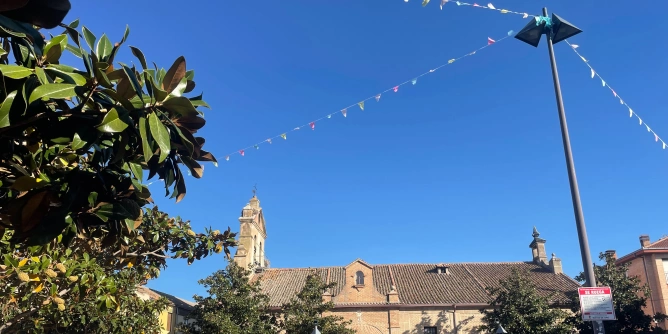
Its architectural heritage reflects centuries of history and community life. Santa María Church (16th-century Mudéjar Gothic) and Santiago Church (documented from 1210) showcase the town’s cultural depth.
The Hermitage of Santo Cristo del Humilladero and the former washhouses, now the Resin Museum, combine tradition, faith, and craft.
The tall brick chimneys of the old resin factories stand as landmarks, symbols of an industrial past that shaped the town’s identity.
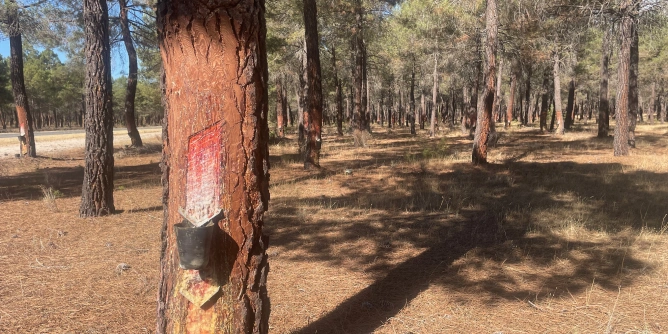
Resin harvesting
Navas de Oro was one of the world’s largest resin producers from the 1950s through the 1980s. Today, with 1,200 residents, remnants of that era remain in the tall brick towers of old factories, the mansions of their owners, and the Resin Museum, which preserves all the tools used for artisanal extraction are displayed.
Along the path, you can see on the pine trunks how resin was collected. First, a thin layer of bark (a process called debarking) no more than 12 cm wide and half a meter high is removed. A metal channel at the base guided the resin (miera) into a container attached to the trunk (potera). Over the season, the bark cut could reach nearly a meter.
Resin was sold by the kilo to factories to make rosin (amber-colored natural resin) and turpentine, essential for the food, adhesive, paint, and pharmaceutical industries. Remaining resin on the ground was burned in pegueras, releasing vapors used to extract pitch for waterproofing boats, ropes, and wine barrels.
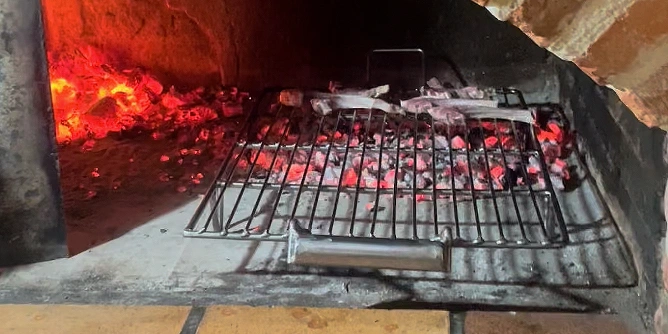
Innovation born from the soil: wine, lamb chops… and jalapeños
The route ends at the table. Navas de Oro has become a living lab where traditional farming techniques thrive alongside experimentation with new varieties.
Among local tomatoes and peppers grow organic chiles, including jalapeño, poblano, and habanero, demonstrating how rural innovation can create new trails from the land to Michelin-star kitchens.
A taste that proves innovation grows from hands that care for the land.
A resilient, long-term business
- We invest in studies and projects for the reduction of carbon intensity
- Focus on low cost barrels
- We have a very strong technical team
- We provide attractive investment options in producing fields
A living mosaic
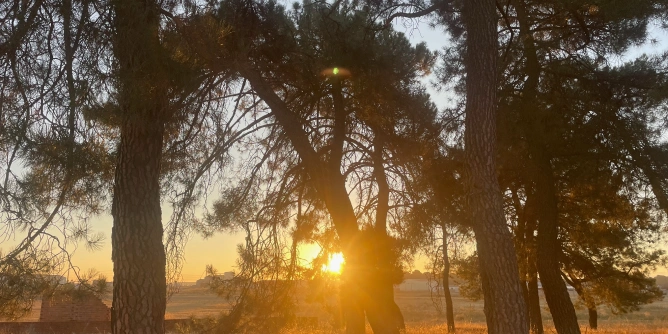
Navas de Oro preserves nearly untouched nature: about 65% of its territory is forest, dominated by maritime pine and stone pine, historically central to resin production. Between the pines and open spaces, you may spot deer, rabbits, foxes, partridges, crows, vultures, eagles, and bustards, along with diverse vegetation including junipers, broom, poplars, lavender, and thyme. In autumn, the landscape comes alive with mushrooms: saffron milk caps, thistle mushrooms, and even amanitas, reflecting the value and fragility of the ecosystem.
Wetlands and ponds act as biodiversity oases, supporting migratory birds and adding life, sound, and movement to this natural mosaic. The municipality has lagoons of special interest cataloged, such as: Pero Rubio, La Magdalena and La Vega, along with other pools and ponds scattered throughout the area. These spaces function as refuge and passage area for migratory birds, providing life, sound, and movement to a territory where water, though discreet, is vital to understanding its natural balance.
Must-see in Navas de Oro:
Santa Águeda, Women’s Festival (Feb 5–6)
San Antonio (July 15), patron linked to Santiago Apóstol, whose date coincided with the harvest.
Santiago Apóstol (July 25) with countryside running of the bulls.
Navas de Oro Patron Saint Festivities 2026. June 13 (main day)
Interpretive route and visit to the La Peña del Moro archaeological site (April 22) Organized by the Navas de Oro Tourism Office
Local businesses:
Merendero Tenencio
Greña Bakery
Discover the rest of the routes

Moeve in the region
We shape the future by driving initiatives in communities to connect people and opportunities.