Cumbres de San Bartolomé, Cumbres de Enmedio and Cumbres Mayores (Huelva)
Camino de las tres cumbres
A route to discover tradition, cultural heritage, innovation, and collaborative projects that are shaping the future.

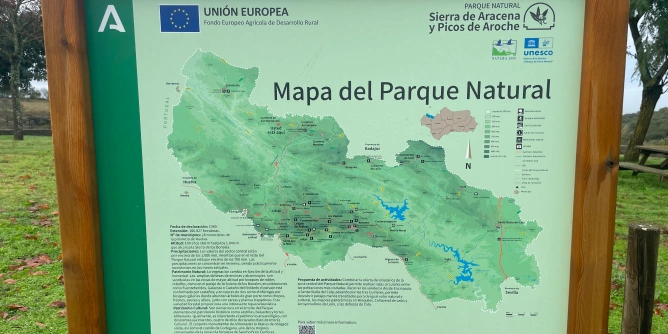
In the heart of the Sierra de Aracena and Picos de Aroche Natural Park, our route connects Cumbres de San Bartolomé, Cumbres de Enmedio and Cumbres Mayores. Places where people meet, take care of each other, and converse naturally. The visitor goes from being an observer to feeling part of the community, almost without wanting. The experience is not tourism, but belonging.
location
uniform
bird
visibility-on
The Camino de las Tres Cumbres runs through ancient cobbled paths, roads, and alleys that connect the three towns in a setting of great natural beauty and good food. A journey among entrepreneurs who have committed themselves to imagining and building the future from here.
We start the walk next to the remains of the Arab fortress of Cumbres de San Bartolomé, entering the trail bordered by a stone wall, considered a World Heritage Site.
About 5 kilometers on, the trail takes us to Cumbres de Enmedio, among olive groves, oaks, and cork oaks.
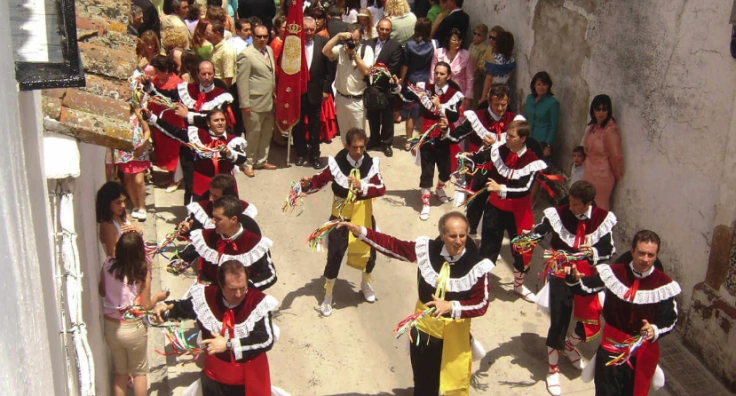
The entrance to Cumbres Mayores welcomes the passerby with the walls of its castle, its abundant production of Iberian ham right in the village, and its traditions around the medieval dance of Santísimo.
Between Cumbres de Enmedio and Cumbres de San Bartolomé, there is a mandatory stop at the Piedra Utrera viewpoint to see the border between Andalusia and Extremadura.
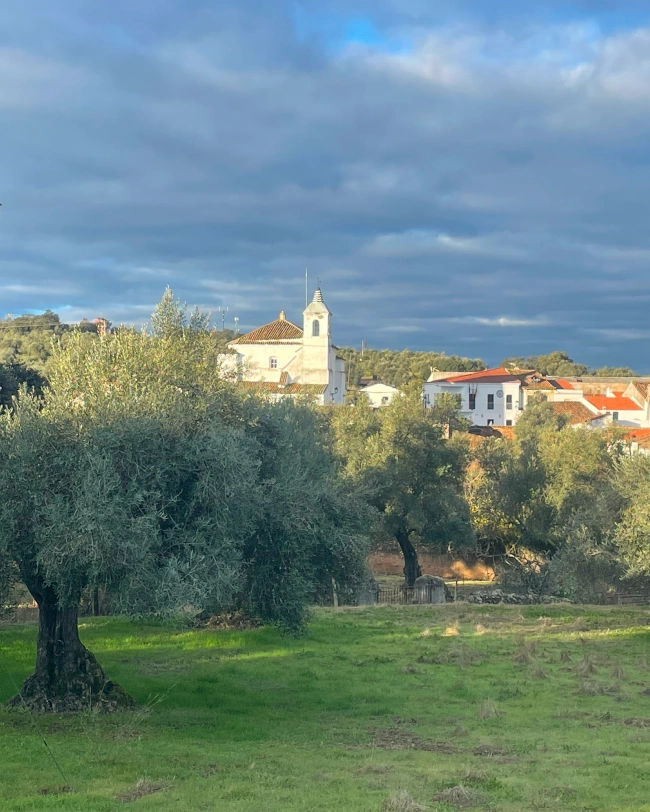
This route places us in the north of the province of Huelva, within the Sierra Morena Dehesas Biosphere Reserve. In addition to finding pigs, goats, and sheep grazing freely, along the way we will also be accompanied by the sound of water from seasonal streams or from the Barranco de la Magdalena, which crosses the path particularly in the section of Cumbres de Enmedio and Cumbres Mayores.
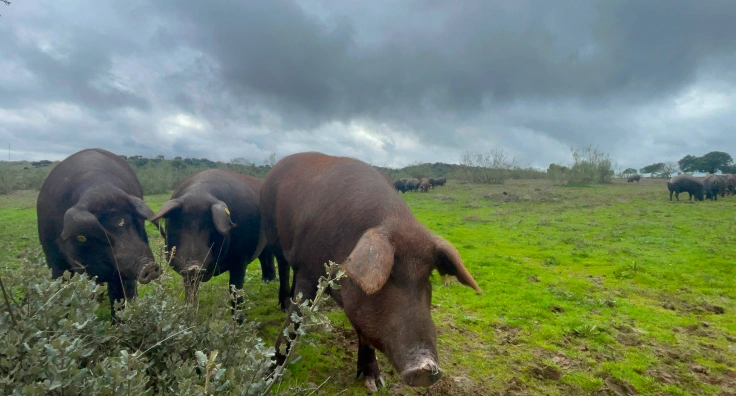
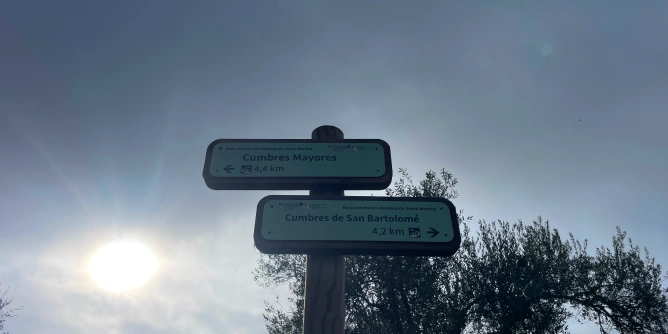
Dawn breaks in the Sierra de Aracena at the border between Portugal, Extremadura, and Andalusia. Before the sun rises over its pastures, oak groves, and olive groves, livestock farming already sets the pace for this region. The farms, spread across small valleys and slopes, require continuous attention: feeding the livestock, moving between plots, and supervising animals that graze freely. It is constant work, seven days a week throughout the year, that reflects the tradition and way of life of the area.
You only need to walk the first few segments of the GR-48 trail to understand the essence of this place. This trail, which starts in Portugal and crosses this entire Andalusian mountain range, takes the walker through landscapes dotted with pastures, oak groves, and poplar forests. The gaze is lost among rolling hills filled with paths, alongside animals freely grazing, the same freedom that is breathed throughout the journey.
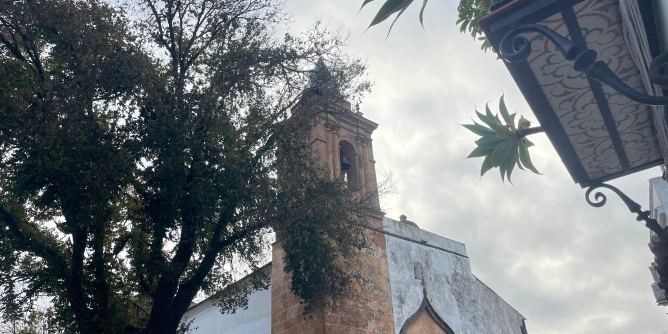
We walk from Cumbres de San Bartolomé to Cumbres Mayores: 12 kilometers of a pleasant trail perfect for walkers, families, and lovers of the landscapes that support lifestyles.
We continue down the path alongside the remains of an Arab fortress in Cumbres de San Bartolomé, a small village of 364 people. Its cobbled streets surround the Plaza de España next to the Casa del Cura, which still retains tiles from the Cathedral of Seville on its lintel, and bid farewell to travelers setting out to tread the earth and the road.
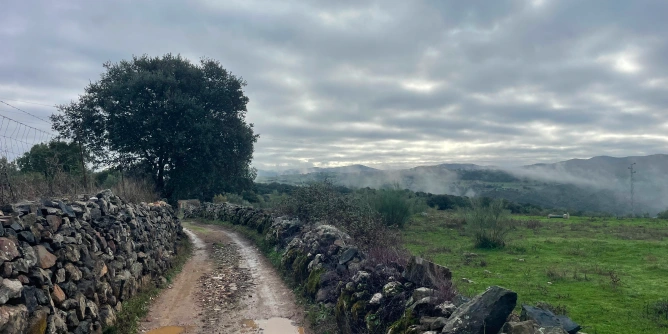
The path is always bordered by stone walls. These stones were declared a World Heritage Site by UNESCO in 2018. And it is a good example of how both the landscape and traditions are protected to the fullest here, with recognition, care, and attention. Along the path, we can peek at the stones that mark the pastures and appreciate the olive groves, oaks, and cork oaks; also sheep, pigs, goats, and foals, all grazing freely.
After two hours of walking, we arrive at Cumbres de Enmedio, considered the smallest village in Andalusia with only 61 registered inhabitants.
The atmosphere is calm and the village preserves its essence: community life and culinary traditions. Collective activities remain a key element of local identity, such as the preparation of traditional recipes–among them migas–made with olive oil, potatoes, bread, garlic, and red pepper.
It's time to head towards Cumbres Mayores, the liveliest of the three villages, with all the basic amenities and a large ham production industry in its 17 factories, all located in the village center. Sitting atop a hill, it appears on the horizon framed by the castle walls and the church bell tower. From there, the people of Cumbres fight against the demographic challenge and protect all those who have decided to stay, as well as their landscapes, traditions, and future.
In Cumbres Mayores, a medieval dance survives: the dance of the Santísimo (or Most Holy). A dance with which generations and generations of people from Cumbre have given thanks for the harvests and prayed for those of the years to come. The dance was only performed by the older people of the village and was on the verge of disappearing.
Over time, documentation, teaching, and intergenerational dissemination efforts were carried out, allowing this tradition to be recovered and kept alive. Thanks to this continuous effort, the dance continues to be practiced today and has become one of the key elements of the village’s intangible heritage.
This commitment to the preservation of its traditions has contributed to Cumbres Mayores being recognized as one of the so-called "magical towns" of Andalusia, a distinction that values the identity, history, and cultural legacy of the municipality.
This passion for their own has also led the people of Cumbres to be united with Boassa, a small village near the capital of Burkina Faso. Even a poster from their Gastronomy Fair reached there. A nun from Cumbres photographed the poster at the children's school she attended and submitted it to the poster contest worldwide. Thus a group of neighbors began to support the nun’s project until they formed an association, now an NGO, and built a new school that today serves 130 children with 13 hired staff and an annex vocational training center for another 60 women.
In December, you may come across the Gastronomy Fair: it lasts three days and is a highlight of the town's calendar, falling right in the middle of the Constitution Day long weekend. Music, workshops, talks and the largest ham tapa in the world: 13 cutters for 25 hams. The entire town smells of Iberian ham.

We shape the future by driving initiatives in communities to connect people and opportunities.