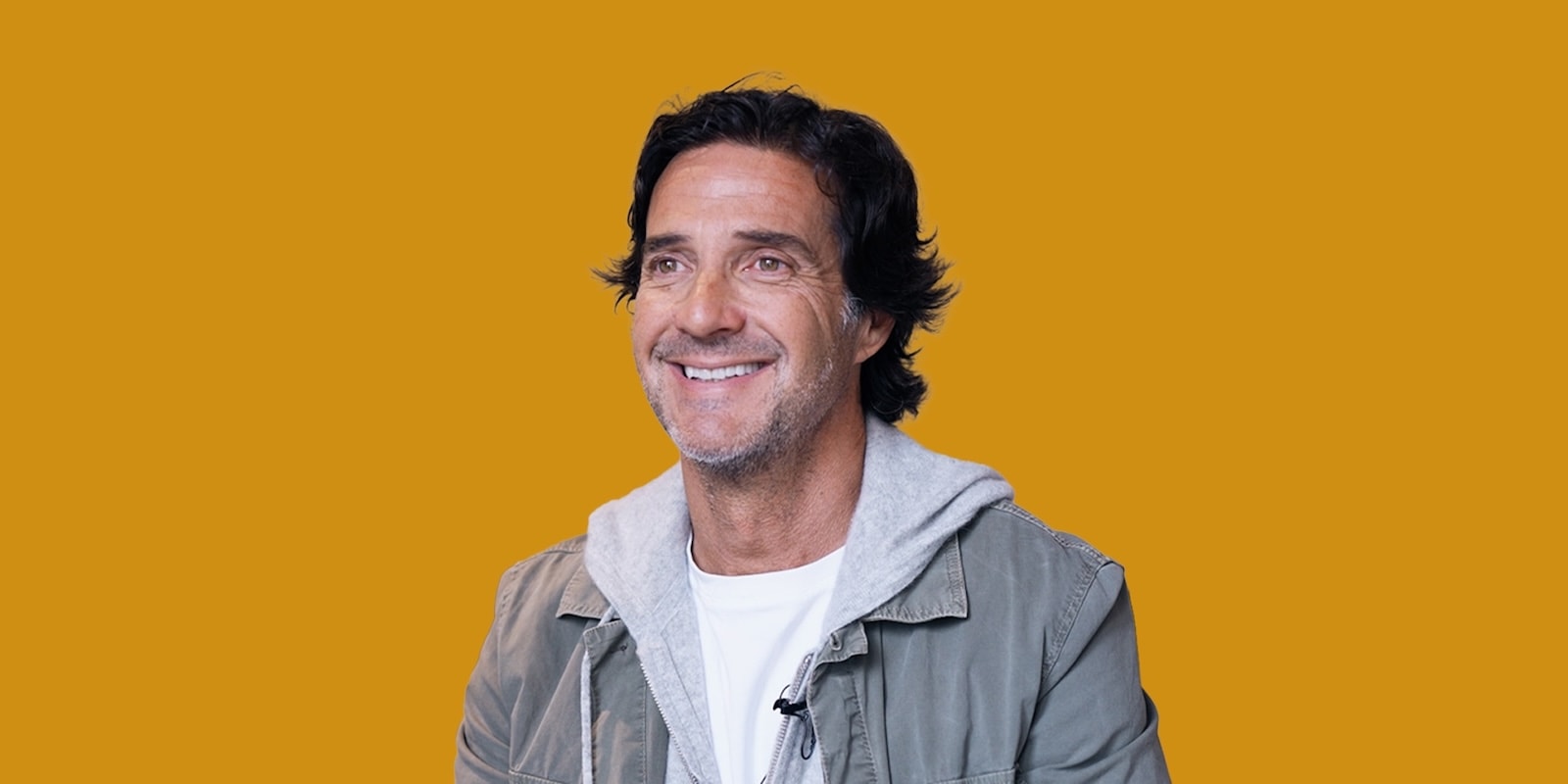
Ecoalf was founded to show that a different way of doing fashion is possible. Its founder, Javier Goyeneche, was committed to recycling when sustainability was still hardly talked about and fabrics were created from scratch. Today, after rescuing tons of waste from the sea and leading 100% recycled collections, his challenge is greater – turning that model into a world reference.
Ecoalf was founded by putting recycling at the center of its strategy; what led you to start down that path?
I wanted to create a sustainable fashion brand, and I thought the best way to achieve this would be to stop using natural resources. Therefore, recycling was an option, provided we could create a new generation of recycled products where you wouldn't know it was recycled unless I told you.
You founded Ecoalf at a time when sustainable fashion was barely heard of. What changes have you seen since?
In 2009, people associated sustainability with poor design and mediocre quality, and recycled products were considered inferior because they had a negative connotation. There were no cool recycled fabrics; only a very small percentage below 20% were recycled and the textures were not very good. We had to start developing the fabrics, which is why the first collection was launched on the market in 2013. It took three years to develop the first fabrics. We had to convince people that a recycled product could be just as beautiful, could have the same design, could have the same technical properties, and that it didn't have to be cheaper.
Turning waste into garments involves investing in innovation. What materials are recycled and what achievements would you highlight to understand the real scope of that impact?
We recycle many different waste materials: millions of plastic bottles, fishing nets, nylon, cashmere wool scraps, coffee grounds, tires... and each one has its own complexity. People are impressed that we can use an old fishing net to make a fabric, but it really only takes seven steps to carry it out, depending on the material.
The one that has been most difficult for us to recycle is cotton. Although it may seem the simplest, in reality it’s the most complex: when recycling it, the resulting thread is very short and there are hardly any factories capable of doing it well. We started with 10% recycled content and 90% organic content, and then we increased. Three years ago we launched the first 100% cotton collection. We saved about 40 million liters of water, compared to what the same production would require using virgin cotton. That’s huge savings, even though we're a small company.
What are the main challenges we face today in achieving a circular and sustainable model?
To achieve a circular model, we would firstly need to change the way we consume. We do not run promotions, we do not have sales during the sales season, nor do we participate in Black Friday, in order to minimize waste generation. And, secondly, it is highly important that what ultimately goes to the landfill can be recycled. Today, 99% of what comes in is not single-material and, therefore, cannot be recycled to create a high-quality fiber. That is why 74% of our latest collection is single-material. This greatly limits the design, but it is what allows a garment to be circular if it ends up in the landfill.
‘Upcycling the Oceans’ is the most important project of the Ecoalf Foundation. How did it come to be and what collaborations have allowed it to grow so much?
This is the project I am most proud of. It was conceived in late 2014, after some fishermen told me about the amount of waste that got trapped in their nets every time they went out to sea. When I saw it with my own eyes, I was shocked. At that moment, there were only five of us in the company, but we got the support of an American philanthropist and convinced three fishermen from the port of Villajoyosa to install a small container on their ships. The idea was simple – instead of returning the waste to sea, bring it in to land.
What started with three fishermen, today brings almost 5,000 together in 83 ports of the Mediterranean. They have already extracted around 2,000 tons since 2015. Every minute, the equivalent of a truck full of garbage enters the sea. That’s why, in 2020 we expanded the project to rivers, starting with the Jarama, where we clean sections with volunteers every week. We are already replicating the initiative in Valencia and Catalonia, because if the rivers are clean, the seas will also be cleaner.
In addition to taking care of the planet, you also seek to generate a positive impact on people. How does this materialize in your projects and collaborations?
In 2018, we got certified as a B Corp company. We scored spectacularly in sustainability, and in 2021, when we were re-evaluated, we were in the top 5% of the best companies in the world. However, in the social aspect, we didn't get such good marks. We had been focusing on the environmental aspect, and from there we realized we had to work much more on the social aspect. We started to apply more stringent criteria in our factories and to work on social projects. For example, with regenerative agriculture in India, we started with 50 farmers and today there are almost 50,000, and we have committed to buying all their production, whatever it may be. The good thing about B Corp is that every three years they hold a mirror up to you and tell you, "You’ve improved in this, not in this." And that makes you keep moving forward.
Is it possible to reconcile environmental and social goals with the need for the company to be profitable and competitive in the market?
We like to think that we are demonstrating it is indeed possible. It is not a pipe dream to make your entire collection 100% recycled; it is possible. It's more complicated, it's more difficult. You compete in (un)equal conditions, but it is possible. If you are already born with a clear purpose and you stay faithful to it, I believe it is a very clear roadmap for you and those who accompany you along the way.
Looking ahead, what steps would you like to take to continue growing and expanding your impact?
At the Foundation, we would love to work with 10,000 fishermen in the Mediterranean to catch a thousand tons per year, and continue participating in more projects. And at the company, we are quite ambitious. We want to be a reference in the sustainable fashion sector and demonstrate that things can be done differently.