February is synonymous with carnival. These celebrations, with deep roots in Spain, are the best example that ingenuity and fun can coexist with respect for the environment. From north to south, we explore our country's most unique celebrations: rituals where history and territorial identity align with caring for the earth to generate a positive impact in each community.
The first stop is in the northwest of the peninsula, where carnival celebrations retain a special cultural significance that connects people to ancestral pagan rituals, rooted in the land and heritage, and linked to the celebrations marking the end of winter and the preparation of the harvest, increasingly linked to sustainability.
Galicia
In Tomiño (Pontevedra province), the Entroido de Goián has the certification of the first Sustainable Celebration of Southwest Galicia thanks to measures such as the separate collection of waste with the installation of recycling islands in tents, the elimination of single-use plastics, and achieving zero organic waste for a celebration that this year will take place from February 7th to 18th.
Castile and León
- Avila
Sustainability also shines in the Masquerades of Castile and León. The connection between the present and the past is closely linked to nature, and is expressed in the use of natural elements in their costumes. Ancient rituals in a lesson on respect for the environment. An example of living rural heritage that translates into the aesthetic of the characters: there are no plastics or synthetic elements, and all decoration comes from what the earth provides (leaves, straw, flowers, etc.).
In the Masquerades of Avila,, the Machurreros in Pedro Bernardo and the Cucurrumachos in Navalosa stand out. In both celebrations, the aesthetic embraces the organic. The Machurreros wrap themselves in branches of holm oak, broom ferns, and rye straw to "dress" characters that camouflage as forest spirits with forged bronze bells, which have been passed down from generation to generation for decades. The Cucurrumachos, for their part, wear wool blankets handwoven on ancient looms and details made from carved animal bones. Everything is created with local artisans, forging links between generations with elements that are passed from parents to children, carnival after carnival.
Southern Spain
- Cadiz
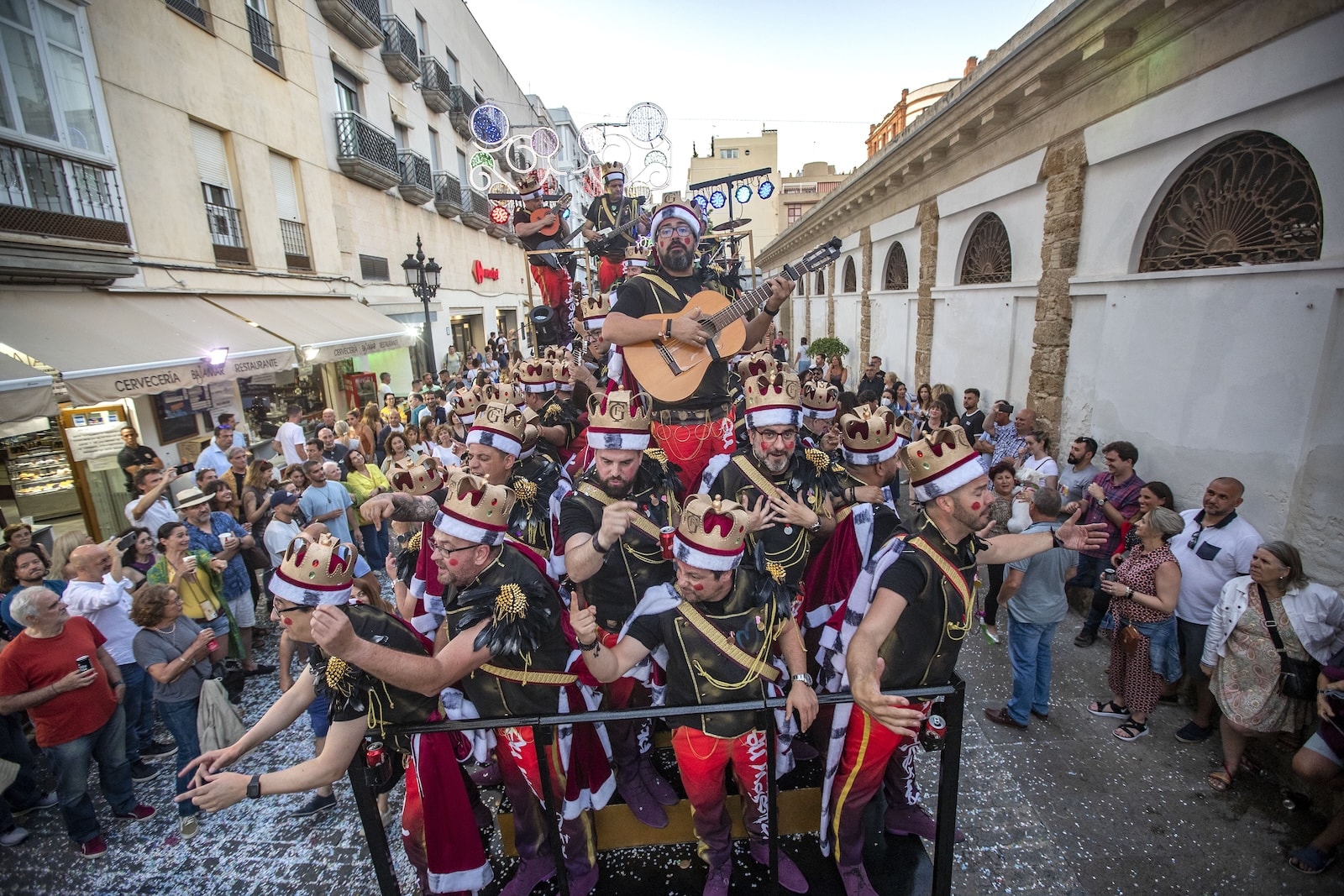
In our country, carnival is synonymous with chirigotas from Cadiz. This city has managed to combine the guasa, or humor, and artistry of its residents with a more environmentally-conscious mindset. This has given rise to initiatives such as the Baúl Disfraz, a term used by carnival groups referring to the use of used or recycled clothing to make their costumes. It is also worth highlighting campaigns like Tu Lata Al Amarillo to raise awareness about the importance of recycling, especially during holidays and leisure.
Throughout the year, the Cadiz carnival event organizes various workshops for the little ones, such as makeup, mask design, and creating handmade carnival pieces using foams, non-corrosive glues, and craft tools.
- Murcia
Months before the Carnival of Águilas (Murcia), its inhabitants begin to save eggshells, which they empty and clean to fill them with special confetti, replacing plastic, thus reusing domestic waste. One of its most traditional and iconic characters, La Mussona, wears a costume made of esparto grass, a plant fiber associated with the area's traditional crafts. Tradition and modernity thus come together in the same garment.
Canary Islands
- Las Palmas de Gran Canaria
Much further south, far from the peninsula, the slogan 'United by the celebration, committed to the planet' welcomes the Carnival in Las Palmas de Gran Canaria. This celebration has a sustainability plan that includes 100% LED lighting, replacing a large part of diesel generators with hybrid solutions and biodiesel, reducing waste, and promoting the local economy. The objective of this 2026 edition, which will conclude with the sardine burial on March 1, is to reduce energy emissions by 20% compared to 2025, and offset 100% of the carbon footprint.
- Santa Cruz de Tenerife
For its part, the neighboring carnival of Santa Cruz de Tenerife, declared a Festival of International Tourist Interest in 1980, also focuses on the environment. As in previous years, it is keeping up with its Carnival campaign, Te Quiero Sostenible, to raise awareness about the importance of reducing, reusing, and recycling materials. This initiative includes the so-called environmental patrols formed by environmental educators who, in addition to delivering the Environmental Decalogue to the kiosks and bars, distribute 10,000 reusable cups and 5,000 hanging cup holders.