The energy transition is entering a decisive phase. According to the International Energy Agency (IEA), global renewable energy capacity will multiply by a factor of 2.7 by 2030, driven mainly by solar photovoltaics and wind power. This growth reinforces the leadership of electrification, but it also highlights an increasingly evident reality: effective decarbonization requires coordinating different energy vectors capable of providing flexibility, stability and security of supply to the system.
In Spain, this process will be structured around five major trends that will define the direction of the energy sector in 2026.
- 1. Renewable electricity:consolidatedleadership and integration challenges
Solar photovoltaic energy will continue to be the main driver of renewable growth. By the end of 2024, Spain had close to 32 GW of installed solar power, representing more than 20% of the total capacity of the electricity system, according to data from Red Eléctrica de España. The Spanish National Integrated Energy and Climate Plan (PNIEC) foresees exceeding 76 GW of solar power by 2030, meaning that more than half of this new capacity will have to be integrated in just six years.
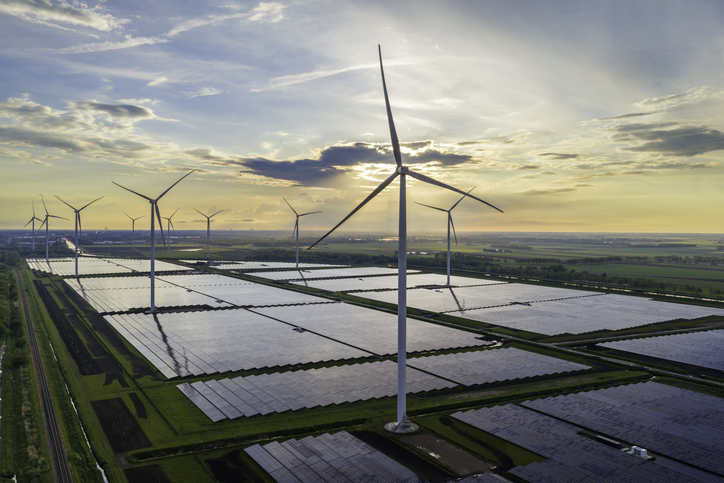
Wind power, with around 31 GW installed, will continue to contribute volume and stability, especially through the repowering of existing wind farms and the gradual development of offshore projects. However, as the share of these variable sources increases, the challenge is no longer limited to generating clean electricity. The priority becomes integrating that capacity into the system, managing variability, and ensuring supply stability, as highlighted by the IEA in its Renewables 2024 report.
In Spain’s case, this challenge is particularly significant: a substantial share of renewable capacity that has already been authorized or is at an advanced stage of permitting is still unable to connect to the grid, underscoring the need to accelerate investment in transmission and distribution networks. The expansion and digitalization of this infrastructure is therefore emerging as a key factor in avoiding bottlenecks, reducing renewable energy curtailment and ensuring that renewable growth effectively translates into available supply.
- 2. Self-consumption: distributed generation and energy savings
Self-consumption has become one of the most dynamic levers of the Spanish electricity system. According to data from the Ministry for the Ecological Transition, Spain already exceeded 7 GW of installed self-consumption power by the end of 2023, multiplying the capacity in place in 2020 by more than four.
This growth has been driven by falling solar technology costs, with a reduction in LCOE (levelized cost of energy) of more than 80% since 2010, according to the International Renewable Energy Agency, as well as by support programs linked to Next Generation EU funds. Many experts point out that in 2026 self-consumption will continue to gain in relevance not only as a cost-saving tool for households and businesses, but also as a mechanism capable of easing pressure on grids and bringing production closer to consumption.
- 3. Electric mobility: gradual progress and remaining challenges
In 2024, Spain’s fleet of electrified vehicles exceeded 1.6% of the total, still far from European targets. Nevertheless, electric vehicle registrations are growing at double-digit rates, driven by incentives under the MOVES Plan and by an increasingly broad market offering.
At the same time, the charging network is close to reaching 50,000 public charging points, although with uneven territorial distribution and administrative activation issues, according to AEDIVE. Looking ahead to 2026, the rollout of infrastructure and the electrification of urban and corporate fleets will be decisive in accelerating emissions reductions.
- 4. Biofuels and biogases: immediate and manageable decarbonization
Biofuels and biogases will gain importance as decarbonization solutions compatible with existing infrastructure. Since 2025, airlines have been required to incorporate 2% sustainable aviation fuels (SAF), a percentage that will increase progressively, driving demand for advanced biofuels.
Biomethane, meanwhile, is becoming established as a strategic vector. According to SEDIGAS, Spain’s technical potential for biomethane production could cover up to 40% of domestic natural gas demand, making it a key tool for strengthening security of supply and reducing emissions immediately, without waiting for disruptive technological changes.
- 5. Renewable hydrogen: industrial infrastructure and a connecting vector
The takeoff of renewable hydrogen as a pathway to decarbonize industry, heavy transport and energy-intensive sectors is expected to be significant in 2026. According to Hydrogen Council projections and market analyses, global hydrogen demand could grow from around 90 Mt today to nearly 660 Mt by 2050, representing more than a sixfold increase over three decades under strong energy transition scenarios.
IRENA estimates that hydrogen could account for around 10-12% of final energy consumption in the EU by 2050, acting as a connector between renewable electricity, industry, and transportation. Its ability to reuse existing gas infrastructure enables a gradual transition and reduces the economic frictions of the process.
An integrated energy system
The defining trend of 2026 will not be the isolated advance of a single technology, but rather the orchestration of an integrated energy system, in which renewable electricity, self-consumption, electric mobility, and green molecules perform coordinated roles under criteria of flexibility, resilience and efficient management.
The energy transition is thus entering a phase in which technological decisions are increasingly tied to industrial and economic considerations. The ability to deploy a robust energy system will be essential to attract investment, strengthen competitiveness, and transform the production sector toward higher value-added activities. In 2026, the challenge will no longer be just to produce clean energy, but to build a system capable of sustaining economic and industrial development in an increasingly demanding global environment.