What are carbon credits?
Also known as carbon offsetting, carbon credits are financial instruments representing the reduction or elimination of a metric ton of carbon dioxide from the atmosphere. Their main objective is to encourage companies and countries to reduce their emissions, as they can sell the credits they do not use or buy the necessary ones to meet their objectives. In short, carbon credits are a fundamental tool for achieving climate goals and stimulating the carbon market globally.
These credits are generated through projects that demonstrate a verifiable reduction in emissions, which implies that each credit must be unique, measurable, permanent, and verified by an independent third party.
How do carbon credits work?
The concept of carbon credits is based on the premise that the atmosphere is a common good and that reducing emissions benefits the entire planet. One of the most well-known mechanisms for managing carbon credits is the "cap and trade" system.
In this model, an authority (such as a government or a country union) sets a cap on the total amount of GHG that certain industries or sectors can emit. Then, emission permits (carbon credits) are assigned or auctioned to companies within that limit.
If a company manages to reduce its emissions to below its allocation, it can sell its surplus credits to other companies that have exceeded their limit and need more permits. This scheme creates an economic incentive to invest in cleaner and efficient technologies. The most prominent example is the European Union Emissions Trading Scheme (EU ETS),which covers approximately 36% of total EU GHG emissions and has contributed to significant emissions reduction in the covered sectors since its creation in 2005.
Projects that generate carbon credits
Carbon credits not only come from cap and trade systems, but also from projects that are the foundation of the carbon credits market and a direct way to reduce or eliminate greenhouse gases (GHG) in a verifiable manner. These projects can be very diverse:
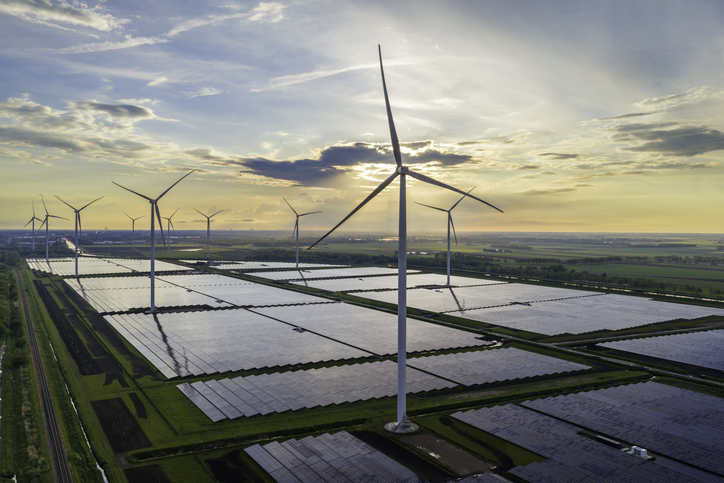
- Renewable energies: installation of wind farms, solar plants or hydroelectric plants that replace energy generation based on fossil fuels.
- Energy efficiency: improvements in industrial processes, buildings and transportation that reduce energy consumption.
- Reforestation and forest conservation: planting trees and protecting existing forests that absorb CO2 from the atmosphere.
- Waste management: projects that capture methane from landfills or wastewater treatment plants for use as energy.
- Sustainable agriculture: Practices that improve carbon capture in soil or reduce nitrous oxide emissions.
These projects must follow strict methodologies and be verified by independent entities to ensure that emissions reductions are real and additional.
Carbon markets
There are mainly two types of carbon markets:
- Compliance (or regulated) markets: those where participation is mandatory for entities subject to emissions regulations, such as the EU ETS. Here, credits are emission permits that must be submitted to comply with the law.
- Voluntary markets: in these markets, companies, organizations, and even individuals voluntarily purchase carbon credits to offset their own emissions and demonstrate their commitment to sustainability. The value of the voluntary carbon market reached $1.7 billion in 2024.
Why are carbon credits important?
These credits are a key tool in driving decarbonization and promoting sustainability for several reasons:
- They encourage green investment: they provide a financial mechanism so that emissions reduction projects are economically viable, attracting capital towards more sustainable solutions.
- They make it easier to reach targets: They help countries and companies reach their emission reduction targets, including the Paris Agreement commitments.
- They promote innovation: They stimulate the development and adoption of cleaner and more efficient technologies.
- They generate social and environmental co-benefits: Many carbon projects not only reduce emissions, but also contribute to local development, job creation, biodiversity conservation , and the improvement of air quality and water quality.
How can you participate in carbon offsetting?
Although this is often associated with large companies and governments, citizens and small businesses can also participate in carbon offsetting.
It can be done through platforms and organizations that offer the purchase of carbon credits from certified projects. It’s important to choose suppliers that use internationally recognized standards, such as Gold Standard or Verra to ensure the credibility and real impact of the projects. By doing so, you not only contribute to GHG reduction, but also support community development and ecosystem conservation around the world, all in a tangible way.